

Understanding Inconel 825: Composition Properties Manufacturing Processes
Inconel 825 is a nickel-iron-chromium alloy with added molybdenum, copper and titanium. The alloy has excellent corrosion resistance in a wide range of corrosive environments, including sulfuric acid, phosphoric acid, and seawater. Produced by Gnee Steel, this nickel-iron-chromium alloy is widely used due to its wide range of applications in several industries, including oil and gas, chemicals, and nuclear energy.
Key Features of Inconel 825
Corrosion Resistance:
Excellent resistance to sulfuric acid and phosphoric acid corrosion.
Good resistance to chloride stress corrosion cracking.
Resistant to pitting and crevice corrosion in seawater and other chloride-containing environments.
Composition and Properties
Composition:
Nickel (Ni): 38-46% (resistance to reducing environments).
Chromium (Cr): 19.5-23.5% (resistance to oxidizing environments).
Iron (Fe): At least 22% (balanced alloy).
Molybdenum (Mo): 2.5-3.5% (enhanced resistance to pitting and crevice corrosion).
Copper (Cu): 1.5-3% (improves resistance to sulfuric acid).
Titanium (Ti): 0.6-1.2% (stabilizes the alloy and prevents sensitization).
Nickel gives the alloy good resistance to reduction, while chromium gives it good resistance to oxidation. Molybdenum and copper improve the alloy's resistance to reducing acids, while titanium helps the material resist sensitization during welding. These properties make UNS N08825 resistant to a variety of corrosive media, such as sulfuric and phosphoric acid.
Mechanical Properties:
High strength and toughness over a wide temperature range.
Good ductility and machinability
Raw Material Selection and Melting
The production of INCONEL 825 involves the following steps:The raw materials for the production of INCONEL 825 are carefully selected. Nickel, chromium, iron and other alloying components are purchased in high purity to meet the quality requirements of the final product. The melting process is usually carried out using vacuum induction melting (VIM) or electric arc furnace (EAF). In vacuum induction melting, the raw materials are melted in a vacuum to avoid contamination by air particles and obtain a high purity melt. Whereas, the arc furnace uses an electric arc to melt the material in a controlled manner, during which the composition of the alloy can be easily adjusted.
Refining and Casting
After the raw materials are melted, the molten metal is refined to remove unwanted elements and obtain the right composition. This step is essential for the alloy to achieve the required properties in a corrosive environment. After refining, the molten metal is cast into ingots. These ingots are then cooled and solidified and serve as the basis for further processing.
Hot Working: Forging and Rolling
The solidified ingots are further subjected to hot working processes such as forging and rolling to produce INCONEL 825 bars. During forging, the ingot is heated to a high temperature and then pressure is applied to shape the material. This process refines the alloy's grain size, which improves the material's strength and toughness. Another hot working process is rolling, which is when the forged material is rolled between rollers to the desired thickness and cross-sectional shape. Hot working processes are critical to ensuring that the alloy's mechanical properties meet the requirements.
Heat Treatment: Improved Mechanical Properties
Heat treatment is one of the key steps in manufacturing 825 alloy bars. The process involves heating the material to a specific temperature, holding it for a certain period of time, and then cooling it at a specific rate. The heat treatment process will improve the mechanical properties of INCONEL 825 alloy, such as tensile strength, hardness, and creep strength. The most typical heat treatment method for UNS N08825 is solution annealing, which involves heating the material to a specific temperature and then cooling it rapidly to prevent the formation of undesirable phases. This treatment helps maintain the corrosion resistance of the alloy while improving its performance.
Machining: Precision and Accuracy
The final process in manufacturing INCONEL 825 alloy bars is machining to obtain the desired dimensions and surface texture. Due to its high strength and easy work hardening, INCONEL 825 alloy is very difficult to machine. There is no compromise in accuracy and precision, thanks to the use of advanced cutting tools and techniques. Depending on the requirements of the final product, the machining process may involve turning, milling, drilling, and grinding.
Quality Control and Testing
Quality control is a critical part of the INCONEL 825 alloy production process. Each material produced is tested to verify that it meets established standards. Testing may include chemical property testing, mechanical property testing (such as tensile and hardness testing), and non-destructive testing (such as ultrasonic testing or radiographic testing). These tests ensure that INCONEL 825 alloy bars have the correct chemical composition and mechanical properties and are free of any defects that may affect their performance in use.
Applications
- Chemical processing equipment (e.g., reactors, heat exchangers).
- Pollution control equipment (e.g., scrubbers, pipelines).
- Oil and gas industry components (e.g., pipes, valves).
- Seawater handling systems (e.g., pumps, valves, fasteners).
- Acid production and handling.
Final Processing: Surface Treatment and Packaging
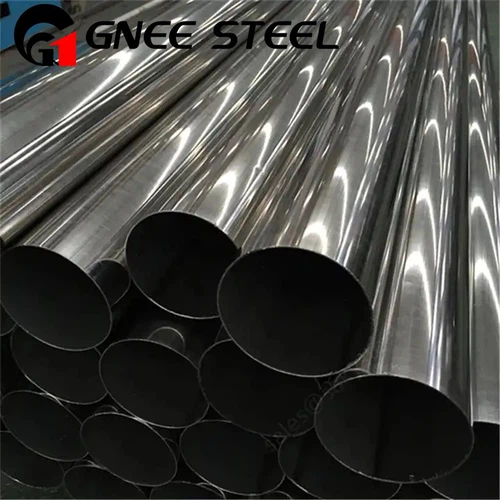
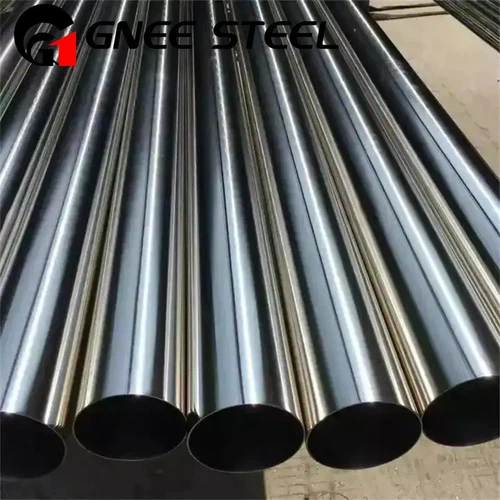
The last step involved in the manufacturing process is surface treatment and packaging. INCONEL 825 bars may be treated with treatments such as pickling, polishing or coating to improve surface characteristics and corrosion resistance. Once the surface treatment is completed, the bars are properly packaged to avoid any damage during transportation. As one of the suppliers of INCONEL 825, Lork Group ensures that the bars are properly packaged, meet export quality standards, and can be shipped all over the world.


