

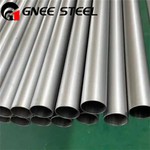
Tantalum Alloy
Our goal is to become your true partner in the field of tantalum alloy in China. GNEE is a professional supplier of austenitic stainless steel, super austenitic stainless steel, duplex steel, super duplex steel and other materials. Non-standard products can be customized according to customer requirements. We have a skilled engineering team dedicated to refining every stage, from product development and process improvement to production oversight, ensuring every product delivered meets rigorous quality and performance standards.The price is competitive and the product is quality-assured, which is a good choice for your long-term cooperation.






Why Choose Us
Our certification
GNEE Steel (Tianjin) Co., Ltd. has passed SGS certification and has successively obtained ISO9001, ISO14001, and ISO45001 system certifications.
Our equipment
At present, our company has a series of production equipment such as vacuum induction furnaces imported from the United States, vacuum consumable arc furnaces made in Germany, 2800mm four-roll reversible rolling mills, and vacuum annealing furnaces. At the same time, we also have more than 100 sets of various testing instruments, the main equipment includes American non-destructive testing systems, spectrometers, carbon and sulfur testers, universal testing machines, ultrasonic testing systems, fatigue testing machines, etc.
Our services
In the pre-sales stage, our team of experts will recommend the most suitable products according to the needs of customers and provide detailed technical consultation. During the sales period, we ensure timely delivery and provide installation guidance. For after-sales, we provide long-term technical support, warranty services and spare parts to help customers maximize the use of products and get reliable maintenance during use.
Advantages of Tantalum Alloy
High corrosion resistance
Tantalum alloys are exceptionally resistant to corrosion, making them perfect for use in harsh chemical environments. They remain unaffected by acids and other corrosive substances, ensuring equipment like heat exchangers and chemical reactors lasts longer and performs reliably.
Excellent conductivity
Tantalum alloys have excellent thermal and electrical conductivity. This makes them valuable in electronics for producing efficient capacitors that store and release energy effectively. Their ability to dissipate heat also helps electronic devices operate more efficiently and last longer.
Biocompatibility
Tantalum alloys are biocompatible, meaning they are well-tolerated by the human body without causing harmful reactions. This is crucial for medical applications, where tantalum implants are used in orthopedic and dental surgeries. Their biocompatibility promotes healing and integration with bone tissue, making them ideal for medical implants and devices.
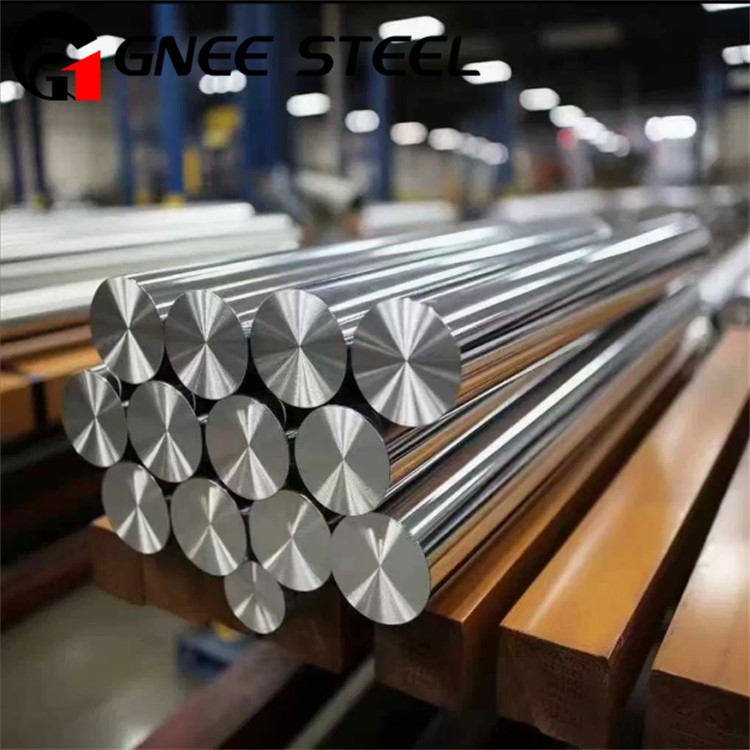
Specification of Tantalum Alloy
|
Alloys |
Hardness (HV) |
Density (g/cm3) |
Melting point (oc) |
Tensile strength (MPa) |
Yield Strength (MPa) |
Elastic Modulus (GPa) |
|
Ta – 2.5% W |
130 |
16.7 |
3005 |
345 |
230 |
195 |
|
Ta – 7.5% W |
245 |
16.8 |
3030 |
550 |
460 |
205 |
|
Ta – 10% W |
325–400 |
16.8 |
3025 |
1035–1165 |
875–1005 |
200 |
Types of Tantalum Alloy

Tantalum-tungsten alloys
Tantalum-tungsten alloys are known for their exceptional strength and high-temperature resistance. These alloys are typically used in applications that require materials to perform well under extreme conditions. Tantalum-tungsten alloys are particularly valuable in aerospace and defense industries where components must withstand high stress and heat.
Tantalum-niobium alloys
Tantalum-niobium alloys combine the unique properties of both metals, resulting in materials that are highly resistant to corrosion and have excellent thermal and electrical conductivity. These alloys are often used in electronics, where reliability and performance are critical.


Tantalum-hafnium alloys
Tantalum-hafnium alloys are prized for their high melting points and remarkable strength. These alloys can endure extreme temperatures, making them ideal for applications in the aerospace industry, such as turbine blades and rocket nozzles.
Tantalum-molybdenum alloys
Tantalum-molybdenum alloys offer a balance of strength, ductility, and corrosion resistance. These properties make them suitable for a wide range of industrial applications, including the production of chemical processing equipment and high-temperature furnace components.

Capacitors: Tantalum alloys are vital in making stable capacitors for electronics, ensuring reliable performance in devices like smartphones and computers.
Turbine components: Used in jet engines and rockets for parts like blades and vanes, thanks to their ability to handle high temperatures and tough conditions.
Implants: Biocompatible for implants such as hip replacements, offering durability and promoting healing in bone applications.
Surgical instruments: Reliable for surgical tools due to their ability to withstand sterilization processes, ensuring safety and effectiveness in medical procedures.
Corrosion-resistant equipment
Essential in chemical plants for equipment like heat exchangers and reactors, where resistance to chemicals and high temperatures is crucial for maintaining purity and durability.
Nuclear applications
Used in reactors for their ability to absorb neutrons and withstand high radiation, ensuring safety and efficiency in nuclear power generation.
High-temperature applications
Reliable in power plants for equipment like heat exchangers and turbines, where durability and resistance to corrosion are essential for maintaining efficiency.
Tantalum and tantalum alloy smelting ingots have coarse grain structures and must first be extruded or hot forged into billets (initial). After crushing its grains, it can be further processed into materials. Pure tantalum can be forged and opened at room temperature, and the opening temperature of tantalum alloy is generally 100 to 12000 degrees Celsius.
During the process, the surface of tantalum alloy oxidizes to form loose oxides, which can penetrate into the alloy matrix and form a hard permeable layer, resulting in cracks during processing. Therefore, efforts should be made to protect the metal surface from oxidation throughout the entire processing process. At present, the protection methods for tantalum billets include salt bath heating, coating, wrapping, inert gas protection, etc.
The extrusion method can produce metal tubes, rods, and profiles of different specifications; Tantalum ingots can be directly forged into rolled slabs. Glass coating can be used for lubrication.
Agent; The rolling of tantalum alloy sheet is usually carried out using a two roll or four roll rolling mill, with a pass deformation of 10% -15%.
Packing and Shipping of Tantalum Alloy
|
Packing |
Waterproof paper and steel strap packaging |
|
Shipping |
Shipped by road, sea, rail |
Other Service of Tantalum Alloy
|
Delivery Time |
20 days to 25 days for a 20' container |
|
Payment |
TT in advance, L/C at sight |
|
MOQ |
5000kg |
|
Inspection |
We can accept the third party's inspection |
FAQ