


Tungsten Alloy
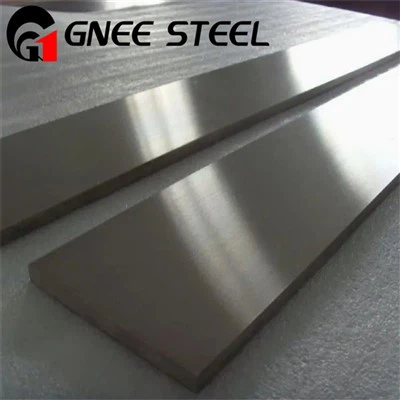
Our goal is to become your true partner in the field of tungsten alloy in China. GNEE is a professional supplier of austenitic stainless steel, super austenitic stainless steel, duplex steel, super duplex steel and other materials. Non-standard products can be customized according to customer requirements. We have a skilled engineering team dedicated to refining every stage, from product development and process improvement to production oversight, ensuring every product delivered meets rigorous quality and performance standards.The price is competitive and the product is quality-assured, which is a good choice for your long-term cooperation.



Why Choose Us
Our certification
GNEE Steel (Tianjin) Co., Ltd. has passed SGS certification and has successively obtained ISO9001, ISO14001, and ISO45001 system certifications.
Our equipment
At present, our company has a series of production equipment such as vacuum induction furnaces imported from the United States, vacuum consumable arc furnaces made in Germany, 2800mm four-roll reversible rolling mills, and vacuum annealing furnaces. At the same time, we also have more than 100 sets of various testing instruments, the main equipment includes American non-destructive testing systems, spectrometers, carbon and sulfur testers, universal testing machines, ultrasonic testing systems, fatigue testing machines, etc.
Our services
In the pre-sales stage, our team of experts will recommend the most suitable products according to the needs of customers and provide detailed technical consultation. During the sales period, we ensure timely delivery and provide installation guidance. For after-sales, we provide long-term technical support, warranty services and spare parts to help customers maximize the use of products and get reliable maintenance during use.
Advantages of Tungsten Alloy
Enhanced machinability
Enhancing tungsten alloys' machinability with the inclusion of alloying elements gives producers more freedom to shape the material for particular uses.
Improved durability and toughness
Tungsten alloys are more appropriate for uses where resistance to impact and deformation is essential, including in military and medical equipment, because of their increased toughness.
Personalised features for various uses
Customising alloy compositions expand the range of possible applications by enabling the fabrication of materials with attributes precisely calibrated for particular uses.
Specification of Tungsten Alloy
|
Element |
R05255 |
R05252 |
|
C |
0.01 |
0.01 |
|
O |
0.015 |
0.015 |
|
N |
0.01 |
0.01 |
|
H |
0.0015 |
0.0015 |
|
Fe |
0.01 |
0.01 |
|
Mo |
0.02 |
0.02 |
|
Nb |
0.1 |
0.5 |
|
Ni |
0.01 |
0.01 |
|
Si |
0.005 |
0.005 |
|
Ti |
0.01 |
0.01 |
|
W |
9.0–11.0 |
2.0–3.5 |
Types of Tungsten Alloy


Tungsten carbide: Tungsten carbide is made from tungsten and carbon. Known for its extreme hardness and wear resistance, it is often used in cutting tools, abrasives, and applications requiring durability. Tungsten carbide usually contains 70-97% tungsten, with the remainder being carbon and a binder metal like cobalt or nickel.
Tungsten-nickel-iron (w-ni-fe) alloys: These alloys are known for their balance of density, strength, and ductility. Often called tungsten heavy alloys, they are used in radiation shielding, counterweights, and aerospace components. Typical composition includes 90-97% tungsten, with nickel and iron.
Tungsten-nickel-copper (w-ni-cu) alloys: These alloys offer high density and strength but are non-magnetic, making them suitable for medical imaging, electrical contacts, and balance weights. They typically consist of 90-95% tungsten, with nickel and copper.
Tungsten-rhenium (w-re) alloys: Tungsten rhenium alloys combine tungsten with rhenium to improve ductility and high-temperature performance. Used in thermocouples, filaments, and rocket nozzles, typical composition is around 75-97% tungsten, with 3-25% rhenium.
Tungsten-silver (w-ag) alloys: Tungsten silver alloys known for their high electrical and thermal conductivity, these alloys are used in electrical contacts and applications needing efficient heat and electrical transfer. Composition usually includes 30-50% tungsten, with the rest being silver.
Tungsten-tantalum (w-ta) alloys: These alloys combine tungsten with tantalum to enhance corrosion resistance and high-temperature stability. Tungsten tantalum alloy used in chemical processing equipment, aerospace, and defense applications, typical composition includes 70-97% tungsten, with the remainder being tantalum.

Application of Tungsten Alloy
Aerospace applications: Tungsten alloys are essential in aerospace applications because of their exceptional density, strength, and resistance to extreme conditions. They serve as counterweights and ballast in aircraft, enhancing stability and balance.
Electronics and semiconductor applications: Tungsten alloys handle high thermal loads, making them crucial for power semiconductors and high-frequency devices. They are used in heat sinks, electrical contacts, and components for vacuum electronics, where high-temperature performance is essential.
Chemical processing applications: Tungsten alloys’ corrosion resistance makes them invaluable in chemical processing. They are used in reactors, heat exchangers, and vessels exposed to aggressive chemicals and high temperatures, ensuring longevity and reduced maintenance in demanding environments.
Defense and military applications: In the defense sector, tungsten alloys’ density and toughness make them perfect for armor-piercing projectiles and penetrators. They are also used in radiation shielding for military vehicles and equipment, absorbing harmful radiation while maintaining structural integrity.
Medical applications: In the medical field, tungsten alloys are used for radiation shielding in diagnostic and therapeutic equipment. Their density effectively blocks radiation while keeping designs compact, making them ideal for collimators and shielding plates in x-ray and radiation therapy machines. Tungsten alloys are also employed in isotope production containers and other medical devices requiring radiation protection.
Machining and tooling applications: Tungsten alloys are widely used in machining and manufacturing for their precision and durability. They are employed in boring bars, grinding quills, and cutting tools, where resistance to vibration and wear enhances performance.
Oil and gas industry applications
In the oil and gas industry, tungsten alloys are used as protective casings for downhole logging tools and components exposed to high pressures and temperatures.
Automotive applications
Their density and strength make tungsten alloys ideal for chassis weights, crankshaft balancing, and skid plates in the automotive industry.
Nuclear and radiation shielding applications
In nuclear applications, tungsten alloys provide maximum protection in compact designs, ideal for space-limited environments.
Aerospace and defense countermeasures
Tungsten alloys are used in aerospace and defense countermeasures, including flares and chaff, to protect aircraft from heat-seeking missiles.
These tungsten alloy custom are rust-free, anti-corrosion, and anodized as well as powder-coated. The tungsten alloy custom found here come with surface treatments namely painting, powder coating, plating, polishing, and more, for better sustainability.
The broad range of tungsten alloy custom available in distinct shapes, sizes, and distinct material capabilities such as aluminum, stainless steel, plastic, and steel alloys. You can pick from varieties of tungsten alloy custom such as perforated metal sheets for lathe machines, metals for welding services, custom stamping products, antique coins, and the list goes on.
Production Process of Tungsten Alloy
Powder metallurgy process
Powder metallurgy is one of the most common methods for producing tungsten alloys, especially for high-density and complex-shaped products.


Heat treatment process
Tungsten alloys May undergo various heat treatment steps during production to improve their mechanical properties and wear resistance.
Casting process
Tungsten alloy casting is typically used for producing large-sized or complex-shaped components.


Mechanical processing
Tungsten alloys are extremely hard, requiring specialized tools and techniques for machining.
Electroplating and surface treatment
For specific applications, tungsten alloys May undergo further surface treatment to improve corrosion resistance or enhance aesthetic appearance.


Casting and forging (for specific alloys)
In some specialized applications, tungsten alloys May also use a casting-forging method, such as with tungsten-copper alloys, where casting and forging are combined to produce high-strength alloys.
Packing and Shipping of Tungsten Alloy
|
Packing |
Waterproof paper and steel strap packaging |
|
Shipping |
Shipped by road, sea, rail |
Other Service of Tungsten Alloy
|
Delivery Time |
20 days to 25 days for a 20' container |
|
Payment |
TT in advance, L/C at sight |
|
MOQ |
5000kg |
|
Inspection |
We can accept the third party's inspection |
FAQ