Copper Alloys

Your Leading Copper Alloys Supplier


GNEE Steel Group is a supply chain-integrated enterprise including steel plates, coils, profiles, outdoor landscape design, and processing. Our products include Super Alloys, Inconel Alloys, Incoloy Alloys, Monel Alloys, Duplex Stainless Steel, Hastelloy Alloys, Titanium Alloys, Copper Alloys, Aluminum Alloys, Zirconium Alloys, Tantalum Alloy, Niobium Alloy, Molybdenum Alloy, Tungsten Alloy, Stainless Steel Pipes and Tubes, Stainless Steel Plates and Sheets, Stainless Steel Coils, Stainless Steel Pipe Fittings, Stainless Steel Rods and Bars.

Why Choose Us?

Rich Experience

GNEE Steel Group was founded in 2008 and has more than 10 years of experience in manufacturing steel.


One-Stop Solution

GNEE Steel Group is a professional, one-stop supply chain enterprise for steel products, covering product research and development, sales, promotion, and providing professional services.

Broad Market

The company's products are sold to Europe, Australia, and exported to more than 70 countries around the world. It has a total of more than 800 global cooperative enterprises, which include 15 shipbuilding companies, 143 engineering project companies, and 23 boiler machinery manufacturers.

Delivery on Time

Our annual product sales volume is 1 million tons, our inventory is 200,000 tons, and our annual export volume has reached 80,000 tons, ensuring on-time delivery.

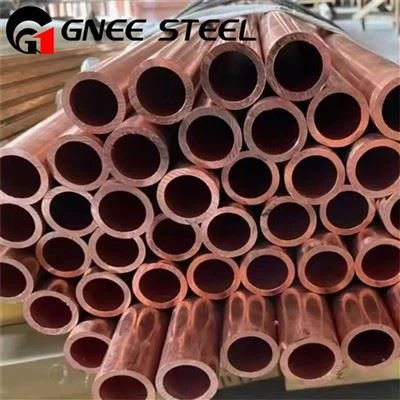


First 12 Last 1/2
Definition of Copper Alloys


Copper alloys are metal alloys that have copper as their principal component. They have high resistance against corrosion. The best known traditional types are bronze, where tin is a significant addition, and brass, using zinc instead.


What are Advantages of Copper Alloys?


Long Life-span Granted by Corrosion Resistance
Copper alloys are praised for their superb resistance to corrosion. This is due to the natural ability of copper to form a protective oxide layer on its surface when exposed to air, which acts as a barrier against corrosion. The addition of other elements to copper, such as tin, nickel and zinc, can further enhance the corrosion resistance of copper alloys.


High Conductivity, Satisfying Different Conditions
Apart from being in a long life span, copper alloys are also known for their high electrical conductivity, which is second only to silver. Copper alloys have a high number of free electrons that can move easily through the material, allowing electricity to flow with minimal resistance. This property makes copper alloys viable for electrical and electronic applications.
One of the most common uses of copper alloys is in electrical wiring. Copper wiring is used in homes, commercial buildings and industrial applications due to its high conductivity and low resistance. Copper alloys are also used in electrical connectors, switches and other electrical components that require reliable and efficient performance.
In addition to their high electrical conductivity, copper alloys also have terrific thermal conductivity. This property makes copper alloys ideal for use in heat exchangers and other applications that require efficient heat transfer.


Resistance to Biofouling and Repels Algae and Barnacles
The natural antimicrobial properties of copper, combined with its ability to form a protective oxide layer, make it a feasible material for marine applications. Copper alloys can effectively inhibit the growth of microorganisms, such as bacteria and algae, on their surfaces, reducing the buildup of biofouling and improving the performance and efficiency of marine structures.
Copper-nickel alloys in particular, have been found to be highly effective in preventing biofouling. These alloys can resist the attachment of marine organisms and are commonly used in marine applications, such as ship hulls, propellers and piping systems.


Strength Retention, Toughness and Brittleness
Copper alloys are well known for their excellent mechanical properties, including high strength, ductility and toughness. These properties make copper alloys a perfect material for a wide range of applications, particularly those that require reliable performance in demanding conditions.
Most copper alloys can maintain their strength and mechanical properties over a wide range of temperatures and environments. Copper-nickel alloys, for instance, have high strength and toughness even at low temperatures, making them suitable for use in cryogenic applications. Copper-zinc alloys, such as brass, are also acclaimed for their high strength and toughness and are commonly used in applications that require good wear resistance, such as worm gears and bearings.
Copper alloys are also known for their resistance to fatigue and stress corrosion cracking. These properties make copper alloys a preferred material for applications that require reliable performance over long periods of time, such as in aerospace and automotive applications.


Excellent Machinability and Ease of Fabrication
Copper alloys have excellent machinability due to their unique combination of properties, including their high thermal conductivity, low hardness and good ductility. These properties allow copper alloys to be easily machined, shaped and formed into complex parts and components.
High thermal conductivity means that copper alloys dissipate heat quickly during machining, reducing the risk of thermal damage to the workpiece and the cutting tool. Additionally, the low hardness of copper alloys means that they can be machined using low cutting forces and speeds, which reduces tool wear and increases tool life.
In other words, copper alloys are equipped with excellent machinability. Copper alloys are softer than many other metals, such as steel and titanium, making them easier to machine and form into complex shapes and parts. This property makes copper alloys a suitable material for a wide range of machining and fabrication processes, including milling, turning, drilling and grinding.


What are Features of Copper Alloys?

Electrical Conductivity
As previously mentioned, copper offers good electrical conductivity. While some copper alloys are more conductive than others, all copper alloys are electrically conductive to some degree.


High Thermal Conductivity
Copper is an excellent conductor of heat, making it suitable for applications requiring rapid heat transfer.


Non-Magnetic
Copper is non-sparking and non-magnetic, making it an ideal choice for special tools and military applications.


Recyclable
Copper can be recycled an infinite amount of times without losing any of its properties.

Corrosion Resistance

Copper has low reactivity, meaning it doesn’t tend to corrode when exposed to different elements such as moisture, certain chemicals, etc.

Durability

Copper and copper alloys are very strong and durable, allowing for long-lasting products and equipment.

Antimicrobial Properties

Copper alloys have specifically been shown to reduce microbial contamination, making them an excellent supplement to existing infection control practices.


Common Types of Copper Alloys
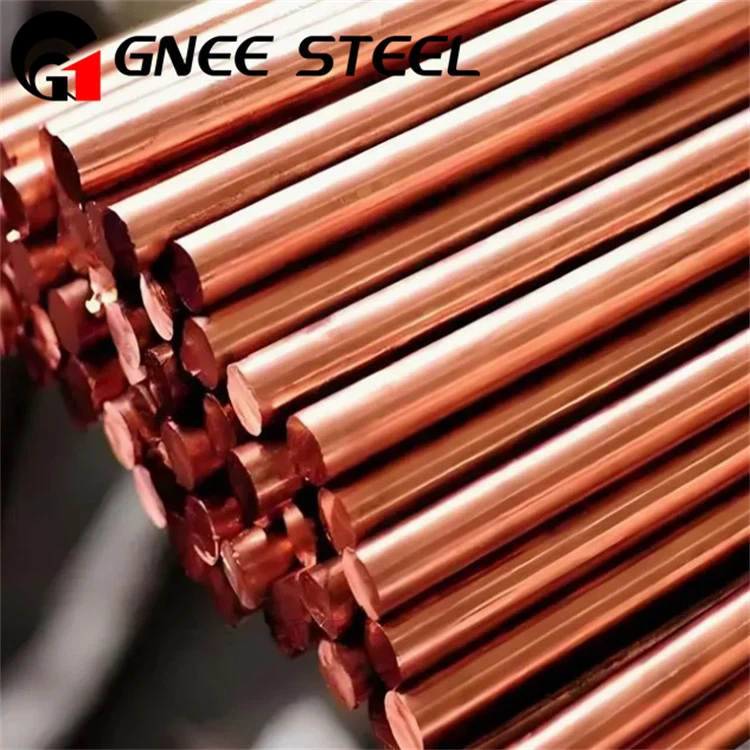
copper bar
copper flat bar
copper pipe
copper plate

Electrolytic-tough Pitch (ETP) Copper
Electrolytic tough pitch copper, UNS C11000, is pure copper (with a maximum of 0.0355% of impurities) refined by electrolytic refining process and it is the most widely used grade of copper all over the world. ETP has a minimum conductivity rating of 100% IACS and is required to be 99.9% pure. It has 0.02% to 0.04% oxygen content (typical). Electrical wiring is the most important market for the copper industry. This includes structural power wiring, power distribution cable, appliance wire, communications cable, automotive wire and cable, and magnet wire. Roughly half of all copper mined is used for electrical wire and cable conductors. Pure copper has the best electrical and thermal conductivity of any commercial metal. The conductivity of copper is 97% that of silver. Due to its much lower cost and greater abundance, copper has traditionally been the standard material used for electricity transmission applications.


Brass
Brass is is the generic term for a range of copper-zinc alloys. Brass can be alloyed with zinc in different proportions, which results in a material of varying mechanical, corrosion and thermal properties. Increased amounts of zinc provide the material with improved strength and ductility. Brasses with a copper content greater than 63% are the most ductile of any copper alloy and are shaped by complex cold forming operations. Brass has higher malleability than bronze or zinc. The relatively low melting point of brass and its fluidity make it a relatively easy material to cast. Brass can range in surface color from red to yellow depending on the zinc content. Some of the common uses for brass alloys include costume jewelry, locks, hinges, gears, bearings, hose couplings, ammunition casings, automotive radiators, musical instruments, electronic packaging, and coins. Brass and bronze are common engineering materials in modern architecture and primarily used for roofing and facade cladding due to their visual appearance.


Bronze
The bronzes are a family of copper-based alloys traditionally alloyed with tin, but can refer to alloys of copper and other elements (e.g. aluminum, silicon, and nickel). Bronzes are somewhat stronger than the brasses, yet they still have a high degree of corrosion resistance. Generally they are used when, in addition to corrosion resistance, good tensile properties are required. For example, beryllium copper attains the greatest strength (to 1,400 MPa) of any copper-based alloy.


Copper-nickel Alloy
Cupronickels are copper-nickel alloys that contain typically from 60 to 90 percent of copper and nickel as the main alloying element. The two main alloys are 90/10 and 70/30. Other strengthening elements, such as manganese and iron, may be also contained. Cupronickels have excellent resistance to corrosion caused by sea water. Despite its high copper content, cupronickel is silver in colour. The addition of nickel to copper also improves strength and corrosion resistance, but good ductility is retained.


Nickel Silver
Nickel silver, known also as German silver, nickel brass or alpacca, is a copper alloy with nickel and often zinc. For example, UNS C75700 nickel silver 65-12 copper alloy has good corrosion and tarnish-resistance, and high formability. Nickel silver is named due to its silvery appearance, but it contains no elemental silver unless plated.


Process of Copper Alloys


Mining
Mining of copper ores is usually done in large open pit mines. These are open, stepped holes in the ground that are gradually dug deeper. Explosives are used to blast the rock, and the resulting boulders are transported for crushing into smaller pieces for processing.


Extraction
According to the two common types of copper ore, there are two main purification processes. A hydrometallurgical process is used for oxide ores. The crushed ore is heaped and an acid-leaching solution is percolated through the heap. This creates a pregnant leach solution. A pyrometallurgical process is used for sulfide ores. The extraction of the ore is done by froth flotation and thickening according to the density of the particles.


Purification
For oxide ores, hydrometallurgy is used. This means that the pregnant leach solution is sent to a solvent extraction process to concentrate the copper in the solution. This solution is then sent to electrowinning, where electricity is used to deposit the solid copper. For sulfide ores, pyrometallurgy is used, which means that a smelter is used to create the raw copper. This is then purified further by electrorefining.


Alloying
Copper alloys are manufactured by first melting the alloying material, and then melting the copper to add to it. The molten mixture is then cast and allowed to cool and solidify.


Electrorefining
Electrorefining of copper involves electrolytically dissolving impure copper material into solution. Pure copper is electrochemically deposited on an electrode by applying an electrical current through the solution. This removes impurities from the copper to achieve higher purity. However, the process is expensive and has a very high electrical demand.


How Do You Maintain Copper Alloys?
 

Clean Regularly & Gently
Cleaning your copper alloy pieces regularly and gently is the best way to maintain them. You can use a soft cloth dipped in warm soapy water to gently wipe away dirt, dust, and oils from your items. If a more thorough cleaning is needed, use a mild detergent solution or an alcohol-based cleaner with lukewarm water to help remove tarnish and oxidation from the piece. Do not use abrasive materials such as steel wool or scouring pads, as this may damage the finish of the item.


Store Properly
Proper storage of your copper alloy pieces is essential for keeping them in good condition over time. When storing any kind of metal artwork, it’s important to keep it away from extreme temperatures (hot or cold), humid environments, and direct sunlight – all things that can cause corrosion or discoloration over time. Storing items in airtight containers will also help prevent tarnishing due to exposure to oxygen in the air. Also, be sure that other metals won’t rub against each other because this will cause scratches on the surface of your copper alloy pieces.


Limit Exposure to Moisture
When wearing copper alloy jewelry like rings or necklaces, try not to expose it to excessive moisture, such as sweat or swimming pools, for long periods of time, as this can cause discoloration or tarnish on the surface of the piece. It’s best to remove any jewelry before showering or swimming so that you can preserve its original sheen for longer periods of time.


The Considerations for Buying


Electrical Conductivity
Copper has the highest conductivity of the engineering metals. Silver or other elements may be added to increase strength, softening resistance or other properties without major loss of conductivity.


Thermal Conductivity
This property is similar to electrical conductivity. Alloys of copper may be used for this property, where good corrosion resistance compensates for loss of conductivity with increased alloying.


Colour and Appearance
Many of the copper alloys have a distinctive colour, which may change as the object weathers. For most of alloys it is easy to prepare and maintain the surface to a high standard, even in adverse corrosion conditions. Many of the alloys are used in decorative applications, either in their native form or after metal plating. The alloys have specific colours, ranging from the salmon pink of copper through yellow, gold and green to dark bronze in the weathered condition. Atmospheric exposure can produce a green or bronze surface, and prepatinated alloys are available in some product forms.


Ease of Fabrication
Most of the alloys can be easily cast, hot or cold formed, machined, joined etc.These alloys are often the standard against which other metals are compared.


Our Certificate


Its stainless steel pipe production technology has reached the world's average technical level. It has been recognized by dozens of project companies and has become a star enterprise in Asia.


productcate-1-1

Our Service


The Group adheres to the principle of "one-stop service, making choices easier". Continuing to meet the different needs of global customers in the field of the world's steel supply chain. A professional sales team provides customers with first-class services. A rigorous procurement and quality inspection team selects high-quality raw materials. A shipping and logistics team that ensures the protection of product transportation.


Contact Us
write to us
Email: ss@gneesteel.com
visiting us
Address: No.4-1114, Beichen Building, Beicang Town, Beichen District, Tianjin, China
Fax
Fax: +86-372-5055135
Contact directly
Phone: +86 15824687445
TEL:+86-372-5055135


Frequently Asked Questions


Q: What are Uses of Copper and Copper Alloys?

A: Historically, alloying copper with another metal, for example tin to make bronze, was first practiced about 4000 years after the discovery of copper smelting, and about 2000 years after “natural bronze” had come into general use. An ancient civilization is defined to be in the Bronze Age either by producing bronze by smelting its own copper and alloying with tin, arsenic, or other metals. The major applications of copper are electrical wire (60%), roofing and plumbing (20%), and industrial machinery (15%). Copper is used mostly as a pure metal, but when greater hardness is required, it is put into such alloys as brass and bronze (5% of total use). Copper and copper-based alloys including brasses (Cu-Zn) and bronzes (Cu-Sn) are widely used in different industrial and societal applications. Some of the common uses for brass alloys include costume jewelry, locks, hinges, gears, bearings, ammunition casings, automotive radiators, musical instruments, electronic packaging, and coins. Bronze, or bronze-like alloys and mixtures, were used for coins over a longer period. is still widely used today for springs, bearings, bushings, automobile transmission pilot bearings, and similar fittings, and is particularly common in the bearings of small electric motors. Brass and bronze are common engineering materials in modern architecture and primarily used for roofing and facade cladding due to their visual appearance.

Q: What are the Properties of Copper Alloys?

A: Material properties are intensive properties, that means they are independent of the amount of mass and may vary from place to place within the system at any moment. The basis of materials science involves studying the structure of materials, and relating them to their properties (mechanical, electrical etc.). Once a materials scientist knows about this structure-property correlation, they can then go on to study the relative performance of a material in a given application. The major determinants of the structure of a material and thus of its properties are its constituent chemical elements and the way in which it has been processed into its final form.
 
Mechanical Properties of Copper Alloys
Materials are frequently chosen for various applications because they have desirable combinations of mechanical characteristics. For structural applications, material properties are crucial and engineers must take them into account.
 
Strength of Copper Alloys
In mechanics of materials, the strength of a material is its ability to withstand an applied load without failure or plastic deformation. Strength of materials basically considers the relationship between the external loads applied to a material and the resulting deformation or change in material dimensions. Strength of a material is its ability to withstand this applied load without failure or plastic deformation.
 
Ultimate Tensile Strength
Ultimate tensile strength of electrolytic-tough pitch (ETP) copper it is about 250 MPa.
Ultimate tensile strength of carthridge brass – UNS C26000 is about 315 MPa.
Ultimate tensile strength of aluminium bronze – UNS C95400 is about 550 MPa.
Ultimate tensile strength of tin bronze – UNS C90500 – gun metal is about 310 MPa.
Ultimate tensile strength of copper beryllium – UNS C17200 is about 1380 MPa.
Ultimate tensile strength of cupronickel – UNS C70600 is about 275 MPa.
Ultimate tensile strength of nickel silver – UNS C75700 is about 400 MPa.
The ultimate tensile strength is the maximum on the engineering stress-strain curve. This corresponds to the maximum stress that can be sustained by a structure in tension. Ultimate tensile strength is often shortened to “tensile strength” or even to “the ultimate.” If this stress is applied and maintained, fracture will result. Often, this value is significantly more than the yield stress (as much as 50 to 60 percent more than the yield for some types of metals). When a ductile material reaches its ultimate strength, it experiences necking where the cross-sectional area reduces locally. The stress-strain curve contains no higher stress than the ultimate strength. Even though deformations can continue to increase, the stress usually decreases after the ultimate strength has been achieved. It is an intensive property; therefore its value does not depend on the size of the test specimen. However, it is dependent on other factors, such as the preparation of the specimen, the presence or otherwise of surface defects, and the temperature of the test environment and material. Ultimate tensile strengths vary from 50 MPa for an aluminum to as high as 3000 MPa for very high-strength steels.
 
Yield Strength
Proof strength of electrolytic-tough pitch (ETP) copper is between 60-300 MPa.
Yield strength of aluminium bronze – UNS C95400 is about 250 MPa.
Yield strength of tin bronze – UNS C90500 – gun metal is about 150 MPa.
Yield strength of copper beryllium – UNS C17200 is about 1100 MPa.
Yield strength of cupronickel – UNS C70600 is about 105 MPa.
Yield strength of nickel silver – UNS C75700 is about 170 MPa.
The yield point is the point on a stress-strain curve that indicates the limit of elastic behavior and the beginning plastic behavior. Yield strength or yield stress is the material property defined as the stress at which a material begins to deform plastically whereas yield point is the point where nonlinear (elastic + plastic) deformation begins. Prior to the yield point, the material will deform elastically and will return to its original shape when the applied stress is removed. Once the yield point is passed, some fraction of the deformation will be permanent and non-reversible. Some steels and other materials exhibit a behaviour termed a yield point phenomenon. Yield strengths vary from 35 MPa for a low-strength aluminum to greater than 1400 MPa for very high-strength steels.
 
Hardness of Copper Alloys
Vickers hardness of electrolytic-tough pitch (ETP) copper depends greatly on the temper of the material, but it is between 50 – 150 HV.
Brinell hardness of carthridge brass – UNS C26000 is approximately 100 MPa.
Brinell hardness of aluminium bronze – UNS C95400 is approximately 170 MPa. The hardness of aluminum bronzes increases with aluminum (and other alloy) content as well as with stresses caused through cold working.
Brinell hardness of tin bronze – UNS C90500 – gun metal is approximately 75 BHN.
Rockwell hardness of copper beryllium – UNS C17200 is approximately 82 HRB.
Brinell hardness of cupronickel – UNS C70600 is approximately HB 100.
Rockwell hardness of nickel silver – UNS C75700 is approximately 45 HRB.

Q: What Is The Difference Between Brass And Bronze?

A: Brasses are copper-based alloys that contain zinc as the principal alloying element. This zinc copper alloy may also contain minor amounts of other elements such as iron, nickel, silicon, or aluminum. A typical example is 60-40 yellow brass, designated as C85500. The zinc copper alloy contains 59% – 63% copper, around 40% zinc, and 0.8% aluminum. It is the high zinc content that would have the material classified as brass. Bronzes are copper-based alloys in which the major alloying element is not zinc or nickel. Originally, the term “bronze” described copper alloys that used tin as the only or principal alloying element. That nomenclature has evolved, however. The term bronze is now used with a preceding modifier that describes the type of bronze it is, by indicating the major alloying element(s). For example, MTEK 175/C95400 is called an aluminum bronze because it is made up of 11% aluminum in addition to 85% copper and 4% iron. MTEK 83-7-7-3/C93200 is a high-lead tin bronze because it contains 7% tin and 7% lead in addition to 83% copper and 3% zinc. These examples meet the criteria of a bronze. The major alloying element is not zinc or nickel, and its modifying words fully describe the alloys as having substantial quantities of aluminum in the case of aluminum bronze and lead and tin in high lead-tin bronze. With the differentiation of brass and bronze established, our discussions will be limited largely to the bronze family of alloys. Bronze alloys are uniquely suited to a wide range of industrial applications.

Q: What other Copper Alloys are there besides common brass and bronze?

A: Aluminum Bronze
Aluminum bronzes are a family of alloys containing aluminum as the principal alloying element. Although, they may also contain iron and nickel. Aluminum significantly adds to alloy properties to the point that its strength is like that of a medium carbon steel. Aluminum bronzes have many other valuable characteristics.
Initial applications stemmed mainly from the strength and corrosion-resistant properties of the material. The recognition of other properties led to the use of aluminum bronzes for a variety of parts requiring hardness, resistance to wear and galling, and low magnetic permeability. Other features include resistance to cavitation, erosion, softening, and oxidation at elevated temperatures. These properties, together with ease of weldability, have greatly extended their uses.
There are some major groups in the Aluminum Bronze family: Aluminum Bronze and Nickel Aluminum Bronze. Aluminum Bronze contains approximately 9-14% aluminum and 4% iron while Nickel Aluminum Bronze contains approximately 9-11% aluminum, 4% iron, and 5% nickel. That addition of nickel in the latter further improves the corrosion resistance of a material that is already strong in this area.
Being responsive to thermal treatment allows the alloys in this group with less than 10% aluminum to have corrosion resistance significantly enhanced for use in aggressive environments. Alloys with aluminum contents over 12% possess excellent compressive strength and excellent anti-galling characteristics. These properties produce alloys ideally suited for the deep drawing and forming of stainless steels. Additionally, this group of bronzes possess high mechanical properties and is used for gears, wear plates, corrosion-resistant applications, bearings, glands, and structural parts.
Some typical Aluminum Bronzes include: MTEK 125/C95200, MTEK 175/C95400, MTEK 275/C95900 and MTEK 375.
 
Nickel Aluminum Bronze
This group of alloys contains nickel and is primarily selected where a combination of high strength, corrosion resistance, and resistance to cavitation and erosion damage is required. They have a history of reliable performance in seawater applications. They perform particularly well under stagnant conditions because resistance to pitting and crevice corrosion attack is superior to that of the 300 series stainless steels. The alloys are stronger than 300 series stainless steel.
Alloys of both the aluminum bronze family and the nickel aluminum bronze family possess excellent machinability, are easily weldable, and can be successfully joined to many other dissimilar alloys. This versatility allows their use in a variety of applications.
Typical alloys in this group include: MTEK 230/C95500 and MTEK 230-N/C95800.
 
Tin Bronze
This group of alloys consists of copper with the major alloying element being tin. The presence of tin provides high mechanical properties at the expense of higher metal cost. The high tin bronzes, however, are particularly suited for certain applications for which the less expensive bronzes are not suitable. The variations in chemistry, particularly the addition of lead, are primarily designed to enhance machinability characteristics and pressure tightness. Alloys in this group are particularly resistant to corrosion caused by certain specific materials.
In general, these alloys can operate as bearings at maximum temperatures up to 500°F / 260°C and loads of 4000 lbs. per square inch. Bearings of these alloys, however, must be very carefully aligned and positively lubricated, and they require harder shafts than do the high-leaded bronzes.
Tin bronze alloys are regularly used in heavy load / low-speed service applications, as such they are the premier gear alloys for long life under heavy loads. They are used for piston pin bushings, valve guides, rolling mill bearings, worm bearings, pilot bearings, and linkage bushings for the machine tool industry. They are also used for steam fittings, pump impellers, and seal rings.
Some popular alloys in the tin bronze group are: MTEK Tin Bronze/C90500, MTEK 65/C90700, Navy G 1% Lead/C92300, MTEK 87-11-0-1/C92500, and MTEK Leaded Tin Bronze/C92700.
 
High Lead Tin Bronze (Bearing Bronze)
Four alloys listed below contain lead in quantities up to 25%. They are a representative group of high-lead tin bronzes most widely used for bearings and bushings. Their load-carrying capacity varies directly with their tin content. However, it will also be impacted by the presence of small amounts of other alloying elements such as nickel and phosphorus. Lead in the alloy is insoluble and is finely dispersed mechanically in the copper-tin matrix. This combination gives good load-carrying capacity and toughness due to the copper-tin content and gives lubricity, conformability, and embeddability due to the free lead that is frozen into the alloy.
These alloys are superior bearing alloys when all properties and costs are considered. They range from maximum operating temperatures of 450°F / 230°C and load capacities of 4,000 lbs. per square inch for those with the highest tin content to maximum operating temperatures of 400°F / 200°C and load capacities of 3,500 lbs. per square inch for those lowest in tin content.
Typical bearing bronzes in this family are: MTEK 83-7-7-3/C93200, MTEK 80-10-10/C93700, MTEK 79-6-15 Hi Lead/C93900, and MTEK 943/C94300.
 
Bearium Alloys
For over 60 years, Bearium® Metals have been chosen for performance under the toughest operating conditions. These are high-lead tin bronze alloys containing virgin copper, tin, and specially processed lead. Bearium® metals can be used where other bearing materials may fail due to speed, load, temperature, or where lubrication is difficult, impossible, or simply neglected.
There are four grades available, B-4, B-8, B-10, B-11. B-4 has the highest lead content and is most suitable for softer mating parts. B-11 has the lowest lead content and is more often used when high strength is more important.
The chemical composition alone does not entirely explain the superior frictional properties found in Bearium Metal. The elevated performance is also due in great measure to the processing of the ingredients used. This results in a metallurgical structure that is superior to that found in other bearing materials even though they may have identical chemical compositions.
There are four grades of Bearium® alloys. The primary difference between the grades is the amount of lead contained. Bearium®B-4 contains 26% lead, B-8 has 22%, B-10 has 20%, and B-12 contains 18% lead.
 
Manganese Bronze
The family of Manganese Bronzes is primarily known for its extremely high strength and its ability to resist the corrosive effects of seawater and brine. Tensile strengths ranging from 60,000 psi to 110,000 psi are readily obtainable depending on the composition of the alloy chosen. Great care must be taken when using these alloys as bearings because manganese bronze and steel do not wear well together. Wear is rapid, and under high loads and speed, a seizure can occur. Alignment must be precise and positive lubrication is essential.
Both aluminum bronze and manganese bronzes require close foundry process controls. Both groups of alloys can be detrimentally affected by small amounts of impurities, so excellent foundry practice and cleanliness in the melting process is essential. Where alloys of tin bronze, high leaded tin bronze, manganese bronze, and aluminum bronzes are poured, close internal control and discipline are necessary.
Manganese bronzes are used for trunnion bearings, heavily stressed gears, gearshift forks, impellers, marine propellers, valve stems, worm gears, and worms. It is also used for highly stressed machine parts.
Typical manganese bronzes are: MTEK Hi Tensile/C86300, MTEK Leaded Manganese/C86400, MTEK Low Tensile/C86500, and MTEK Med Tensile/C86200.

Q: What types of Copper Alloys are there?

A: Copper are essentially commercially pure copper, which ordinarily is very soft and ductile, containing up to about 0.7% total impurities. These materials are used for their electrical and thermal conductivity, corrosion resistance, appearance and colour, and ease of working. They have the highest conductivity of the engineering metals and are very ductile and easy to braze, and generally to weld. Typical applications include electrical wiring and fittings, busbars, heat exchangers, roofs, wall cladding, tubes for water, air and process equipment.
 
High copper alloys contain small amounts of various alloying elements such as beryllium, chromium, zirconium, tin, silver, sulphur or iron. These elements modify one or more of the basic properties of copper, such as strength, creep resistance, machinability or weldability. Most of the uses are similar to those given above for coppers, but the conditions of application are more extreme.
 
Brasses are copper zinc alloys containing up to about 45% zinc, with possibly small additions of lead for machinability, and tin for strength. Copper zinc alloys are single phase up to about 37% zinc in the wrought condition. The single phase alloys have excellent ductility, and are often used in the cold worked condition for better strength. Alloys with more than about 37% zinc are dual phase, and have even higher strength, but limited ductility at room temperature compared to the single phase alloys. The dual phase brasses are usually cast or hot worked. Typical uses for brasses are architecture, drawn & spun containers and components, radiator cores and tanks, electrical terminals, plugs and lamp fittings, locks, door handles, name plates, plumbers hardware, fasteners, cartridge cases, cylinder liners for pumps.
 
Bronzes are alloys of copper with tin, plus at least one of phosphorus, aluminium, silicon, manganese and nickel. These alloys can achieve high strengths, combined with good corrosion resistance. They are used for springs and fixtures, metal forming dies, bearings, bushes, terminals, contacts and connectors, architectural fittings and features. The use of cast bronze for statuary is well known.
 
Copper nickel are alloys of copper with nickel, with a small amount of iron and sometimes other minor alloying additions such as chromium or tin. The alloys have outstanding corrosion resistance in waters, and are used extensively in sea water applications such as heat exchangers, condensers, pumps and piping systems, sheathing for boat hulls.
 
Nickel silvers contain 55 – 65% copper alloyed with nickel and zinc, and sometimes an addition of lead to promote machinability. These alloys get their misleading name from their appearance, which is similar to pure silver, although they contain no addition of silver. They are used for jewellery and name plates and as a base for silver plate (EPNS), as springs, fasteners, coins, keys and camera parts.

Q: What are the basic properties of Copper Alloys?

A: Conductivity. Copper is one of the most thermal and electrically conductive materials available. This makes it ideal for use in electronic wiring and connections.
Strength. In its pure form, copper is malleable, which makes it easy to form into wires or beat into thin sheets for cladding. The addition of tin, nickel, and other metals helps to create copper alloys that are stronger and more durable.
Formability. Copper’s malleability allows for the creation of conductive miniaturized electronic components and wires without heat treatment. For heavy-duty applications, alloys can enhance the strength of copper while maintaining its cold forming properties.
Joining. Pure copper and copper alloys are easy to solder and braze, allowing them to cleanly join with other metals. Its formability further makes copper and its alloys easy to rivet, bolt, and crimp.
Corrosion. Copper and its alloys exhibit exceptional corrosion resistance to moisture, saltwater, and a variety of chemicals.
Antimicrobial. Uncoated Copper is capable of killing up to 99.9% of certain microbes within two hours of exposure.
Color. Copper’s attractive reddish color can be modified by the addition of other metals to create colors ranging from gold and bronze to bright silver and matte gray.

Q: How to choose Copper Alloys?

A: Electrical conductivity: copper has the highest conductivity of the engineering metals. Silver or other elements may be added to increase strength, softening resistance or other properties without major loss of conductivity.
Thermal conductivity: this property is similar to electrical conductivity. Alloys of copper may be used for this property, where good corrosion resistance compensates for loss of conductivity with increased alloying.
Color and appearance: many of the copper alloys have a distinctive color, which may change as the object weathers. For most of alloys it is easy to prepare and maintain the surface to a high standard, even in adverse corrosion conditions. Many of the alloys are used in decorative applications, either in their native form or after metal plating. The alloys have specific colors, ranging from the salmon pink of copper through yellow, gold and green to dark bronze in the weathered condition. Atmospheric exposure can produce a green or bronze surface, and prepatinated alloys are available in some product forms.

Q: What methods can be used to harden Copper Alloys?

A: There are four common ways to harden (strengthen) copper. A fifth, spinodal composition, is currently used commercially only in certain copper-nickel-tin alloys. Combinations of strengthening mechanisms are often used to provide higher mechanical properties in high-copper alloys.
 
Strain Hardening. The application of cold work, usually by rolling or drawing, hardens copper and copper alloys. Strength, hardness and springiness increase, while ductility decreases. Conductivity is reduced to a small extent, normally not to the extent that it hinders use of the alloys in electrical products. The effect of cold work can be removed by annealing, in which case full conductivity returns. Strain hardening is the only strengthening mechanism that can be used with pure copper.
 
Solid-Solution Hardening. Alloying elements that remain dissolved in solidified copper strengthen the lattice structure. If the addition is within the limit of the element’s solid solubility, no secondary phases form, and the appearance under the microscope is similar to that of pure copper.
 
All dissolved additions to copper reduce electrical conductivity, making the balance between strengthening gained and conductivity lost necessarily a compromise. The extent of this effect on conductivity varies widely from element to element. Cadmium additions, for example, affect conductivity least, while others, such as phosphorus, tin and zinc, are more detrimental. In any case, cold working can be used to increase strength beyond the limits of solid solution hardening, and the two strengthening mechanisms are frequently used in combination.
 
Precipitation Hardening. Some alloying elements exhibit higher solubility in solid copper when hot than when cold. This means they can be dissolved by solution treatment (solution annealing) at high temperatures, around 950–1000°C, and then removed from solution by a precipitation (or "aging") treatment at a lower temperature, commonly around 1200°F (650°C). This practice produces a fine precipitate throughout the metal that strengthens the matrix without spoiling the conductivity. In fact, conductivity improves as precipitates drop out of solution. Beryllium, chromium and zirconium are common examples of this type of addition. Combinations of nickel with silicon or phosphorus are also useful.
 
Dispersion Strengthening. Particles of insoluble or even inert materials can also be finely distributed within a copper matrix by metallurgical, mechanical or chemical means, i.e., without having to resort to heat treatment. Being insoluble, the particles have little effect on electrical conductivity.

Q: What are the advantages of Copper Alloys?

A: Strength
Copper alloys are, maybe above all else, very strong and durable. When you incorporate them into products or equipment, you won’t have to worry about how they’ll hold up. They will stand the test of time and continue to perform for you well into the future.
 
Good electrical and thermal conductivity
Looking for an alloy that offers you good electrical and thermal conductivity? Look no further than copper alloys, which are known for being good when it comes to both of these things. There are some copper alloys that are better suited for handling electricity and heat than others. But overall, you’ll find that copper alloys always deliver in the electrical and thermal conductivity department.
 
Ductile
You can get your hands on copper alloys that come in many different forms. This is due in large part to the fact that copper alloys have a ductility that allows for them to be produced in different ways without sacrificing any strength.
 
Very resistant to corrosion
If you’re going to be using copper alloys in products that will be placed into harsh conditions, it’s essential for them to be resistant to corrosion. You’ll quickly find that copper alloys are more than ready to stand up to any challenge as a result of their corrosion resistance. You won’t have to worry about copper alloys succumbing to the strain they’ll face in certain environments.

Q: What are your cleaning tips for Copper Alloys?

A: Sometimes, cleaning and brightening copper alloys seems more like an art than a science. The slightest adjustment in your process or chemistries can create vastly different results. Switching out your mineral acid wash for an organic one can help you cut down on rinse cycles, improve the safety of your workers, and keep your waste treatment process in-house. Here’s how.
Challenges with cleaning copper alloys with mineral acids.
Mineral acids require multiple rinse steps. When you add steps to any process, the chance you’ll make an error increases. So does the risk of contamination. More rinse steps also make it more difficult to maintain a clean rinse liquid.
Mineral acids are hazardous. They’re unstable, give off harmful fumes, and can add dust to the air that is harmful to your workers. Chelators and phosphates pollute wastewater and require you to treat it off-site, increasing costs.
Mineral acids can go too far. Mineral acids are very potent. There is little room for error when cleaning and brightening copper alloys with mineral acids. Often, this results in over-etching and the need to reprocess your parts.
A safer, simpler solution is to use a methane sulfonic acid based product.
Organic acids are safer alternatives to mineral acids. They are excellent deoxidation agents, so replacing your mineral acid with an organic one won’t sacrifice quality. But organic acids are safer to handle and give off fewer fumes than mineral acids do. Organic acids are also more forgiving during application, which means you reduce the chances you’ll need to reprocess parts.

Q: What are the alloys of copper?

A: The most well-known copper alloy families are brass (copper-zinc), bronze (copper-tin) and copper-nickel. These actually represent families of alloys, all made by varying the amount of specific alloying elements.

Q: What are the high copper alloys?

A: The high-copper alloy family includes, in wrought forms, cadmium coppers (C16200 and C16500), beryllium coppers (C17000-C17500), chromium coppers (C18100-C18400), zirconium copper (C15000), chromium-zirconium copper (C14500) and combinations of these and other elements.

Q: What is copper alloys and its uses?

A: Copper alloys are also used for bearings, gears and valve guides, radiators, hydraulic tubing, and fasteners. Small, machined components can be made cheaper in brass than in steel, and, for automotive applications, generally do not need expensive protection against corrosion.

Q: Is copper alloy copper?

A: While copper is a pure metal, brass and bronze are copper alloys (brass is a combination of copper and zinc; bronze is a combination of copper and tin).
Gnee Super Alloy (Tianjin) Co., Ltd. is well-known as one of the leading copper alloys manufacturers and suppliers in China. We warmly welcome you to buy or wholesale high quality copper alloys in stock here and get free sample from our factory. For price consultation, contact us. inconel alloy metal tube, alloy inconel tube, lncoloy 800 round bar

whatsapp

Phone

E-mail

Inquiry