




Aluminum Alloys
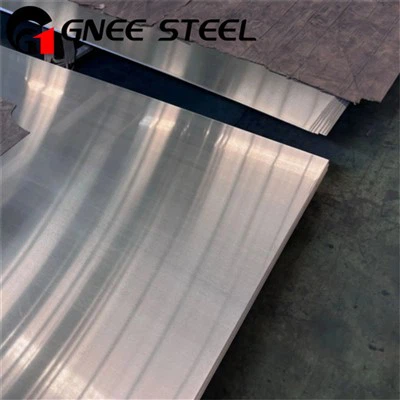
Our goal is to become your true partner in the field of aluminum alloys in China. GNEE is a professional supplier of austenitic stainless steel, super austenitic stainless steel, duplex steel, super duplex steel and other materials. Non-standard products can be customized according to customer requirements. We have a skilled engineering team dedicated to refining every stage, from product development and process improvement to production oversight, ensuring every product delivered meets rigorous quality and performance standards.The price is competitive and the product is quality-assured, which is a good choice for your long-term cooperation.




Why Choose Us
Our certification
GNEE Steel (Tianjin) Co., Ltd. has passed SGS certification and has successively obtained ISO9001, ISO14001, and ISO45001 system certifications.
Our equipment
At present, our company has a series of production equipment such as vacuum induction furnaces imported from the United States, vacuum consumable arc furnaces made in Germany, 2800mm four-roll reversible rolling mills, and vacuum annealing furnaces. At the same time, we also have more than 100 sets of various testing instruments, the main equipment includes American non-destructive testing systems, spectrometers, carbon and sulfur testers, universal testing machines, ultrasonic testing systems, fatigue testing machines, etc.
Our services
In the pre-sales stage, our team of experts will recommend the most suitable products according to the needs of customers and provide detailed technical consultation. During the sales period, we ensure timely delivery and provide installation guidance. For after-sales, we provide long-term technical support, warranty services and spare parts to help customers maximize the use of products and get reliable maintenance during use.
Advantages of Aluminum Alloys

Outstanding performance in a lightweight package: Aluminum alloys are known for their excellent strength-to-weight ratio. This balance is crucial in industries where both strength and weight play significant roles, such as aerospace and automotive.
Superior durability against the elements: One of the key advantages of aluminum alloys is their natural resistance to corrosion. Aluminum develops a thin oxide layer that protects it from further oxidation, which makes it highly suitable for applications exposed to harsh environmental conditions.
Efficiency in thermal and electrical applications: Aluminum alloys have excellent thermal and electrical conductivity. This makes them ideal for applications like heat exchangers and electrical transmission lines, where efficient energy transfer is crucial.
Economic and environmental considerations: Aluminum is not only abundant but also highly recyclable. The recycling process for aluminum requires only about 5% of the energy needed to produce primary aluminum, which significantly reduces its environmental impact.
Versatility and ease of fabrication: Aluminum alloys offer unmatched versatility. They can be easily cast, machined, and formed into various shapes, catering to a wide range of industrial needs. The flexibility of aluminum allows for creative and complex designs that might be more challenging with other metals .
Types of Aluminum Alloys
Pure aluminum alloys: Pure aluminum alloys, designated in the 1000 series, are characterized by their high purity (typically 99% or higher) and excellent corrosion resistance. These alloys are primarily used where high electrical conductivity or formability is required, such as in electrical transmission lines and food packaging.
Aluminum-copper alloys: Aluminum-copper alloys, found in the 2000 series, incorporate copper as the primary alloying element. These alloys are renowned for their high strength-to-weight ratio and are extensively utilized in aerospace applications, where strength and fatigue resistance are critical.
Aluminum-silicon alloys: Aluminum-silicon alloys belong to the 4000 series and are known for their excellent casting properties, corrosion resistance, and minimal shrinkage during solidification. They are commonly used in automotive components and marine applications.
Aluminum-magnesium alloys: Aluminum-magnesium alloys, categorized in the 5000 series, offer good weldability, moderate-to-high strength, and excellent corrosion resistance, particularly in marine environments.
Aluminum-zinc alloys: Aluminum-zinc alloys, part of the 6000 series, are among the strongest aluminum alloys available. They exhibit superior strength, toughness, and stress corrosion cracking resistance, making them suitable for aerospace and sporting equipment applications.
Application of Aluminum Alloys

Aerospace and automotive
Aluminum’s balance of strength and weight makes it a prime choice for improving fuel efficiency and performance .

Construction
Its corrosion resistance and ease of fabrication are ideal for durable, long-lasting structures .

Electrical and thermal systems
The high conductivity of aluminum alloys is perfect for efficient energy transfer applications .

Consumer goods
Lightweight and versatile, aluminum is ideal for everything from smartphones to household appliances .
Specification of Aluminum Alloys

Casting aluminum alloys: Casting involves pouring molten aluminum into molds to form complex shapes and components. This method is favored for its ability to produce intricate designs with uniform properties and good surface finish. It is commonly used in automotive parts, aerospace components, and architectural elements where specific shapes and detailed designs are required.
Wrought aluminum alloys: Wrought alloys are shaped through processes such as rolling, extrusion, forging, or machining from solid blocks or ingots. These methods enhance mechanical properties like strength and ductility compared to cast alloys. Wrought aluminum alloys find applications in structural components, consumer goods, and precision parts where high strength-to-weight ratio and formability are critical.
Heat treatment techniques: Heat treatment plays a crucial role in enhancing the mechanical properties of aluminum alloys, especially heat-treatable alloys.
Packing and Shipping of Aluminum Alloys
|
Packing |
Waterproof paper and steel strap packaging |
|
Shipping |
Shipped by road, sea, rail |
Customizable options of Aluminum Alloys

Material composition
Custom aluminum alloy parts are fabricated from differing compositions to cater for specific preferences. By incorporating copper, magnesium, or silicon into the alloys, the manufacturers can enhance the strength or workability of the end products.
Heat treatment options
Heat treatment processes such as t6 aging provide custom aluminum alloy parts with enhanced strength and stability. These treatments adjust mechanical properties to suit specific functional requirements.


Surface treatment and finishing
A broad range of surface treatment processes including anodizing, powder coating, and plating are used for finishing customized aluminum alloy parts. Anodizing enhances corrosion resistance as well as develops a hard surface for varying traits. Powder coating adds to the parts' aesthetics and durability.
Design flexibility
Customized aluminum parts offer design flexibility whereby the clients can specify unique dimensions, shapes, and surface finishes that would meet their diverse requirements. Advanced cad software allows for detailed design creation, ensuring accurate visualizations before the part's fabrication begins.

Other Service of Aluminum Alloys
|
Delivery Time |
20 days to 25 days for a 20' container |
|
Payment |
TT in advance, L/C at sight |
|
MOQ |
5000kg |
|
Inspection |
We can accept the third party's inspection |
FAQ