




Zirconium Alloys
Our goal is to become your true partner in the field of zirconium alloys in China. GNEE is a professional supplier of austenitic stainless steel, super austenitic stainless steel, duplex steel, super duplex steel and other materials. Non-standard products can be customized according to customer requirements. We have a skilled engineering team dedicated to refining every stage, from product development and process improvement to production oversight, ensuring every product delivered meets rigorous quality and performance standards.The price is competitive and the product is quality-assured, which is a good choice for your long-term cooperation.





Why Choose Us
Our certification
GNEE Steel (Tianjin) Co., Ltd. has passed SGS certification and has successively obtained ISO9001, ISO14001, and ISO45001 system certifications.
Our equipment
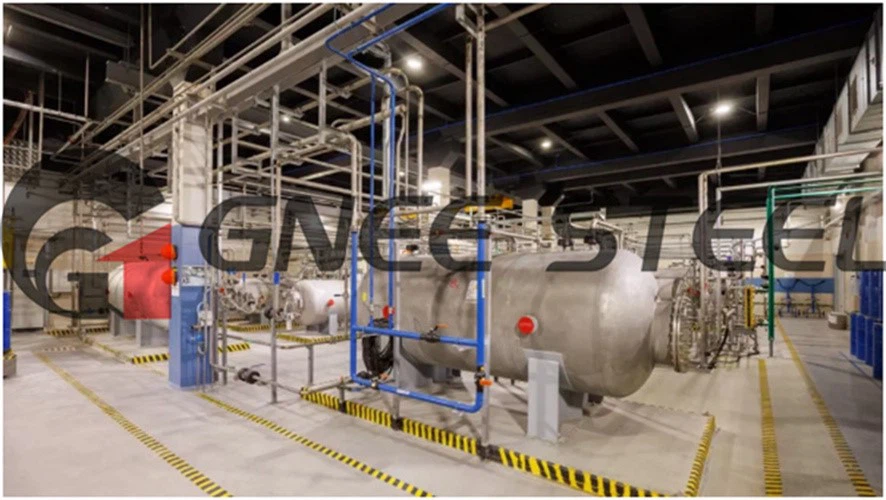
At present, our company has a series of production equipment such as vacuum induction furnaces imported from the United States, vacuum consumable arc furnaces made in Germany, 2800mm four-roll reversible rolling mills, and vacuum annealing furnaces. At the same time, we also have more than 100 sets of various testing instruments, the main equipment includes American non-destructive testing systems, spectrometers, carbon and sulfur testers, universal testing machines, ultrasonic testing systems, fatigue testing machines, etc.
Our services
In the pre-sales stage, our team of experts will recommend the most suitable products according to the needs of customers and provide detailed technical consultation. During the sales period, we ensure timely delivery and provide installation guidance. For after-sales, we provide long-term technical support, warranty services and spare parts to help customers maximize the use of products and get reliable maintenance during use.
Advantages of Zirconium Alloys

High melting point
Zirconium alloy has a high melting point, which can be used for processing and application in high temperature environment.
Corrosion resistance
Zirconium alloys have excellent corrosion resistance and can be used for a long time in harsh environments such as strong acid, strong alkali, high temperature and high pressure, so they are widely used in the fields of chemical industry, marine and nuclear industry.
Good biocompatibility
Zirconium alloy will not cause rejection when it comes into contact with biological tissues, and can be used in the manufacture of medical devices and artificial joints and other medical materials, with good biocompatibility.
Good mechanical properties
Zirconium alloy has excellent mechanical properties, including high strength, high hardness, high toughness and high wear resistance, etc., which can be used to manufacture high-quality mechanical parts and tools.
Low thermal neutron absorption cross-section
Zirconium alloy has a very low thermal neutron absorption cross-section, which can be used as core structural materials for nuclear reactors, such as fuel cladding, pressure tubes, stents and orifice tubes.
Specification of Zirconium Alloys
|
Specification |
Details |
|
Grades |
ASTM B551 (R60700, R60702, R60704, R60705, R60706) |
|
Purity |
Zirconium content > 99.2% |
|
Thickness Range |
0.5 mm – 50 mm |
|
Width Range |
Up to 2000 mm |
|
Length Range |
Up to 6000 mm |
|
Surface Finish |
Polished, pickled, or as required |
|
Standards |
ASTM, ASME, ISO, DIN |
Types of Zirconium Alloys
Zirconium-copper alloys (zr-cu)
Zirconium-copper alloys combine the corrosion resistance of zirconium with the conductivity of copper. This amalgamation creates materials suitable for electrical applications, such as electrical connectors and conductive components in electronics.


Zirconium-nickel alloys (zr-ni)
Zirconium-nickel alloys exhibit enhanced strength and corrosion resistance. So, they are vital in marine applications, especially for components exposed to seawater.
Zirconium-titanium alloys (zr-ti)
Zirconium-titanium alloys boast excellent mechanical properties and high-temperature resistance. They find applications in aerospace engineering, particularly in aircraft components and structural materials, owing to their strength-to-weight ratio and thermal stability.


Zirconium-tin alloys (zr-sn)
Zirconium-tin alloys are known for their exceptional corrosion resistance in acidic and chloride-rich environments. They are extensively utilized in chemical processing industries, such as in the manufacture of heat exchangers and reactors handling corrosive substances.
Zirconium-aluminum alloys (zr-al)
Zirconium-aluminum alloys combine the strength of zirconium with the lightweight properties of aluminum. These alloys find use in the automotive and aerospace sectors, contributing to lightweight structural components that require high strength and corrosion resistance.


Zirconium-niobium alloys (zr-nb)
Zirconium-niobium alloys are also known as zircaloy. They possess exceptional resistance to corrosion and neutron absorption. These alloys are fundamental in nuclear reactor components, including fuel cladding due to their stability in high-radiation environments.
Application of Zirconium Alloys
Nuclear sector
In the realm of nuclear energy, these alloys play a critical role. Their remarkable resistance to corrosion and neutron absorption renders them indispensable in nuclear reactors, particularly for fuel cladding and structural components.
Marine uses
Furthermore, in marine engineering, zirconium alloys act as shields against corrosion in harsh marine environments. Their robustness and resilience make them invaluable in shipbuilding and the construction of offshore structures.


Chemical processing
Beyond the nuclear sector, zirconium alloys find extensive utilization in chemical processing. Their innate resistance to aggressive chemicals makes them a go-to choice for equipment and machinery in chemical plants, safeguarding against corrosion and ensuring the integrity of processing systems.
Aerospace and aviation
In the aerospace and aviation domains, these alloys contribute significantly to the development of lightweight, high-strength components. From aircraft engines to structural materials, zirconium alloys aid in enhancing performance while maintaining durability, crucial for the stringent demands of aviation.

Extracting and preparing the raw material: The first step in making zirconium alloy is to extract zirconium from the mineral called zircon (zrsio4). This mineral is mined in places like australia and south africa. Once the zircon is mined, it is crushed into a fine powder to prepare it for further processing.
Purifying the zirconium: After extracting and preparing the zirconium concentrate, the next step is to purify it. This is important because zirconium naturally contains another element called hafnium, which must be removed for many applications, especially in nuclear reactors.
Shaping the alloy: The zirconium alloy ingots are then shaped into the desired forms, such as rods, tubes, or sheets.
Quenching: Rapidly cooling the alloy after heating to lock in certain properties, like hardness.
Creating the zirconium alloy
Once the zirconium is purified, it’s time to turn it into an alloy. An alloy is a mixture of metals, and zirconium alloys often include small amounts of metals like tin, niobium, iron, or chromium.
Heat treatment and surface finishing
Once the alloy is shaped, it undergoes heat treatment to enhance its properties.
Annealing: Heating the alloy and then slowly cooling it to remove internal stresses and make it stronger.
Quality control and testing
Throughout the manufacturing process, rigorous quality checks are essential to ensure the alloy meets the required standards.
Packing and Shipping of Zirconium Alloys
|
Packing |
Waterproof paper and steel strap packaging |
|
Shipping |
Shipped by road, sea, rail |
Customizable Zirconium Alloys
This zirconium plate boasts a minimum purity of 99.9%, ensuring exceptional durability and resistance to corrosion, making it an ideal choice for various industrial applications. The product offers customization options for thickness (0.5mm, 1mm, 1.5mm) and model number, catering to the specific needs of customers.
Other Service of Zirconium Alloys
|
Delivery Time |
20 days to 25 days for a 20' container |
|
Payment |
TT in advance, L/C at sight |
|
MOQ |
5000kg |
|
Inspection |
We can accept the third party's inspection |
FAQ