

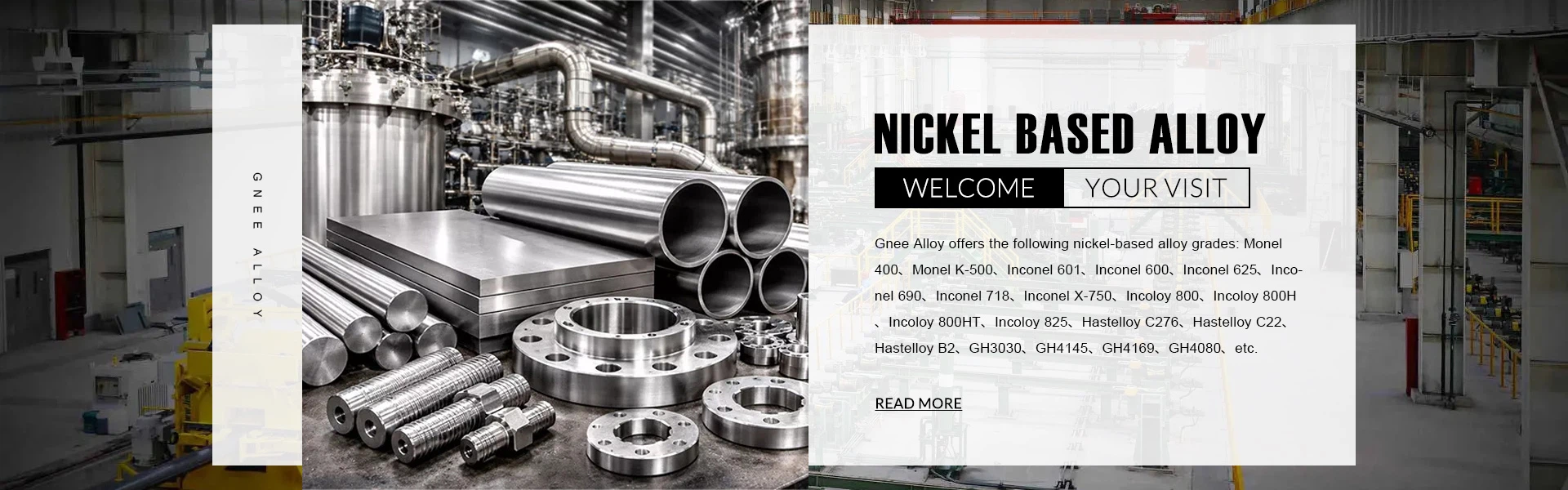
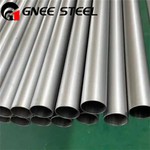
Stainless Steel Plate&Sheet
Our goal is to become your true partner in the field of stainless steel plate&sheet in China. GNEE is a professional supplier of austenitic stainless steel, super austenitic stainless steel, duplex steel, super duplex steel and other materials. Non-standard products can be customized according to customer requirements. We have a skilled engineering team dedicated to refining every stage, from product development and process improvement to production oversight, ensuring every product delivered meets rigorous quality and performance standards.The price is competitive and the product is quality-assured, which is a good choice for your long-term cooperation.


Why Choose Us
Our certification
GNEE Steel (Tianjin) Co., Ltd. has passed SGS certification and has successively obtained ISO9001, ISO14001, and ISO45001 system certifications.
Our equipment
At present, our company has a series of production equipment such as vacuum induction furnaces imported from the United States, vacuum consumable arc furnaces made in Germany, 2800mm four-roll reversible rolling mills, and vacuum annealing furnaces. At the same time, we also have more than 100 sets of various testing instruments, the main equipment includes American non-destructive testing systems, spectrometers, carbon and sulfur testers, universal testing machines, ultrasonic testing systems, fatigue testing machines, etc.
Our services
In the pre-sales stage, our team of experts will recommend the most suitable products according to the needs of customers and provide detailed technical consultation. During the sales period, we ensure timely delivery and provide installation guidance. For after-sales, we provide long-term technical support, warranty services and spare parts to help customers maximize the use of products and get reliable maintenance during use.
Advantages of Stainless Steel Plate&Sheet

Corrosion resistance
Stainless steel’s competitive advantage, its corrosion resistance, comes from a thin, invisible layer of chromium that protects the metal’s surface from oxidization. Since this passive layer of protection can break down in isolated spots, a phenomenon known as pitting, manufacturers add other protective elements like nickel, manganese, and molybdenum.
Durability
Stainless steel sheets are highly resistant to impact, wear, and extreme temperatures. While they May wear thin slightly faster than carbon steel in some applications, their overall strength and resilience make them a reliable choice.
Aesthetic appeal
Stainless steel’s bright and shiny finish will never go out of style, and since manufacturers can brush, polish, or matte this metal, there are numerous treatment choices for nearly any decorative or architectural purpose.
Ease of fabrication
Although harder than many other metals, stainless steel sheets can be easily cut, welded, or formed into different shapes. They can be cut with laser cutting, waterjet cutting, or shearing, and although tough, they can be bent using press brakes.
Hygienic properties
Stainless steel’s non-porous surface makes it easy to clean and ideal for food service and medical environments.
Types of Stainless Steel Plate&Sheet

Austenitic stainless steel plates
Austenitic stainless steel plates demonstrate high resistance to corrosion and non-magnetic properties for their application in food processing and chemical and marine industries. Two examples of stainless steel plates include stainless steel plate 304 and stainless steel plate 316.
Ferritic stainless steel plates
Ferritic stainless steel plates consist of lower nickel content which results in cost-effective solutions with average resistance to corrosion. This material finds its main applications in automotive fields and decorative purposes.
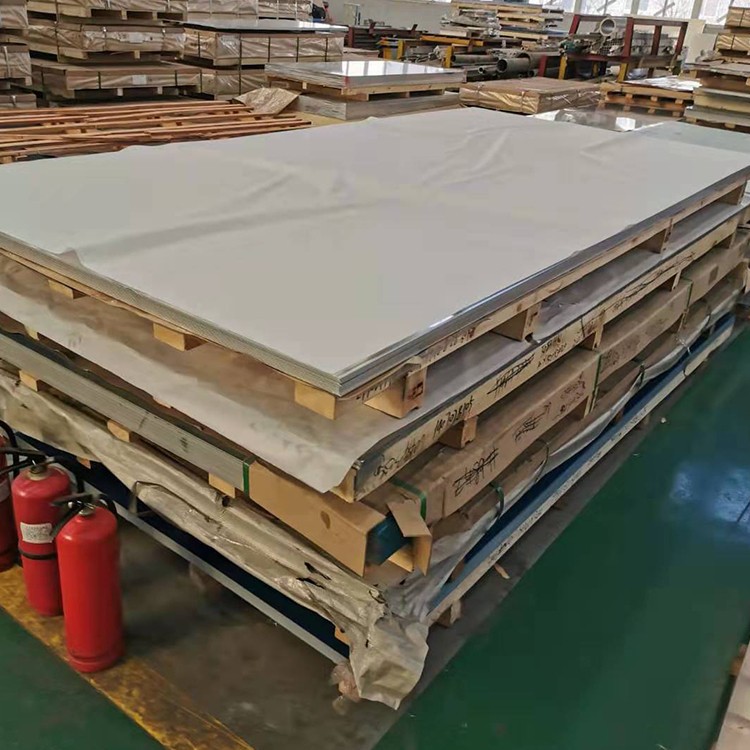
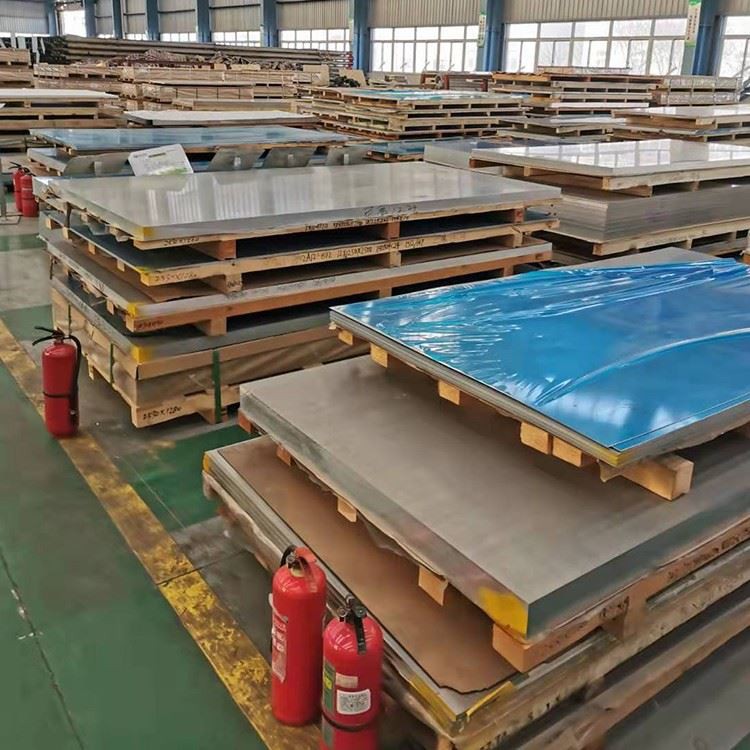
Martensitic stainless steel plates
The strength and hardness of martensitic stainless steel plates makes them suitable for turbine blade applications and surgical instruments and knives production.
Duplex stainless steel plates
The combination of ferritic and austenitic metal characteristics within duplex stainless steel plates creates high strength and advanced corrosion prevention abilities suitable for the offshore and chemical product fields.
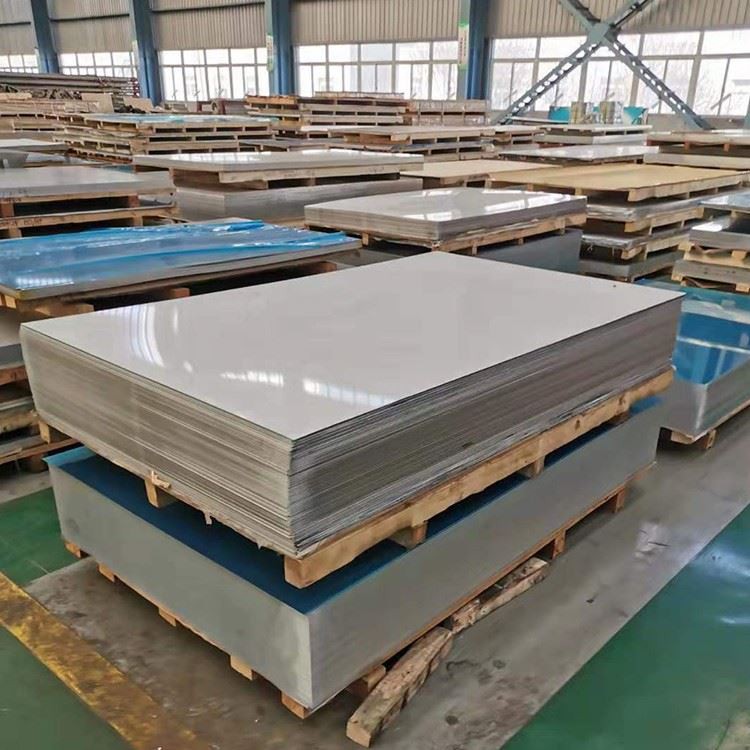
Specification of Stainless Steel Plate&Sheet
|
Stainless Steel Sheet |
|
|
Grade |
304, 304/304L, 316, 316/316L, 2205, 4003/3CR12 & 4003Ti/3CRTi. |
|
Thickness (mm) |
0.45 to <3.0. |
|
Width (mm) |
914, 1219, 1500, 2000 & customer specific width. |
|
Length (mm) |
1829, 2438 & customer specific length. |
|
Finish |
2B, No.4, BA & customer specific polish. |
|
Standard coating |
Paper interleaf & PE. |
|
Optional coating |
Laser & Deep drawing PVC. |
|
Plasma profiles |
To customer drawings. |
Finishes for Stainless Steel Plate&Sheet
Brushed finish
Achieved by rough grinding, this finish generally results in a coarse, low- to non-reflective surface. This finish typically has a roughness average (ra) range of 25-40, which May vary slightly from mill to mill. Although it used to be the standard finish, it is now often used for equipment and industries looking for a rougher finish, such as on outdoor grills.
Mirror finish
Known for its highly reflective, mirror-like surface, this finish involves extensive polishing to remove imperfections and produce an almost flawless appearance. It is used in decorative applications like signage, sculptures, and wall panels, where aesthetics are paramount.
Mill finish
The finish is a smooth, matte surface achieved through cold rolling, annealing, and pickling, followed by passing through bright rolls. It is non-reflective and widely used in applications like food processing, chemical equipment, and solar panels due to its clean, uniform look.
Iron: All steel starts with iron. It forms the base of the alloy.
Carbon: All steel includes carbon, which gives the iron strength and hardness.
Silicon: This iron stabilizer deoxidizes the metal, providing steel with corrosion resistance.
Manganese: Manganese is a stabilizer that strengthens and hardens the metals.
Titanium
This element increases weldability and decreases intergranular corrosion.
Nickel
As the nickel content of the alloy increases, it enhances formability and toughness.
Molybdenum
Molybdenum boosts resistance to pitting and crevice corrosion.
Application of Stainless Steel Plate&Sheet
Medical
Stainless steel sheets are essential in medical environments due to their sterility, corrosion resistance, and ease of cleaning. They are used to create surgical instruments, hospital furniture, and medical implants.
01
Automotive
The automotive industry relies on stainless steel sheets for their strength, resistance to high temperatures, and lightweight properties. Typical uses include exhaust systems, trims, and structural components.
02
Construction
Stainless steel sheets are used for cladding, roofing, and structural supports. Their resistance to environmental conditions ensures longevity and aesthetic appeal.
03
Aerospace
Stainless steel sheets are employed in aerospace for their excellent strength-to-weight ratio, resistance to extreme temperatures, and durability.
04
Foodservice
Stainless steel sheets ensure hygiene and ease of cleaning on everything from kitchen counters to food processing equipment, making them ideal for maintaining food safety standards.
05
Melting: Raw materials melted together.
Removal of carbon: Decarburization removes excess carbon.
Tuning: To achieve the exact composition, the molten metal is sampled and tweaked with the addition of appropriate alloying elements.
Forming: The molten steel is cast into a long billet and then rolled into flat sheets.
Rolling: Final product thickness is achieved using a series of rolling processes.

Packing and Shipping of Stainless Steel Plate&Sheet
|
Packing |
Waterproof paper and steel strap packaging |
|
Shipping |
Shipped by road, sea, rail |
FAQ