

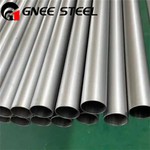
Stainless Steel Coil
Our goal is to become your true partner in the field of stainless steel coil in China. GNEE is a professional supplier of austenitic stainless steel, super austenitic stainless steel, duplex steel, super duplex steel and other materials. Non-standard products can be customized according to customer requirements. We have a skilled engineering team dedicated to refining every stage, from product development and process improvement to production oversight, ensuring every product delivered meets rigorous quality and performance standards.The price is competitive and the product is quality-assured, which is a good choice for your long-term cooperation.




Why Choose Us
Our certification
GNEE Steel (Tianjin) Co., Ltd. has passed SGS certification and has successively obtained ISO9001, ISO14001, and ISO45001 system certifications.
Our equipment
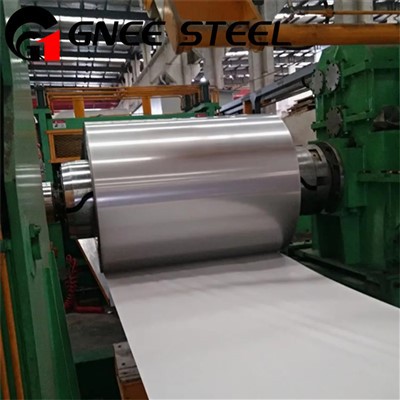
At present, our company has a series of production equipment such as vacuum induction furnaces imported from the United States, vacuum consumable arc furnaces made in Germany, 2800mm four-roll reversible rolling mills, and vacuum annealing furnaces. At the same time, we also have more than 100 sets of various testing instruments, the main equipment includes American non-destructive testing systems, spectrometers, carbon and sulfur testers, universal testing machines, ultrasonic testing systems, fatigue testing machines, etc.
Our services
In the pre-sales stage, our team of experts will recommend the most suitable products according to the needs of customers and provide detailed technical consultation. During the sales period, we ensure timely delivery and provide installation guidance. For after-sales, we provide long-term technical support, warranty services and spare parts to help customers maximize the use of products and get reliable maintenance during use.
Advantages of Stainless Steel Coil

Super corrosion resistance
Through the salt spray test, 316l material can last for 5000 hours without rusting in a 5% nacl environment.
Customized flexibility
Support non-standard sizes: Thickness 0.3-6mm, width 10-2000mm, coil weight 1-20 tons.


High temperature tolerance
310s austenitic stainless steel can maintain structural stability at high temperatures of 1150℃, making it suitable for boiler heat exchangers.
Excellent mechanical properties
Tensile strength up to 860mpa (such as 17-4ph precipitation hardened steel), far exceeding ordinary carbon steel.

Types of Stainless Steel Coil

Ordinary stainless steel coil: This type is mainly used for general purposes, such as making kitchen utensils, building materials, etc. The most common ones are 304 and 316 stainless steel coils.
High-temperature stainless steel coil: This type of steel has high-temperature resistance, oxidation resistance, corrosion resistance, and other characteristics. It is mainly used to make high-temperature equipment, stoves, etc. The most common type is a 310S stainless steel coil.
Corrosion-resistant stainless steel coil: This type of stainless steel has good corrosion resistance and is mainly used to make chemical equipment, marine equipment, etc. The most common type is a 316L stainless steel coil.
Super stainless steel coil: This type of steel has high strength, toughness, good corrosion resistance, and other characteristics. It is mainly used to make high-end equipment, appliances, etc., among which the most common ones are 904L stainless steel coils.
Titanium-plated stainless steel coil: Stainless steel coils with a titanium coating on the surface have excellent anti-fouling and corrosion resistance and are mainly used for building decoration, electrical appliance manufacturing, etc.
Chemical Composition Impact of Stainless Steel Coil
|
Element |
304 Grade |
316 Grade |
430 Grade |
Effect on Properties |
|
Chromium |
18-20% |
16-18% |
16-18% |
Corrosion Resistance |
|
Nickel |
8-10.5% |
10-14% |
<0.75% |
Ductility, Formability |
|
Molybdenum |
- |
2-3% |
- |
Pitting Resistance |
Temperature Performance Analysis of Stainless Steel Coil
|
Grade |
Max Operating Temp |
Oxidation Resistance |
Common Applications |
|
309 |
1000°C |
Excellent |
Heat Exchangers |
|
310 |
1150°C |
Superior |
Furnace Components |
|
321 |
900°C |
Very Good |
Aircraft Exhaust |
|
304H |
870°C |
Good |
Chemical Processing |
Application of Stainless Steel Coil


Cookware: Stainless steel is a popular material for cookware, as it is hygienic, easy to clean, and resistant to staining or flavor transfer.
Cutlery: Knives and other cutlery items are often made from stainless steel due to their corrosion resistance and durability.
Household hardware: Stainless steel coils are used to produce various household hardware items, such as door handles, drawer pulls, and bathroom fixtures.
Surgical instruments: Stainless steel’s corrosion resistance and biocompatibility make it suitable for use in surgical instruments.
Major appliances: Many major appliances, including refrigerators, dishwashers, and ovens, use stainless steel for their exteriors and components.
Industrial equipment: Stainless steel coils are used in industries such as sugar refineries for their corrosion resistance in harsh environments.
Automotive and aerospace structural alloy: Stainless steel is used in the manufacture of structural components in the automotive and aerospace industries due to its strength and corrosion resistance.
Construction material: Stainless steel coils can be used as construction material in large buildings, providing strength and durability. The wide range of applications demonstrates the versatility and reliability of stainless steel coils across different industries.
Surface Treatment of Stainless Steel Coils
No.1
A rough, matte finish from hot rolling used in industrial applications. NO.1 has a smooth and bright surface and is suitable for fields such as building decoration.
2B
A smooth, semi-reflective finish from cold rolling used in general-purpose applications. 2B has a poor surface finish and is suitable for occasions with low surface requirements.
BA(Bright Annealed)
A smooth, semi-reflective finish from cold rolling, used in general-purpose applications. BA has a good surface finish and is suitable for making high-end home appliances and other products.
No.4
A brushed, satin finish with fine polishing lines, often used in architecture and kitchens.
HL(Hairline)
A brushed, satin finish with fine polishing lines, often used in architecture and kitchens.
No.8/Mirror
A high-gloss mirror finish used for aesthetic and decorative purposes.
Production Process of Stainless Steel Coil

Raw materials: The primary materials required for making stainless steel coils are iron ore, chromium, nickel, and various alloying elements like carbon, manganese, silicon, and molybdenum.
Melting: The production process typically starts in an electric arc furnace or an induction furnace, where the raw materials are melted together at high temperatures exceeding 1700°c (3090°f).
Refining: Once melted, the molten steel undergoes refining processes to further remove impurities and adjust its chemical composition. Processes like aod (argon oxygen decarburization) or vod (vacuum oxygen decarburization) are commonly used to achieve the desired levels of carbon, oxygen, and other elements.
Casting: After refining, the molten steel is cast into semi-finished forms like slabs, billets, or blooms through continuous casting or ingot casting processes. Continuous casting is more common for producing stainless steel coils as it allows for a continuous, uninterrupted process, resulting in uniform quality and reduced production time.
Hot rolling: The semi-finished forms are then heated to high temperatures and passed through a series of rolling mills to reduce their thickness and shape them into coils.
Cold rolling: Once the desired thickness is achieved through hot rolling, the coils May undergo cold rolling processes to further reduce thickness, improve surface finish, and enhance mechanical properties.
Annealing and pickling: After cold rolling, the coils are annealed to soften the steel and improve its formability and ductility. This process involves heating the coils to high temperatures in controlled atmospheres and then slowly cooling them.
Finishing: After pickling, the coils May undergo additional processes like leveling, cutting, or slitting to meet specific customer requirements. Leveling ensures uniform flatness across the coil surface, while cutting and slitting divide the coils into smaller widths or lengths as per customer specifications.

Packing and Shipping of Stainless Steel Coil
|
Packing |
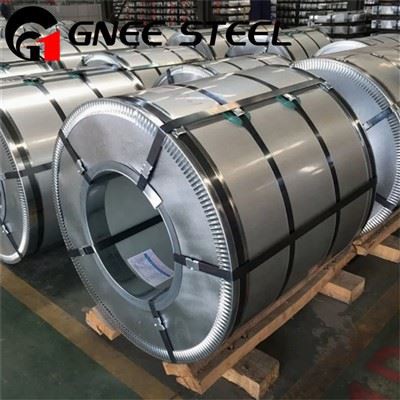
Waterproof paper and steel strap packaging |
|
Shipping |
Shipped by road, sea, rail |
FAQ