


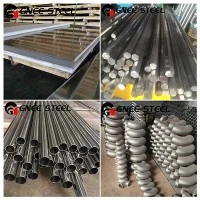


Inconel Alloy

GNEE is a professional supplier of Inconel nickel alloys, covering Inconel 600, Inconel 601, Inconel 718, Inconel 690 and Inconel X-750 alongside other advanced specialty materials. We provide a comprehensive product portfolio consisting of seamless tubes, precision tubing, round bars, plates and forgings for diverse industrial applications.
GNEE Alloys supplies Inconel alloys, including:
Seamless steel pipes: Sizes: 4-219 mm; Wall thickness: 0.5-20 mm;
Steel plates: Thickness: 0.1-100 mm; Plate width: 10-2500 mm;
Alloy bars: Diameter: 3-800 mm.
We at GNEE Alloy collaborate with numerous steel mills to provide customers with nickel-based alloys that meet or exceed many industry-leading standards, including ASTM, ASME, SAE, AMS, ISO, DIN, EN, and BS standards.
GNEE Alloys stocks and sells nickel-based alloy tubing, plates, strips, bars, and forgings. If you have any questions, please feel free to contact us at ss@gneesteel.com for a quote.
Backed by a stable supply chain and comprehensive processing & testing capabilities, we provide a wide range of Inconel nickel-based alloy grades. Below are the key product details:


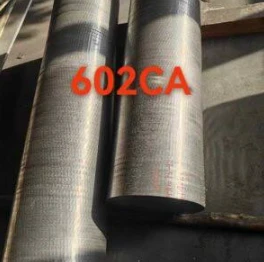

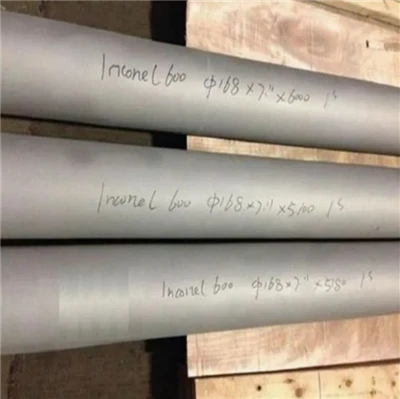
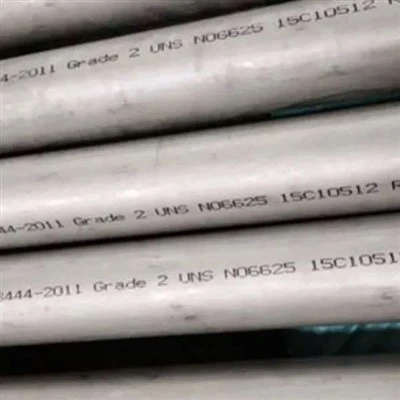

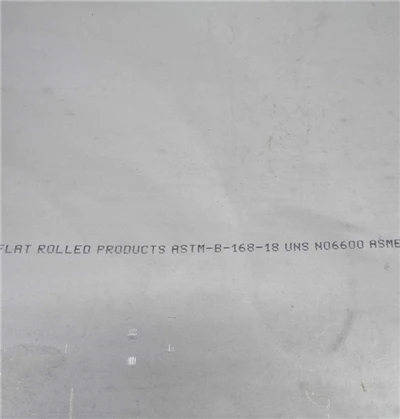

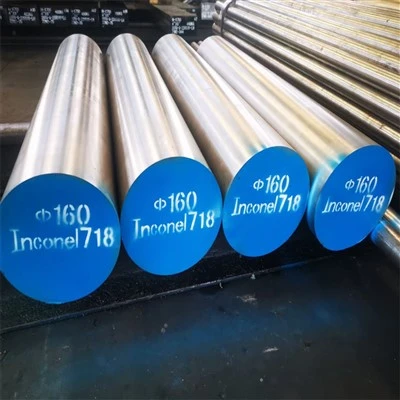
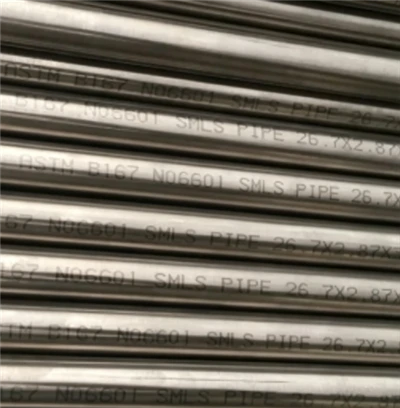
What is Inconel Material?

Inconel alloys are high-temperature alloys based on nickel (50–75%) and chromium (14–23%), capable of long-term service at 600–1000°C (e.g., grade 718 supports -253°C to 705°C), with a high-temperature oxidation rate of less than 0.1 mm/year and a creep strength of 690 MPa at 650°C. They also exhibit excellent corrosion resistance: a corrosion rate of only 0.1–0.3 mm/year in 25% sulfuric acid, a pitting potential >+300 mV in seawater environments, and a critical stress for stress corrosion resistance >300 MPa. With tensile strengths of 700–1200 MPa and yield strengths of 300–1000 MPa, they are widely used in aero-engines, nuclear reactors, marine oil and gas, and extreme chemical environments.


Inconel Alloy Size Chart
Inconel Tubes / Pipes (Seamless)
| OD (inch) | OD (mm) | Wall Thickness Range (mm) | Typical Length (m) | Notes |
|---|---|---|---|---|
| 1/16" | 1.6 | 0.5 – 1.0 | 3 – 6 | Seamless only |
| 1/8" | 3.2 | 0.5 – 1.2 | 3 – 6 | Mainly seamless |
| 1/4" | 6.4 | 0.7 – 2.0 | 3 – 12 | Seamless |
| 3/8" | 9.5 | 0.8 – 2.5 | 3 – 12 | Seamless |
| 1/2" | 12.7 | 1.0 – 3.0 | 3 – 12 | Seamless |
| 3/4" | 19.1 | 1.2 – 4.0 | 3 – 12 | Seamless |
| 1" | 25.4 | 1.6 – 5.0 | 3 – 12 | Seamless |
| 1-1/2" | 38.1 | 2.0 – 6.0 | 3 – 12 | Seamless |
| 2" | 50.8 | 2.5 – 8.0 | 4 – 12 | Seamless |
| 3" | 76.2 | 3.0 – 10.0 | 4 – 12 | Seamless |
| 4" | 101.6 | 3.5 – 12.0 | 4 – 12 | Seamless |
| 6" | 152.4 | 4.0 – 15.0 | 4 – 12 | Welded more common |
| 8" | 203.2 | 4.5 – 20.0 | 4 – 12 | Primarily welded |
| 10" | 254.0 | 5.0 – 25.0 | 4 – 12 | Primarily welded |
| 12" | 304.8 | 6.0 – 30.0 | 4 – 12 | Primarily welded |
Note: OD above 10" is typically welded; seamless max is usually 10" (12" for some alloys).
Inconel Sheets & Plates (Cold Rolled / Hot Rolled)
| Thickness (mm) | Typical Width (mm) | Typical Length (mm) | Condition | Process |
|---|---|---|---|---|
| 0.5 – 1.0 | 1000 / 1220 | 2000 / 2440 | Cold rolled / Annealed | Sheet |
| 1.2 | 1000 / 1220 | 2000 / 2440 | Cold rolled / Annealed | Sheet |
| 1.5 | 1000 / 1220 | 2000 / 2440 | Cold rolled / Annealed | Sheet |
| 2.0 | 1000 / 1220 | 2000 / 2440 | Cold rolled / Annealed | Sheet |
| 2.5 | 1000 / 1220 | 2000 / 2440 | Cold rolled / Annealed | Sheet |
| 3.0 | 1000 / 1220 | 2000 / 2440 | Cold / Hot rolled | Transition thickness |
| 4.0 – 6.0 | 1000 – 1500 | 2000 – 6000 | Cold / Hot rolled | Sheet / light plate |
| 8.0 | 1200 – 2000 | 3000 – 8000 | Hot rolled | Plate |
| 10 | 1200 – 2000 | 3000 – 8000 | Hot rolled | Plate |
| 12 – 20 | 1200 – 2500 | 3000 – 12000 | Hot rolled | Medium plate |
| 25 – 50 | 1200 – 2500 | 3000 – 12000 | Hot rolled / Forged | Heavy plate |
| 60 – 100 | 1000 – 2000 | 2000 – 6000 | Forged | Special order |
Common standard sheet sizes: 4′×8′ (1220×2440 mm) and 1000×2000 mm.
Inconel Round Bars / Rods (Cold Drawn / Hot Rolled / Forged)
| Diameter Range (inch) | Diameter Range (mm) | Common Diameters (mm) | Length (m) | Process |
|---|---|---|---|---|
| 1/16″ – 1/2″ | 1.6 – 12.7 | 1.6, 2.0, 3.0, 4.0, 5.0, 6.0, 8.0, 10.0, 12.0 | 2 – 4 | Cold drawn |
| 1/2″ – 2″ | 12.7 – 50.8 | 12, 14, 16, 18, 20, 22, 25, 28, 30, 32, 35, 38, 40, 45, 50 | 2 – 4 | Cold drawn / Hot rolled |
| 2″ – 4″ | 50.8 – 101.6 | 55, 60, 65, 70, 75, 80, 85, 90, 95, 100 | 3 – 6 | Hot rolled |
| 4″ – 8″ | 101.6 – 203.2 | 105, 110, 115, 120, 125, 130, 140, 150, 160, 170, 180, 190, 200 | 3 – 6 | Hot rolled / Forged |
| 8″ – 12″ | 203.2 – 304.8 | 210, 220, 230, 240, 250, 260, 270, 280, 290, 300 | 3 – 6 | Forged |
For square and hexagonal bars, please refer to the circumscribed circle diameter; the maximum cold-drawn diameter is typically 50 mm.
Contact us to customize Inconel Alloy products to your project's dimensions
Inconel Material Grades
| Commercial Grade | UNS Number | Werkstoff No. | JIS (Japan) | EN Symbol | Defining Characteristic |
| Inconel 600 | N06600 | 2.4816 | NCF 600 | NiCr15Fe | High Ni (72% min); immune to chloride SCC. |
| Inconel 601 | N06601 | 2.4851 | NCF 601 | NiCr23Fe | Aluminum addition for severe thermal cycling. |
| Inconel 625 | N06625 | 2.4856 | NCF 625 | NiCr22Mo9Nb | Solid-solution hardened; deep pitting resistance. |
| Inconel 718 | N07718 | 2.4668 | NCF 718 | NiCr19Fe19Nb5Mo3 | Gamma double-prime strengthened; high weldability. |
| Inconel X-750 | N07750 | 2.4669 | NCF 750 | NC15TNbA | Gamma prime strengthened; high relaxation resistance. |
Inconel Material Composition
| Inconel | Element, proportion by mass (%) | ||||||||||||||
|---|---|---|---|---|---|---|---|---|---|---|---|---|---|---|---|
| Ni | Cr | Fe | Mo | Nb & Ta | Co | Mn | Cu | Al | Ti | Si | C | S | P | B | |
| 600 | ≥72.0 | 14.0–17.0 | 6.0–10.0 | — | ≤1.0 | ≤0.5 | ≤0.5 | ≤0.15 | ≤0.015 | ||||||
| 617 | 44.2–61.0 | 20.0–24.0 | ≤3.0 | 8.0–10.0 | 10.0–15.0 | ≤0.5 | ≤0.5 | 0.8–1.5 | ≤0.6 | ≤0.5 | 0.05–0.15 | ≤0.015 | ≤0.015 | ≤0.006 | |
| 625 | ≥58.0 | 20.0–23.0 | ≤5.0 | 8.0–10.0 | 3.15–4.15 | ≤1.0 | ≤0.5 | ≤0.4 | ≤0.4 | ≤0.5 | ≤0.1 | ≤0.015 | ≤0.015 | ||
| 690 | ≥58 | 27–31 | 7–11 | ≤0.50 | ≤0.50 | ≤0.50 | ≤0.05 | ≤0.015 | |||||||
| Inconel 690 | ≥58 | 28–31 | 7–11 | ≤0.10 | ≤0.50 | ≤0.50 | ≤0.50 | ≤0.04 | ≤0.015 | ||||||
| 718 | 50.0–55.0 | 17.0–21.0 | Balance | 2.8–3.3 | 4.75–5.5 | ≤1.0 | ≤0.35 | ≤0.3 | 0.2–0.8 | 0.65–1.15 | ≤0.35 | ≤0.08 | ≤0.015 | ≤0.015 | ≤0.006 |
| X-750 | ≥70.0 | 14.0–17.0 | 5.0–9.0 | 0.7–1.2 | ≤1.0 | ≤1.0 | ≤0.5 | 0.4–1.0 | 2.25–2.75 | ≤0.5 | ≤0.08 | ≤0.01 | |||
Mechanical properties of Inconel alloys – Tubes, Plates/Bars (Typical values at room temperature)
| Alloy | Product Form | Tensile Strength (MPa) | Yield Strength 0.2% (MPa) | Elongation (%) | Hardness (HRB / HB) | Notes |
|---|---|---|---|---|---|---|
| 600 | Tube | 550–690 | 170–345 | 35–60 | ≤85 HRB | Annealed |
| Sheet/Plate | 550–690 | 170–345 | 35–60 | ≤85 HRB | Annealed | |
| Bar | 550–690 | 170–345 | 30–55 | ≤85 HRB | Annealed | |
| 601 | Tube | 550–750 | 210–450 | 30–60 | ≤88 HRB | Annealed |
| Sheet/Plate | 550–750 | 210–450 | 30–60 | ≤88 HRB | Annealed | |
| Bar | 550–750 | 210–450 | 25–55 | ≤90 HRB | Annealed | |
| 625 | Tube | 690–900 | 275–550 | 30–60 | ≤100 HRB | Annealed |
| Sheet/Plate | 690–900 | 275–550 | 30–60 | ≤100 HRB | Annealed | |
| Bar | 690–900 | 275–550 | 25–55 | ≤100 HRB | Annealed | |
| 718 | Tube | 1035–1240 | 860–1035 | 12–25 | 35–45 HRC | Solution + Aged |
| Sheet/Plate | 1035–1240 | 860–1035 | 12–25 | 35–45 HRC | Solution + Aged | |
| Bar | 1035–1240 | 860–1035 | 12–25 | 35–45 HRC | Solution + Aged |

Global Equivalent Alloy Grades of Inconel
Inconel alloys are identified by international designations like UNS, Werkstoff, JIS & EN to ensure global standardization. These equivalents help engineers, buyers, and manufacturers match the correct grade for applications across industries and comply with worldwide material standards.
| Grade | UNS No. | Werkstoff Nr. | JIS | EN |
| Inconel 600 | N06600 | 2.4816 | NCF 600 | NiCr15Fe |
| Inconel 625 | N06625 | 2.4856 | NCF 625 | NiCr22Mo9Nb |
| Inconel 718 | N07718 | 2.4668 | NC19FeNb | NiCr19Fe19Nb5Mo3 |
| Incoloy 800 | N08800 | 1.4876 | NCF 800 | X8NiCrAlTi32-21 |
| Incoloy 825 | N08825 | 2.4858 | NCF 825 | NiCr21Mo |
|
Trade Name |
ASTM/ ASME / UNS |
|---|---|
|
(600) |
ASTM B167 UNS N06600 |
|
(601) |
ASTM B167 UNS N06601 |
|
(N06603) |
ASTM B167 UNS N06603 |
|
(N06690) |
ASTM B167 UNS N06690 |
|
(N06693) |
ASTM B167 UNS N06693 |
|
(N06025) |
ASTM B167 UNS N06025 |
|
(N06045) |
ASTM B167 UNS N06045 |
|
(N06696) |
ASTM B167 UNS N06696 |
|
(600) |
ASTM B163 UNS N06600 |
|
(601) |
ASTM B163 UNS N06601 |
|
(690) |
ASTM B163 UNS N06690 |
Quick Guide to Selecting Inconel Alloy Grades
Operating environment involves thermal cycling above 900°C → Select Inconel 601
Exposure to seawater, brine, or chloride-containing corrosive media → Select Inconel 625
Aircraft engines, high-pressure rotating components, or high-strength requirements → Select Inconel 718 (AMS certified grade)
Furnace muffles, heat treatment baskets, or moderately corrosive environments → Select Inconel 600
High-temperature springs, bolts, or elastic components → Select Inconel X-750
Contact our experts to recommend the right alloy for your project
Applications of Inconel


Aerospace and Jet Engines
Inconel nickel alloys are frequently used in the aerospace industry to manufacture turbine blades, exhaust pipes, and combustion chambers. The high-temperature strength, oxidation resistance, and fatigue resistance of these components are crucial for ensuring safe and efficient flight operation.
Power Generation and Gas Turbines
Inconel nickel alloy components are widely used in gas turbine systems, nuclear reactors, superheaters, and high-pressure steam systems. Due to their excellent thermal stability and creep resistance, Inconel nickel alloys are widely used in these applications, maintaining good performance even under prolonged exposure to high temperatures.
Chemical and Petrochemical Industries
Due to their corrosion resistance, Inconel nickel alloys are commonly used in applications involving corrosive or highly corrosive chemicals, such as reactor vessels, heat exchangers, and acid treatment pipelines.
Marine and Offshore Engineering
Inconel nickel alloys resist chlorination stress cracking and seawater corrosion, and are therefore used in subsea pipelines, desalination plants, marine engines, and offshore oil drilling platforms.
Automotive and Motorsports
Inconel alloys are used in high-performance turbochargers, exhaust manifolds, and valves—components subjected to rapid engine thermal cycling and extreme temperatures, where commonly used materials typically have limited strength.


Inconel Alloy Industrial Applications
| Industry / Application Area | Primary Grades | Typical Components / Systems | Key Performance Requirements |
|---|---|---|---|
| Aerospace & Jet Engines | Inconel 718 (AMS) | Turbine disks, combustion chambers, exhaust liners, engine fasteners, high‑temperature seals | High creep and fatigue resistance under long‑term loading at 650°C |
| Power Generation & Gas Turbines | 625 / 718 / 601 | Gas turbine hot‑section components, nuclear reactor vessels, superheater tubes, high‑pressure steam piping | High‑temperature oxidation resistance and creep resistance |
| Offshore Oil & Marine Engineering | 625 (preferred) | Subsea pipelines, offshore platform heat exchangers, desalination equipment, seawater valves | Resistance to chloride pitting and stress corrosion cracking (SCC) |
| Chemical & Petrochemical Industry | 600 / 625 | Acidic reaction vessels, heat exchangers in highly corrosive environments, sulfuric acid piping, pickling equipment | Stable performance in strong acid media |
| Heat Treatment & Industrial Furnaces | 600 / 601 | Furnace rollers, retorts, heat‑treatment baskets, sintering fixtures | Long‑term oxidation resistance at temperatures above 900°C |
| High‑Performance Racing | 718 / 601 | Turbocharger housings, exhaust manifolds, high‑temperature valves | Withstands severe thermal cycling shock |
Click to contact us and save time on material selection
Inconel Alloy Quality Testing and Product Manufacturing Equipment


Inconel Alloy Non-Destructive Testing (NDT)
Assess internal, surface, and near-surface defects without damaging the product.
Ultrasonic Testing (UT): Volume wave detection of porosity, inclusions, and cracks in bars, forgings, or thick plates (straight or angled probes).
Radiological Testing (RT): Porosity, looseness, and slag inclusions in castings or welds (commonly used for Inconel 625 welds).
Physical Penetrant Testing (PT): Surface opening defects (cracks, folds, porosity); applicable to almost all Inconel products.
Eddy Current Testing (ET): Surface and near-surface defects in pipes, wires, and heat exchange tubes (e.g., Inconel 600).
Visual Inspection (VT): Surface quality of raw materials and finished products (e.g., scratches, scale, pits).


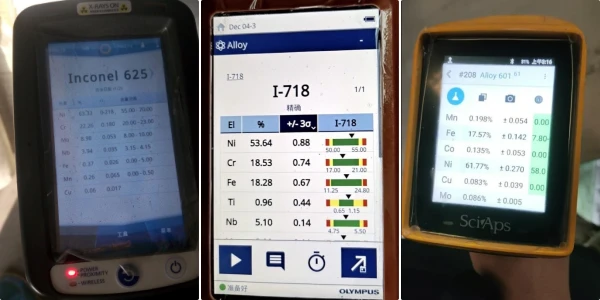
Inconel Alloy PMI Testing
Inconel Alloy Product Certificate
Mill Test Report (MTR) EN10204 3.1 / 3.2, complete chemical composition, mechanical test, heat number record
PMI Positive Material Identification test report for every batch
NDT Full Inspection Report: UT Ultrasonic, PT Penetrant, ET Eddy Current, RT Radiographic as required
Industry Special Certificates: ISO9001, AS9100 (aerospace), NACE MR0175 (oil & gas), halogen-free nuclear grade certification
Third-party witness inspection available by SGS, TÜV, BV before shipment

Inconel 600 Material Certificate

Inconel 601 Material Certificate

Inconel 625 Material Certificate

GH4169 Material Certificate

Inconel 617 Material Certificate

Inconel 718 Material Certificate
Professional nickel-based alloy packaging
Inconel Alloy Product Packaging for Mechanical Damage Protection (for different product forms)
1. Rods, Tubes, and Profiles (Long Strips)
Single Strip Insulation: Each rod is encased in expanded polyethylene (EPE) tubing or wrapped with non-woven fabric/bubble wrap.
Bundled Packaging: Bundled with plastic cable ties or steel straps, with partitions (cardboard or plastic sheets) between each layer.
Outer Protection: Completely covered with woven fabric or waterproof polyethylene film, with plastic end caps to seal both ends (to prevent damage to the tube ends and the entry of foreign objects).
2. Sheets and Sheets
Interlayer Insulation: Neutral sulfur-free paper, microcrystalline wax paper, or low-chlorinated polyethylene film between each layer.
Packaging Method: Lay flat on a wooden pallet, covered with a waterproof plastic film + wooden cover or plywood, and secured with packing straps.
Rolls: Lined with rust-proof paper, wrapped with polyethylene film + reinforced end rings + iron or wooden outer packaging (for export).
3. Precision machined parts (e.g., nozzles, fasteners, sealing rings)
Prevention of impact damage: Each part is placed individually in a soft plastic bag, then placed in a blister pack or compartmentalized plastic box.
Prevention of mixing: Each packaging unit contains only one drawing number/lot number, separated internally by neutral padding.
Outer packaging: Small parts boxes are placed in high-strength corrugated cardboard boxes, filled with shredded paper or foam pellets, and labeled "Handle with care/Keep from crush".

Special Packaging Requirements (For Specific Industries)
| Application Field | Special Requirements |
|---|---|
| Aerospace | Per AMS 2810 (packaging of steel, extended to superalloys); silicone materials prohibited; packaging must be done in a clean environment; double-layer sealing (inner + outer bag) with dry nitrogen purging. |
| Nuclear Power | Packaging materials must be halogen-free (especially chlorine-free); each product individually sealed with an attached traceability label; outer box clearly marked "Nuclear Grade Use". |
| Export (Ocean/Air) | Must comply with ISPM-15 wood packaging standard (heat treatment or fumigation); use plywood pallets, avoid solid wood; provide moisture-proof packaging declaration. |
| Parts for Vacuum or High-Temperature Brazing | Double-layer vacuum sealing + getter material (e.g., zirconium-aluminum) inside; packaging bag must withstand vacuum and be solvent-free. |
Quick Selection Table of Packaging Methods (By Product & Transport Condition)
| Product Type | Transport Environment | Core Packaging Method |
|---|---|---|
| Bars/Tubes | Domestic short-haul | Individual EPE tube sleeve + bundling + waterproof woven fabric |
| Bars/Tubes | Export ocean shipment | Individual sulfur-free paper wrap + end caps + aluminum foil bag + desiccant + wooden case (foam-lined) |
| Precision Parts | Air freight | Blister or compartment box + vacuum-sealed PE bag + high-strength carton + anti-static label outside |
| Thin Sheets/Strips | Container ocean shipment | Lay flat on pallet + sulfur-free paper between layers + plywood top/bottom + overall stretch wrap + desiccant inside container |
| Large Forgings | Open-top container/flatbed | Foam wrap + custom steel frame support + waterproof tarpaulin + metal strapping |
Our value-added services

Laser Cutting

Waterjet Cutting

Precision Bar Saw

Pipe Beveling

Pipe Threading

Plate Beveling

Shear Cutting

Hi-Def Plasma Cutting

Gauer/Straightener
Contact Us
Frequently Asked Questions
Q:What is Inconel 600 used for?
A:It is used for retorts, muffles, roller hearths and other furnace components and for heat-treating baskets and trays. In the aeronautical field, INCONEL alloy 600 is used for a variety of engine and airframe components which must withstand high temperatures. Examples are lockwire, exhaust liners and turbine seals.
Q:What is the difference between Inconel 625 and Inconel 601?
A:Inconel 601 has a melting point of 2467°F (1350°C), while Inconel 625 has a melting point of 2375°F (1310°C). In terms of tensile strength at room temperature, Inconel 601 ranges from 590-930 MPa, while 625 is slightly stronger at 690-895 MPa.
Q:What is the difference between Inconel 600 and 601?
A:While Inconel 600 and 601 are both nickel-chromium superalloys used in high-temperature environments, Inconel 601 is engineered with added aluminum for superior high-temperature oxidation resistance and strength. Inconel 600 excels in moderate-heat aqueous and chemical corrosion environments.
Q:What is 625 material grade?
A:Alloy 625 is a nickel-chromium-molybdenum alloy that is used for its high strength, high toughness and excellent corrosion resistance. The strength of alloy 625 is derived from the stiffening effect of molybdenum and niobium on its nickel-chromium matrix.
Q:What is the maximum operating temperature of Inconel 718?
A:The maximum operating temperature of Inconel 718 depends on its specific application:
High-strength structural applications: Up to 1200°F to 1300°F (650°C to 700°C). Prolonged exposure to temperatures above 1200°F (650°C) will reduce the structural strength of the material.
Oxidation/fouling resistance: Up to 1800°F (980°C).
Short-term transient temperature fluctuations: Up to 1385°F (750°C).
Q:What is the difference between Inconel 718 and Inconel 750?
A:Compared to Inconel X-750, Inconel 718 has more chromium. This makes Inconel 718 better than Inconel X-750 in oxidation resistance. In addition, Alloy 718 contains molybdenum which is not present in alloy X-750. The addition of molybdenum improves the reduction corrosion resistance of Inconel 718.
Q:What is the difference between Inconel 625 and Inconel 750?
A:Both Inconel 750 and 625 are known for their good high-temperature properties. However, Inconel 750 can withstand slightly higher temperatures than Inconel 625. Inconel 750 can be used in temperatures up to 1,400°F (760°C), while Inconel 625 is typically used at temperatures up to 1,000°F (538°C).
Q:What is the standard pipe for Inconel 600?
A:The pipes belong to ASTM B167, B829 and B517 specifications. There are different dimensions based on the ASTM, ASME and API standards. The Inconel 600 Tube ranges from 4mm to 219mm for seamless pipes, 5 to 1219.2mm for welded and EFW pipes with the wall thicknesses ranging from 0.5mm to 20mm.
Q:Is Inconel 600 better than SS 304?
A:Stainless Steel 304 is a versatile and cost-effective choice for general-purpose use, while Inconel 600 offers superior performance in extreme conditions. Understanding the propertie and application of these materials will help you select the right alloy for your needs.
Q:What is INCONEL pipe made of?
A:Inconel (/ˈɪnkənəl/ IN-co-nel) is a superalloy composed mainly of nickel, chromium, and iron that is often used in extreme environments where components are subjected to high temperature, pressure, or mechanical loads. Inconel alloys are oxidation- and corrosion-resistant.
Q:Is Inconel better than stainless steel?
A:Inconel Metal vs Stainless Steel: What's the Difference? For one thing, Inconel is much more expensive than stainless steel alloys. Inconel also has much better corrosion resistance and strength at high temperatures. However, at lower temperatures, steels like 17-4PH stainless will have a higher strength than Inconel.
Q:Is Inconel stronger than aluminum?
A:Is Inconel stronger than Aluminum? Yes, significantly. Inconel 718 has a tensile strength of ~1,300 MPa, whereas high-strength 7075 aluminum peaks at ~570 MPa. Inconel is over twice as strong at room temperature and infinitely stronger at 600°C.