



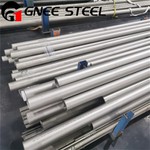

Duplex Stainless Steel
GNEE Steel Group is a supply chain-integrated enterprise including steel plates, coils, profiles, outdoor landscape design, and processing. Our products include Super Alloys, Inconel Alloys, Incoloy Alloys, Monel Alloys, Duplex Stainless Steel, Hastelloy Alloys, Titanium Alloys, Copper Alloys, Aluminum Alloys, Zirconium Alloys, Tantalum Alloy, Niobium Alloy, Molybdenum Alloy, Tungsten Alloy, Stainless Steel Pipes and Tubes, Stainless Steel Plates and Sheets, Stainless Steel Coils, Stainless Steel Pipe Fittings, Stainless Steel Rods and Bars.
Why Choose Us?
Rich Experience
GNEE Steel Group was founded in 2008 and has more than 10 years of experience in manufacturing steel.
One-Stop Solution
GNEE Steel Group is a professional, one-stop supply chain enterprise for steel products, covering product research and development, sales, promotion, and providing professional services.
Broad Market
The company's products are sold to Europe, Australia, and exported to more than 70 countries around the world. It has a total of more than 800 global cooperative enterprises, which include 15 shipbuilding companies, 143 engineering project companies, and 23 boiler machinery manufacturers.
Delivery on Time
Our annual product sales volume is 1 million tons, our inventory is 200,000 tons, and our annual export volume has reached 80,000 tons, ensuring on-time delivery.


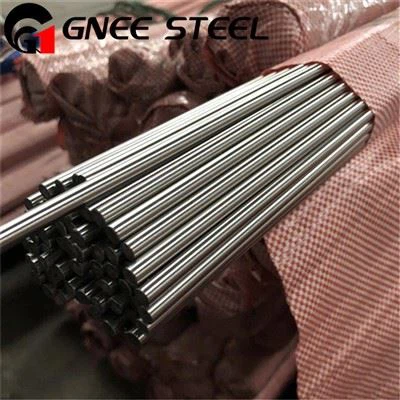


Duplex stainless steels are a family of stainless steels. These are called duplex (or austenitic-ferritic) grades because their metallurgical structure consists of two phases, austenite (face-centered cubic lattice) and ferrite (body centered cubic lattice) in roughly equal proportions. This gives duplex stainless many of the perks of austenitic and ferritic families of steel while also minimizing the weaknesses.
What are Advantages of Duplex Stainless Steel?
Improved Strength
Many duplex grades are as much as two-times stronger than austenitic and ferritic stainless steel grades.
High Toughness and Ductility
Duplex stainless steel is often more formable under pressure than ferritic grades and provides greater toughness. Though they often offer lower values than austenitic steels, the unique structure and characteristics of duplex steel often outweigh any concerns.
High Corrosion Resistance
Depending on the grade in question, duplex stainless steels offer comparable (or better) corrosion resistance as common austenitic grades. For alloys with increased nitrogen, molybdenum, and chromium, steels exhibit high resistance to both crevice corrosion and chloride pitting.
Cost Effectiveness
Duplex stainless steel offers all of the above benefits while requiring lower levels of molybdenum and nickel. This means that it is a lower-cost option than many traditional austenitic grades of stainless steel.The price of duplex alloys is often less volatile than other steel grades making it easier to estimate costs -- both at an upfront and lifetime level.The higher strength and corrosion resistance also means that many parts made using duplex stainless can be thinner than their austenitic counterparts providing lower costs.
What are Features of Duplex Stainless Steel?

Corrosion Resistance
Duplex Stainless Steel grades have corrosion resistance properties equivalent or even superior to that of austenitic grades. Higher Chromium content paired with Molybdenum impart it higher resistance to pitting and crevice corrosion. Pitting Resistance Equivalent Number (PREN) is used to rank the grades based on their resistance to pitting. Higher the PREN number, higher will be its resistance to pitting corrosion.
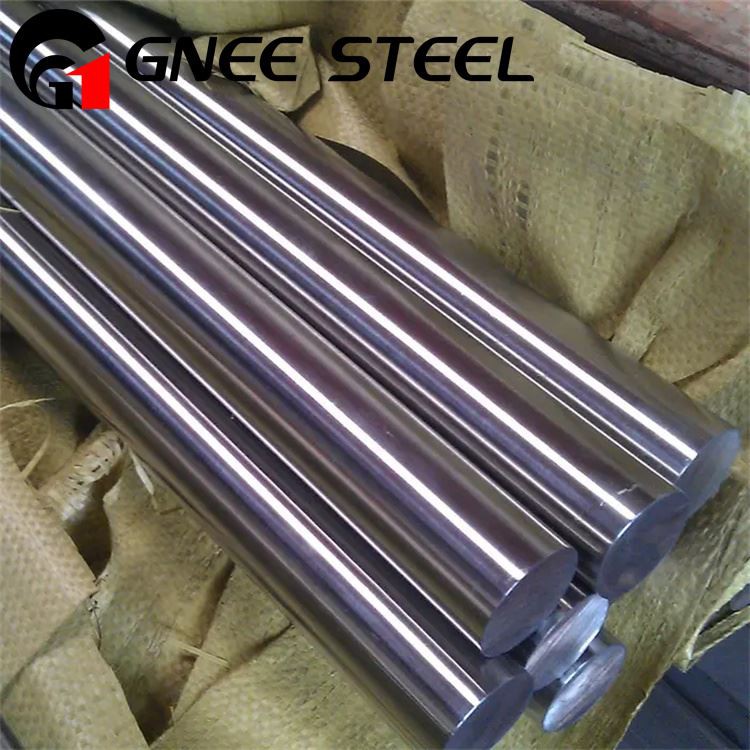
Stress Corrosion Cracking (SCC) Resistance
Austenitic grades are susceptible to SCC whereas ferritic grades have higher resistance to it. Duplex Stainless steels have better SCC resistance compared to austenitic grades but inferior to ferritic stainless steel grades. In duplex stainless steel grades SCC initiates in austenitic region but is arrested at ferritic crystal structure present at the boundary, thus preventing propagation of crack and increasing uptime.

Mechanical Strength
Duplex Stainless steels have higher mechanical strength than austenitic grades and ferritic grades. It permits use of thinner sections and helps in weight reduction. Machining of duplex stainless steel is difficult and slower compared to austenite, owing to its higher mechanical strength.
Welding
Welding is difficult compared to austenite. Close control on heat input and cooling rate is required in order to avoid formation of undesired intermetallic phases.
Lean Duplex Stainless Steels
The lean duplex grades such as LDX 2101® (S32101), UR 2202 (S32202), ATI 2102® (S82011) and 2304 (S32304) are characterized by relatively low levels of nickel and/or molybdenum. To compensate for the reduced nickel content, which is a strong austenite former, these grades have increased levels of nitrogen and manganese, which provide an acceptable austenite/ferrite phase balance. As a group the lean grades have high strength, particularly yield strength, and exhibit a pitting and crevice corrosion resistance that is similar to, or just below that, of the Type 316L austenitic grade. Because of their relatively high yield strength, the lean DSSs are well suited for tank construction and structural applications.
Standard Duplex Stainless Steels
The standard duplex grades typically contain 21-25% chromium, 2-3% molybdenum and 0.15% nitrogen. Grades in this category are used widely across all industry sectors and 2205 (S32205) has become by far the most widely used duplex grade. The 2205 grade has a yield strength that is more than twice that of Type 316 and a pitting and crevice corrosion resistance that is similar to Type 904L austenitic stainless steel. Applications for standard duplex grades include tanks, piping, process vessels and structural applications.
Super Duplex Stainless Steels
The super duplex stainless steels typically contain 25% chromium, 3.5-4.0% molybdenum, and 0.25-0.27% nitrogen. The pitting and crevice corrosion resistance of the super duplex grades are essentially equivalent to the 6% Mo super austenitic stainless steels. The most widely used super duplex stainless steel grades are the 2507 (S32750) and Z100 (S32760) grades. Common applications include piping, heat exchangers, tanks, and process vessels used for chemical processing and marine applications.
Hyper Duplex Stainless Steels
The hyper duplex stainless steels, S33207 and SAF S32707 are the most highly alloyed of the duplex family and contain 26-30% chromium, 3.5-5.0% molybdenum, and 0.30-0.50% nitrogen. The hyper duplex grades are designed for more aggressive acid and chloride-containing environments. They are produced in limited quantities and are currently only available as seamless tubing.
Paper Production
Duplex stainless steels are preferred to austenitic and ferritic stainless steels for the fabrication of vessels that contain bleach and other corrosive liquids in paper processing.
Desalination
Desalination of seawater, a process that presents highly corrosive chlorine in a high-temperature environment, is a sturdy test for a corrosion-resistant material. Duplex stainless steels have become the material of choice for the fabrication of evaporators. They can also be made with thinner cross-sections because of the higher strength and corrosion resistance of duplex stainless steels.
Oil and Gas
The development of duplex stainless steels with PRE numbers above 40 has made it possible to manufacture components such as pumps, piping and manifolds that require high resistance to pitting and crevice corrosion, which are crucial in the oil and gas industry.
Construction
Duplex stainless steels are used in the construction of load-bearing members that also require corrosion resistance. Typical applications include the construction of bridges over seawater or structures that are in close proximity to the sea.
Food and Drink Storage
Lean duplex steels show promise in the commercial storage of food and drinks during processing due to their relatively low cost while retaining excellent corrosion resistance and strength.

Hot-Rolled
Hot rolling is a processing method used to form duplex steel into various shapes, such as: plates, sheets, and bars. The material is heated and passed through rollers to achieve the desired shape and dimensions. Hot-rolled duplex steel is characterized by improved mechanical properties.
Annealed
Annealing is a heat treatment process that involves heating duplex steel to a specific temperature and then slowly cooling it to relieve stress and improve its ductility. Annealed duplex steel is more malleable and suitable for forming and machining.
Cold-Drawn
Cold drawing is a cold-working process that involves pulling duplex steel through a die to reduce its diameter or achieve a specific shape. Cold-drawn duplex steel is known for its enhanced surface finish and dimensional accuracy, making it suitable for precision applications.
How Do You Maintain Duplex Stainless Steel?
Proper Cleaning and Maintenance
The most important step in maintaining the quality of steel is to ensure its proper cleaning. This involves removing any dirt, debris, or corrosion present on the surface. Cleaning should be done using a mild detergent, warm water, and a soft cloth or brush. After cleaning, it is important to thoroughly dry the surface.
Avoid Abrasive Cleaners
Using abrasive cleaners should be avoided as they can cause scratches and other damage to the surface of duplex steel, leading to deterioration over time.
Prevent Rust
Rust can be a major problem for duplex stainless steel. To prevent it, keep the steel dry and clean. Additionally, use a protective coating such as paint or a special oil to safeguard the metal from moisture and other corrosive elements.
Keep It Cool
Heat can be damaging, so it is essential to keep duplex steel away from extreme temperatures. If necessary, use insulating materials to ensure the metal remains cool.
Use the Right Tools
When handling duplex steel, make sure to use tools specifically designed for stainless steel to avoid any damage.
Store Carefully
Proper storage is crucial to protect the quality of the metal. Store it in a dry, clean environment away from extreme temperatures. Additionally, avoid contact with other metals or corrosive substances that may damage the steel's surface.
Regular Inspection
Regularly inspect the steel for signs of wear and tear. Look for any indications of rust or other damage that could affect its quality. Repair any damages or replace the steel, if necessary.
Our Certificate
Its stainless steel pipe production technology has reached the world's average technical level. It has been recognized by dozens of project companies and has become a star enterprise in Asia.

The Group adheres to the principle of "one-stop service, making choices easier". Continuing to meet the different needs of global customers in the field of the world's steel supply chain. A professional sales team provides customers with first-class services. A rigorous procurement and quality inspection team selects high-quality raw materials. A shipping and logistics team that ensures the protection of product transportation.
Contact Us
Frequently Asked Questions
Q: What are the uses of Duplex Stainless Steel?
Q: What is Duplex Stainless Steel?
Q: What should you pay attention to with Duplex Stainless Steel?
Q: What are the properties of Duplex Stainless Steel?
Q: What is the difference between stainless steel and duplex stainless steel?
Q: How Is Duplex Steel Made?
Q: What Is the Carbon Content of Duplex Steel?
Q: What Are the Common Forms of Duplex Steel Material?
Q: What Are the Advantages of Using Duplex Steel?
Q: What Is the Difference Between Duplex Steel and 304 Stainless Steel?
Q: What Is the Difference Between Duplex Steel and 316 Stainless Steel?
Q: What Is the Difference Between Duplex Steel and 201 Stainless Steel?
Q: Why is nitrogen added to Duplex Stainless Steel?
Q: What grades of Duplex Stainless Steel are there and where are they generally used?
Q: What are the welding methods of Duplex Stainless Steel?