

Looking for reliable Inconel 625 and Inconel 718 alloy manufacturers and suppliers in China? You've come to the right place. As a leading nickel-based superalloy manufacturer with over 18 years of experience, GNEE supplies certified materials directly from the factory at highly competitive prices. This guide provides a detailed comparison of Inconel 625 and Inconel 718, highlighting their chemical composition, mechanical properties, corrosion resistance, key applications, and cost-effectiveness to help you make an informed choice based on your specific project needs.
Inconel 625 offers superior corrosion resistance, ductility, and ease of processing (welding/machining), making it ideal for chemical/marine environments. Inconel 718, on the other hand, boasts significantly higher strength (tensile strength/yield strength/fatigue strength), creep resistance, and hardness, making it the preferred choice for extreme aerospace and high-stress applications, although requiring complex post-weld heat treatment. The key difference lies in their strengthening methods: 625 uses solid solution strengthening, while 718 uses precipitation strengthening (γ' phase) to achieve its superior mechanical properties.

What are the advantages of Inconel 718?

Inconel 718 is a high-strength, corrosion-resistant nickel-based superalloy. It possesses excellent mechanical properties, high-temperature strength, and resistance to oxidation and corrosion. Inconel 718 is widely used in various industries, including aerospace, oil and gas, automotive, and power generation.
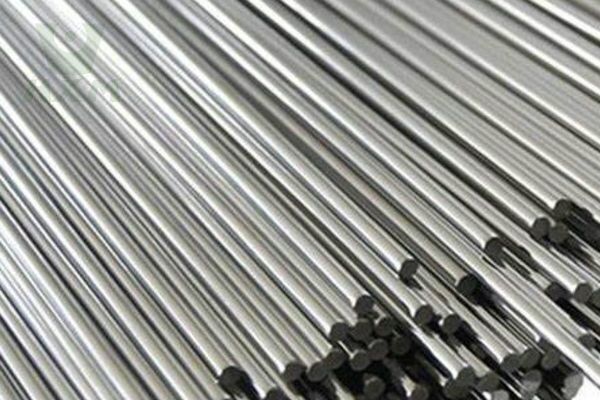
Inconel 625 Alloy
Inconel 625 is a nickel-based alloy with a chemical composition that prioritizes corrosion resistance and high-temperature performance. Its main elements are nickel and chromium, which form the basis of its superior performance. The nickel content is at least 58%, while the chromium content is between 20% and 23%. These elements provide the alloy with strong protection against oxidation and chemical corrosion.
Alloy 718
Inconel 718 is another nickel-based alloy with a more complex chemical composition, designed for high-strength and high-temperature applications. It contains 50% to 55% nickel and 17% to 21% chromium. Unlike Inconel 625, this alloy incorporates cobalt (up to 1%) and iron as balancing elements. Cobalt enhances the alloy's stability and resistance to high-temperature corrosion, while iron improves its toughness and strength.

Chemical Composition and Strengthening Mechanism Comparison: Inconel 625 vs Inconel 718
| Element | Inconel 625 (UNS N06625) Content (%) | Inconel 718 (UNS N07718) Content (%) | Key Role & Difference |
|---|---|---|---|
| Nickel (Ni) | ≥ 58 | 50 – 55 | Matrix element; provides corrosion resistance and high‑temperature stability. 625 has higher Ni content. |
| Chromium (Cr) | 20 – 23 | 17 – 21 | Provides oxidation and corrosion resistance. 625 has slightly higher Cr content. |
| Iron (Fe) | ≤ 5 | Balance | Fe is a major alloying element in 718, with significantly higher content. |
| Molybdenum (Mo) | 8 – 10 | 2.8 – 3.3 | Key difference. Mo greatly enhances resistance to reducing media and pitting corrosion, forming the core advantage of 625. |
| Niobium + Tantalum (Nb+Ta) | 3.15 – 4.15 | 4.75 – 5.5 | Both contain Nb. In 625, Nb and Ta contribute to solid‑solution strengthening; in 718, Nb mainly forms γ″ with Ni for precipitation hardening. |
| Aluminum (Al) | ≤ 0.4 | 0.2 – 0.8 | Key difference. In 718, Al together with Ti forms the γ′ strengthening phase for age hardening. In 625, Al content is very low. |
| Titanium (Ti) | ≤ 0.4 | 0.65 – 1.15 | Key difference. Works together with Al and is a key element for precipitation hardening in 718. |
Mechanical Properties: Inconel 718 vs Inconel X-750
| Property | Inconel 718 | Inconel X-750 |
|---|---|---|
| Tensile Strength | 1370 MPa | 1100 MPa |
| Yield Strength | 1030 MPa | 780 MPa |
| Elongation | 12-15% | 15-20% |
| Hardness (Rockwell) | B95-C36 | B88-C32 |
Inconel 718 outperforms X-750 in tensile strength and oxidation resistance, making it a better choice for aerospace turbines. However, X-750 offers superior creep resistance, which is crucial for long-term high-temperature mechanical applications such as springs and fasteners.
Physical Properties: Inconel 718 and Inconel X-750
| Property | Inconel 718 | Inconel X-750 |
|---|---|---|
| Density (g/cm³) | 8.19 | 8.28 |
| Melting Range (°C) | 1260 – 1336 | 1390 – 1430 |
| Thermal Conductivity (W/m·K, at 20°C) | ~11.4 | ~11.4 |
| Electrical Resistivity (µΩ·m, at 20°C) | ~1.29 | ~1.29 |
| Elastic Modulus (GPa) | 200–210 | 207 |
Summary:
Inconel 718 has a slightly lower density and a wider melting point range, resulting in better weldability and processability.
Inconel X-750 has a higher melting point, thus offering greater thermal stability in certain high-temperature applications.
Corrosion Resistance and Oxidation Resistance Comparison
This is a traditional strength of Inconel 625, but both perform exceptionally well in most environments.
Overall Corrosion Resistance: Inconel 625 is generally superior. Its high molybdenum content gives it excellent resistance to chloride pitting, crevice corrosion, and reducing acids such as sulfuric acid and hydrochloric acid.
High-Temperature Oxidation: Both exhibit excellent oxidation resistance in air up to 1100°C. Due to its higher chromium content, Inconel 625 may have a slight advantage in extreme oxidizing environments.
Stress Corrosion Cracking (SCC): The high nickel content of both alloys gives them excellent resistance to chloride ion stress corrosion cracking.
Marine Environment: 625 is the material of choice for marine applications (such as seawater pipelines and ship components) due to its extremely strong resistance to seawater corrosion.
Machining and Welding Properties
Machinability:
Both are difficult-to-machine materials. 718 has extremely high strength after age hardening, making it more difficult to machine and causing faster tool wear.
Both require specialized tools, low-speed heavy cutting, and sufficient cooling.
Weldability:
Inconel 625: Excellent weldability. Can be welded using all conventional methods. The welded area has good corrosion resistance and usually requires no heat treatment.
Inconel 718: Excellent weldability among precipitation-hardening alloys. Low susceptibility to post-weld cracking, but post-weld aging is recommended for complex structures to obtain optimal performance.

Actual photos of Inconel 718 pipe welding inside the GNEE factory.
Main Application Areas of Inconel 718 and Inconel 625
Based on their performance differences, their application scenarios are clearly distinguished.
**Preferred Applications for Inconel 625:**
Chemical Processing: Acid gas environment equipment, flue gas desulfurization systems, reactors.
Marine & Offshore: Seawater systems, marine pump shafts, submarine components.
Aerospace: Engine exhaust systems, flame-retardant sleeves (non-load-bearing structures).
Nuclear Power: Control rod drive mechanisms, steam piping.
**Preferred Applications for Inconel 718:**
Aerospace: Engine turbine disks, blades, compressor disks, casings (core load-bearing high-temperature components).
Gas Turbines: Turbine disks, fasteners.
Oil & Gas: High-strength downhole tools, valve components.
High-Performance Racing: Turbocharger components.
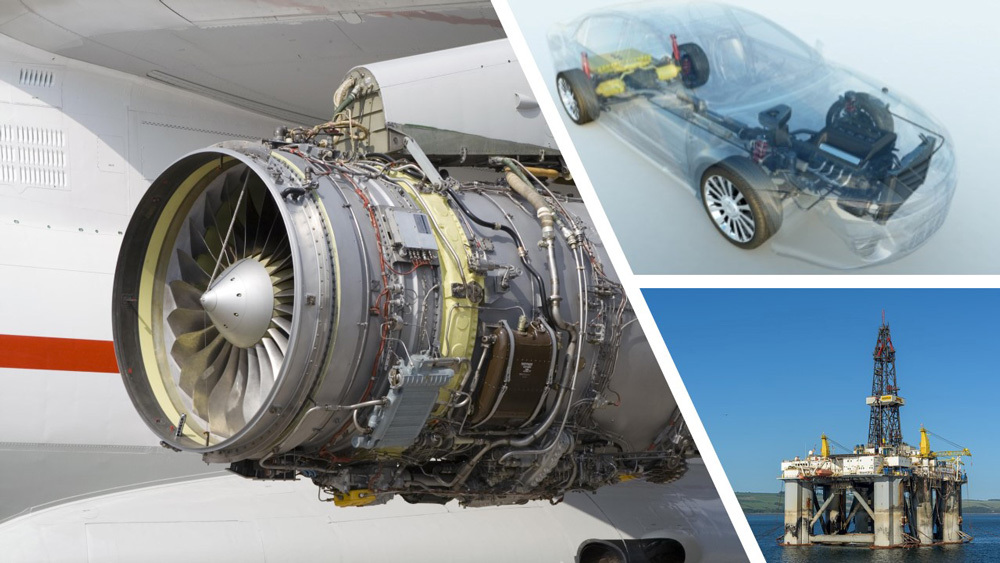
Application Areas of Inconel 718 and Inconel 625
Conclusion:
Inconel 625 and Inconel 718 represent the pinnacle of two major strengthening pathways for nickel-based superalloys. Inconel 625 reigns supreme in corrosive environments, renowned for its unparalleled overall corrosion resistance and ease of machining and welding; while Inconel 718 is the champion in high-temperature, high-stress applications, dominating core components of aero-engines with its superior high-temperature strength and comprehensive mechanical properties resulting from precipitation hardening.
The choice depends entirely on whether corrosion or mechanical load is the primary concern in your application environment. As a seasoned Inconel alloy supplier certified by API and ISO and supporting SGS/BV third-party inspection, GNEE not only provides materials that meet stringent standards but also offers professional technical selection support.
Contact us today for customized Inconel 625 or 718 solutions, mechanical property reports, and competitive factory quotes for your project.


