

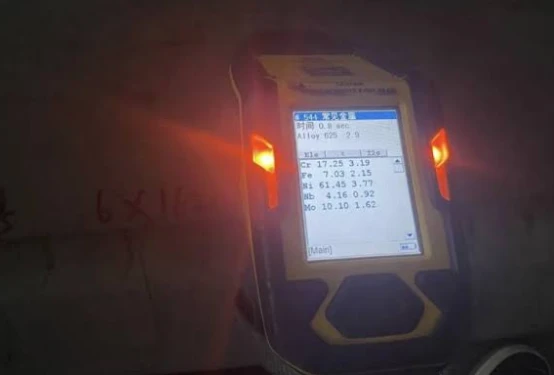
What is ASTM B443 Inconel 625(UNS N06625)Corrosion Resistance Plate/Sheet?
Inconel 625 plate and sheet rely on niobium and molybdenum solid-solution strengthening, without precipitation hardening heat treatment. It delivers resistance to pitting, crevice corrosion and chloride stress cracking, and performs stably in seawater, sour gas and mixed oxidizing-reducing media. The material retains mechanical strength over a broad temperature range, making it suitable for offshore, chemical and marine pressure containment components.
ASTM B443 specifies requirements for hot and cold rolled Inconel 625 plate, sheet and strip. It covers chemical composition, mechanical properties, heat treatment, sampling and inspection rules for corrosion and high-temperature industrial service.
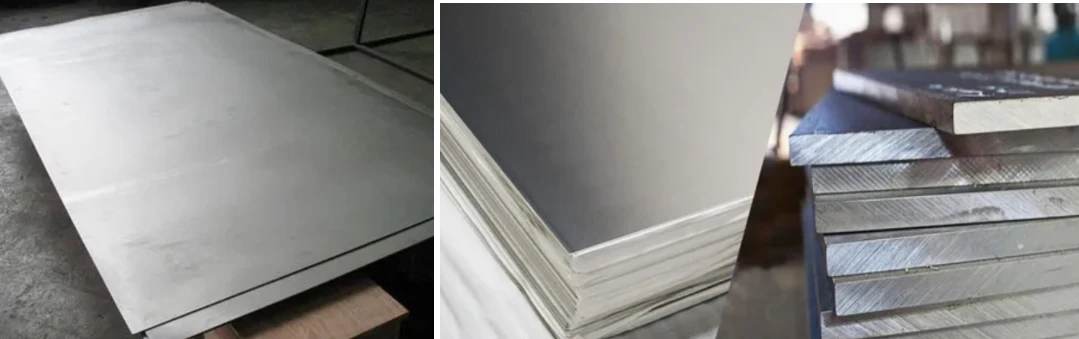
ASTM B443 Dimensional Coverage for Inconel 625 Flat Products
ASTM B443 defines thickness boundaries for Inconel 625 (UNS N06625) plate, sheet and strip. It sets dimension tolerances alongside chemical, mechanical and heat treatment rules for Grade 1 and Grade 2 material, covering cold and hot rolled forms for corrosive and high-temperature service.
| Product Form | Thickness Range |
|---|---|
| Strip | 0.13 mm – 6.4 mm |
| Sheet | 0.46 mm – 6.4 mm |
| Plate | ≥4.8 mm, up to 50.8 mm (2 in) standard limit |
Inconel 625 UNS N06625 Chemical Composition
The chemical composition of Altemp 625™ is displayed in the following table.
| Element | Content (%) |
|---|---|
| Nickel, Ni | 60 |
| Chromium, Cr | 22 |
| Molybdenum, Mo | 9 |
| Iron, Fe | 4 |
| Niobium, Nb | 3.5 |
| Titanium, Ti | 0.3 |
| Manganese, Mn | 0.3 |
| Aluminum, Al | 0.3 |
| Silicon, Si | 0.25 |
| Carbon, C | 0.05 |
| Sulfur, S | 0.003 |
| Phosphorous, P | 0.01 |
Inconel 625 UNS N06625 Physical Properties
The physical properties of Altemp 625™ are highlighted in the following table.
| Properties | Metric | Imperial |
|---|---|---|
| Density | 8.44 g/cm³ | 0.305 lb/in³ |
| Melting point | 1330°C | 2425°F |
Inconel 625 UNS N06625 Mechanical Properties
The following table shows the mechanical properties of Altemp 625.
| Properties | Metric | Imperial |
|---|---|---|
| Hardness, Rockwell B (typical annealed) | 95 | 95 |
| Tensile strength (for flat products (<4" thickness) and seamless tube and pipe) | ≥ 827 MPa | ≥ 120000 psi |
| Yield strength (for flat products (<4" thickness) and seamless tube and pipe) | ≥ 414 MPa | ≥ 60000 psi |
| Elongation at break (typical annealed) | 45% | 45% |
Inconel 625 Grade 1 vs Grade 2 (ASTM B443) Nickel-Based Alloy Plate
ASTM B443 defines two grades of Inconel 625 flat products differentiated by heat treatment.
- Grade 1 is solution annealed for high ductility and corrosion resistance.
- Grade 2 receives a lower-temperature stress-relief treatment, delivering higher room-temperature tensile and yield strength.
Both grades meet identical chemical composition limits and corrosion performance requirements; selection depends on whether the project prioritizes ductility or higher ambient-temperature mechanical strength.
| Parameter | Grade 1 | Grade 2 |
|---|---|---|
| Heat Treatment | Solution annealing, 1093–1204°C, air cool | Stress relief, 816–871°C, air cool |
| Typical Feature | Superior ductility, optimal corrosion resistance | Higher tensile and yield strength at room temperature |
| Typical Usage | Offshore, seawater, sour media, forming operations | Static structural parts requiring higher ambient strength |
| Minimum Yield Strength (RT) | 276 MPa | 414 MPa |
What Heat Treatment Processes Apply to Inconel 625?
Solution annealing is the primary heat treatment for Inconel 625 plate specified in ASTM B443 Grade 1. It is carried out at 1093–1204°C followed by air cooling. This process dissolves intermetallic precipitates, delivering maximum ductility and corrosion resistance for forming and corrosive service.
Stress relief treatment is adopted for ASTM B443 Grade 2. It operates at 816–871°C with air cooling. The treatment removes residual forming or machining stress while retaining higher room-temperature yield strength, suited for static structural components without severe forming demands.
| Heat Treatment Type | Temperature Range | Cooling Method | Main Outcome |
|---|---|---|---|
| Solution Annealing (Grade 1) | 1093–1204 °C | Air cool | Optimum ductility and corrosion resistance |
| Stress Relief (Grade 2) | 816–871 °C | Air cool | Higher room-temperature strength, residual stress reduction |
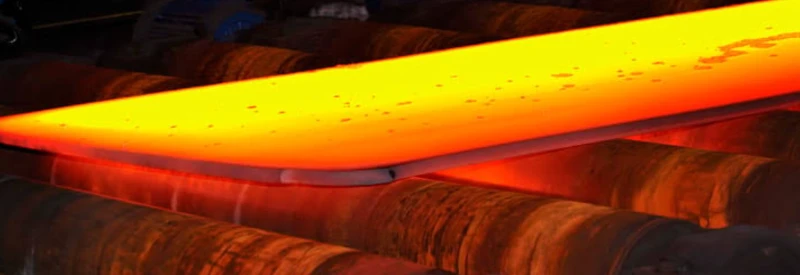
Inconel 625 (UNS N06625) Plate Material Properties
✅ Solid-solution strengthening by molybdenum and niobium Molybdenum and niobium enable reinforcement of the nickel matrix without precipitation hardening heat treatment for fabrication.
✅ Broad-spectrum local corrosion resistance It resists pitting, crevice attack and chloride stress corrosion cracking in seawater, sour oil and mixed chemical media.
✅ Stable mechanical performance over wide temperature span It maintains consistent tensile strength and ductility from cryogenic conditions up to around 980°C continuous service.
✅ Reliable fabrication and welding capability The plate supports cold forming, hot bending and welding; welded joints preserve corrosion resistance without post-weld ageing.
✅ Good fatigue and thermal cycling tolerance It withstands repeated thermal fluctuation and cyclic loading, suitable for components under alternating heat and mechanical stress.
✅ Low magnetic permeability at normal working temperatures The alloy remains non-magnetic in most service environments, fitting assemblies that require non-magnetic structural materials.
ASTM B443 Inconel 625 Plate and Sheet Standard Size Range
ASTM B443 classifies Inconel 625 flat products into plate, sheet and strip with separate dimension ranges. Hot and cold rolling routes determine available thickness limits. Standard widths and lengths cover common stock sizes, while non-standard dimensions are available by special order. Dimensions in this table represent typical production ranges, and final feasible sizes are subject to mill rolling capacity and heat lot arrangement.
| Product Form | Thickness Range | Width Range | Length Range |
|---|---|---|---|
| Sheet (cold rolled) | 0.46–6.4 mm | 600–2000 mm | 1000–6000 mm |
| Plate (hot rolled) | 4.8–50.8 mm standard; thicker upon special request | 1000–2500 mm | 2000–8000 mm |
ASTM B443 Inconel 625 Plate and Sheet Permissible Thickness Tolerance
ASTM B443 applies different thickness tolerance rules for plate, sheet and strip. For plate ≤50.8 mm, thickness deviation and average weight control are enforced simultaneously. Sheet and strip tolerance depends on nominal thickness and measuring position, measured at least 9.5 mm from the edge for widths above 25.4 mm. Tighter precision tolerances can be agreed through supplementary purchase specifications.
| Product Form | Nominal Thickness | Permissible Thickness Deviation | Measurement Rule |
|---|---|---|---|
| Strip | 0.13–6.4 mm | ±0.02 ~ ±0.15 mm | 9.5 mm from edge for wide strip; any position for narrow strip |
| Sheet | 0.46–6.4 mm | ±0.05 ~ ±0.25 mm | 9.5 mm from edge for width ≥25.4 mm |
| Plate ≤50.8 mm | 4.8–50.8 mm | -0.3 ~ +1.0 mm, paired with weight tolerance | Weight and thickness dual control per ASTM B443 Table 4 |
| Plate >50.8 mm | Above 50.8 mm | +0.8 ~ +2.0 mm, no negative tolerance | Only positive thickness allowance applies |
What industries use Inconel 625 nickel alloy plate?
✅ Aerospace engine piping, exhaust systems and casings Inconel 625 plate is fabricated into engine transfer piping segments, exhaust transition ducts and outer casing panels. These components endure cyclic high temperature, thermal fatigue and corrosive exhaust gas during engine startup and continuous flight operation.
✅ Chemical and petrochemical processing equipment This plate is machined for heat exchanger shells, reactor liner sections, distillation column internals and process vessel partitions. It withstands pitting and crevice corrosion in sour fluids, mixed acids and chloride-rich process media.
✅ Marine and seawater engineering components including propeller blades and blade shrouds Plate material is formed into propeller blade segments, blade protective shrouds and seawater pipeline bulkhead fittings. It maintains stability under continuous seawater immersion, chloride attack and hydrodynamic cyclic loading.
✅ Pollution control and scrubber system assemblies Inconel 625 plate makes up scrubber tower walls, gas inlet baffles and mist eliminator support frames. It resists corrosive flue gas, acidic condensate and temperature fluctuation within exhaust treatment facilities.
Inconel 625 Welding & Machining Guidelines
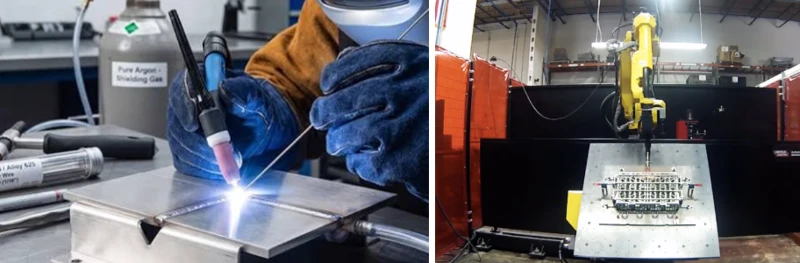
Inconel 625 can be welded by GTAW, GMAW and SMAW. ERNiCrMo-3 is the matching filler metal. Low heat input is required to avoid grain coarsening. Preheating is not mandatory for most cases; interpass temperature should be controlled below 150°C. Post-weld solution annealing is only needed when maximum corrosion resistance is required for critical corrosive service.
Machining Inconel 625 needs rigid tooling and low cutting speed due to work-hardening tendency. Sharp cutting tools and sufficient coolant reduce built-up edge. High feed rates help prevent work hardening on the machined surface. Light cuts are recommended to avoid surface cold working that lowers corrosion performance.
| Operation | Key Requirements |
|---|---|
| Welding Process | GTAW preferred; GMAW, SMAW acceptable |
| Filler Metal | ERNiCrMo‑3 |
| Interpass Temperature | Max 150°C |
| Preheat | Not required for standard thickness |
| Machining Strategy | Low cutting speed, sharp tools, adequate coolant, light cuts |
FAQ;
What is the price of an Inconel 625 sheet?
Inconel 625 sheets typically cost between ₹1,000 and ₹5,000 per kilogram, depending on the thickness, finish, and supplier.
What is the ASTM standard for Inconel 625?
Inconel 625 (UNS N06625) does not have just one single ASTM standard; instead, the correct standard depends entirely on the product form (such as plate, pipe, or bar).
What material is uns N06625?
UNS N06625 is a high-performance nickel-chromium-molybdenum superalloy widely known by the trade name Inconel 625.
Can Inconel 625 rust?
No, Inconel 625 does not rust.
Is Inconel corrosion resistant?
Inconel Inconel - Wikipedia has exceptional corrosion and oxidation resistance because it forms a thick, stable protective layer on its surface when exposed to heat and oxygen.


