

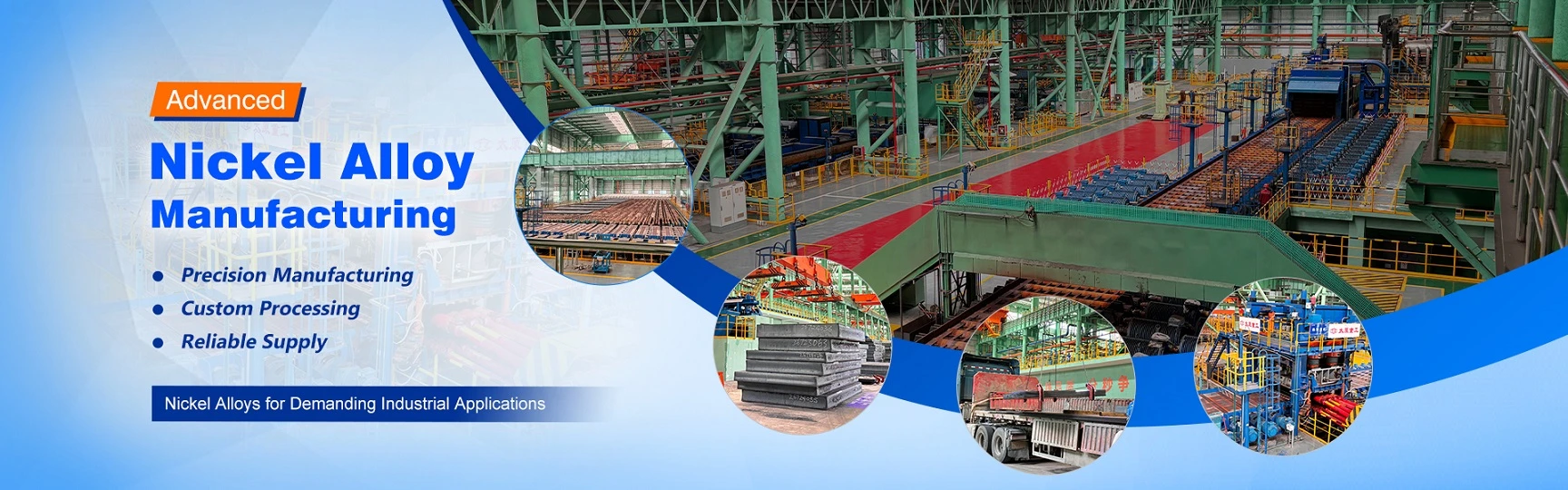
ASTM B637 Inconel 718 (UNS N07718) round bar is a precipitation-hardened nickel‑iron‑chromium superalloy supplied to this ASTM specification. Strengthened by gamma‑prime and gamma‑double‑prime precipitates, it retains high tensile, creep and fatigue strength from cryogenic temperatures up to around 700°C. It features good weldability and machinability, widely forged and machined for gas turbine, aerospace and oilfield high‑load hot‑section components.
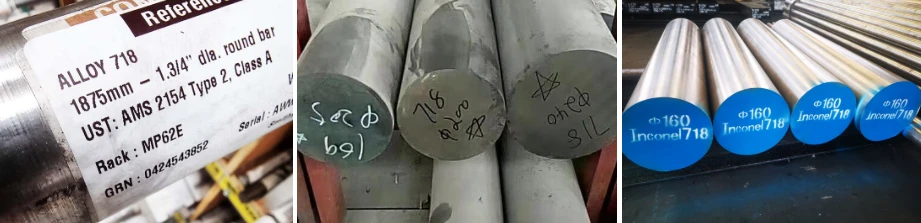
If you need customized sizes and technical parameters of Inconel 718, feel free to consult our professional team.
Main Specifications & Standards of Inconel 718 Round Bar
Equivalent Grade Reference:
This table lists primary cross-reference grades for Inconel 718 round bar. ASTM B637 / ASME SB 637 governs wrought nickel alloy bar stock. UNS N07718 and W.Nr. 2.4668 are universal material identifiers. AMS 5662 specifies annealed condition, while AMS 5663 covers precipitation-hardened material for aerospace hot-section components. These grades support direct substitution under matching heat treatment states.
| Item | Details |
|---|---|
| Primary Specification | ASTM B637 / ASME SB 637 |
| UNS Number | N07718 |
| Werkstoff Number | 2.4668 |
| AMS 5662 | Annealed condition |
| AMS 5663 | Precipitation hardened / aged condition |
Available Product Forms:
ASTM B637 specifies multiple wrought forms of Inconel 718. This table matches the available size scope covering plate & sheet, round bar, tube, pipe and wire. Each form follows unified chemical composition rules, while dimensional limits and tolerance standards differ by product category. These stock shapes support direct machining, forming and fabrication for aerospace, oil & gas and power generation projects.
| Product Form | Description |
|---|---|
| Plate and Sheet | Flat rolled product, thickness 0.016″–3.00″, width 20″–48″ |
| Round Bar | Solid circular cross-section, diameter from 1/4″ up to 12″ |
| Tube (Welded & Seamless) | Seamless or welded tubing, OD 1/16″–3″, wall 0.010″–0.250″ |
| Pipe | Standard pipe, 1/4″ Sch 10 through 16″ Sch 80 |
| Wire | Solid wire, diameter range 0.1 mm – 20 mm |
Inconel 718 Round Bar Chemical Composition(%)
| C | Si | Mn | P | S | Cr | Ni | Nb+Ta | Co | Mo | Fe | Al | Ti | Cu | B |
|---|---|---|---|---|---|---|---|---|---|---|---|---|---|---|
| 0.08 max | 0.35 max | 0.35 max | 0.015 max | 0.015 max | 17.0-21.0 | 50.0-55.0 | 4.75-5.50 | 1.0 max | 2.8-3.3 | balance | 0.2-0.8 | 0.65-1.15 | 0.3 max | 0.006 max |
Inconel 718 Round Bar Mechanical Properties (solution + precipitation harden)
| Tensile Strength Rm (Mpa) | Yield Strength Rp0.2 (Mpa) | Elongation % in 2″ (50.8 mm) | Reduction Of Area (%) | Hardness (HBW) |
|---|---|---|---|---|
| 1275 min | 1034 min | 6 min | 8 min | 331 min |
Inconel 718 Round Bar Heat Treatment and Delivery Condition
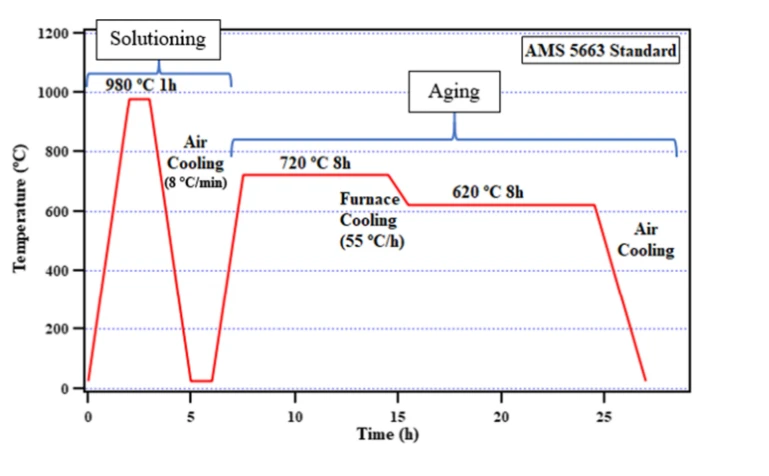
The heat treatment system of Inconel 718 round bar directly determines its final mechanical properties. Buyers must specify the delivery condition based on application requirements.
Standard heat treatment systems fall into three categories:
| Treatment Type | Process Parameters | Applicable Requirements |
|---|---|---|
| Type I (High-temperature solution) | 1010~1065℃±10℃, hold 1h, oil/air/water cooling + 720℃±5℃, 8h, furnace cool at 50℃/h to 620℃±5℃, 8h, air cooling | Controls grain size, higher plasticity |
| Type II (Standard heat treatment) | 950~980℃±10℃, hold 1h, oil/air/water cooling + 720℃±5℃, 8h, furnace cool at 50℃/h to 620℃±5℃, 8h, air cooling | Standard double aging, balanced strength and plasticity |
| Type III (Direct aging) | 720℃±5℃, 8h, furnace cool at 50℃/h to 620℃±5℃, 8h, air cooling | Direct aging, maximum strength enhancement |
The purpose of solution treatment is to fully dissolve precipitated phases within the grains to obtain a uniform and stable austenitic microstructure, laying the structural foundation for subsequent aging strengthening. The γ″ phase fully dissolves at 950°C, and the δ phase fully dissolves at 1020°C
Delivery Conditions and Corresponding Standards:
| Delivery Condition | Governing Standard | Typical Mechanical Properties (Room Temperature) | Applicable Scenarios |
|---|---|---|---|
| Solution annealed (soft) | AMS 5662 / ASTM B637 | Tensile ≥965 MPa, Yield ≥550 MPa, Elongation ≥30% | Components requiring subsequent forging, cold forming, or secondary heat treatment |
| Solution annealed + double aged | AMS 5663 / ASTM B637 | Tensile ≥1240 MPa, Yield ≥1030 MPa, Elongation ≥12% | Final high-strength components used directly |
| High-temperature solution annealed | AMS 5664 | Per project specification requirements | Applications requiring service at higher temperatures |
Buying note: Always pair the grade name with the governing specification and the delivery condition, for example "UNS N07718 per AMS 5663, solution treated and precipitation aged". The same forging leaves the factory at either roughly 550 MPa or roughly 1,034 MPa proof strength depending on whether it was aged - this is the single most common source of dispute on Alloy 718 orders. MTC (material test certificate) and inspection reports determine final acceptance.
Get professional UNS N07718 material selection guidance for high-temperature and corrosion equipment.
Inconel 718 Temperature Range
Inconel 718 is one of the few nickel-based superalloys that maintains stable performance over an extremely wide temperature range.
| Temperature Parameter | Specific Value | Description |
|---|---|---|
| Long-term service temperature range | -253℃ ~ 700℃ | Excellent comprehensive mechanical properties within this range |
| Short-term service temperature upper limit | Up to 800℃ | Short-time use can reach 800℃ |
| Maximum oxidation resistance temperature | 980℃ (1800°F) | Excellent oxidation resistance maintained at this temperature |
| Melting range | 1260℃ ~ 1336℃ | Melting interval |
| Cryogenic limit | -423°F (-253℃) | Maintains stable chemical properties and toughness at cryogenic temperatures |
Key performance data across temperatures:
| Temperature Condition | Tensile Strength | Yield Strength | Description |
|---|---|---|---|
| Room temperature (20℃) | ≥1270 MPa | ≥1030 MPa | Standard double-aged condition |
| 650℃ high-temperature service | ≥1000 MPa | ≥860 MPa | Maintains high strength, creep resistance, fatigue resistance |
| -253℃ cryogenic | Maintains good toughness and strength | - | Suitable for cryogenic tanks, rocket engines, etc. |
The alloy's yield strength ranks first among all wrought nickel-based superalloys below 650°C. Its γ″ (Ni₃Nb) strengthening phase has a maximum stability temperature of 650°C; exceeding this temperature causes coarsening and strength degradation. The alloy retains high tensile strength, fatigue strength, creep strength, and rupture strength at 700°C, but long-term service is not recommended above 650°C.
Inconel 718 Round Bar Typical Application Scenarios
Competitive advantage
The company conducted a competitive advantage analysis to identify its strengths and weaknesses compared to its rivals.
Aerospace
Turbine discs, compressor blades, casings, shafts, fasteners, elastic elements, gas ducts, seals, and combustion chambers - both rotating and static components of aircraft engines and rocket motors. The alloy was developed in 1959 by the Huntington Division of the International Nickel Company and became a primary aero-engine material in the 1960s.
01
Gas Turbines & Power Generation
Land-based gas turbine turbine discs, seals, combustion hardware; nuclear reactor internals, heat exchangers, steam generator components. The alloy offers radiation resistance, oxidation resistance, and is suitable for elastic elements and grids in the nuclear industry.
02
Oil & Gas / Petrochemical
Downhole tools, wellhead components, high-acidic (H₂S) corrosion-resistant parts; the alloy complies with NACE MR0175 and API 6A718 standards for sour service applications. Typical applications include packers, high-temperature/High-pressure valves, pump shafts, and wellhead components.
03
Cryogenic Engineering
Cryogenic storage tanks (LNG transport), cryogenic equipment. The alloy maintains good impact toughness and strength at -253°C, making it reliable for ultra-low-temperature service.
04
Automotive & Industrial Machinery
Turbocharger rotors, exhaust components, high-temperature fasteners; hot-work dies, high-temperature fixtures, vacuum equipment structural parts.
05

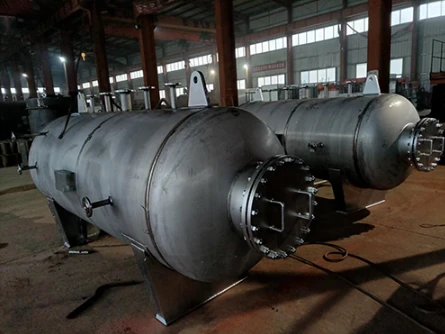
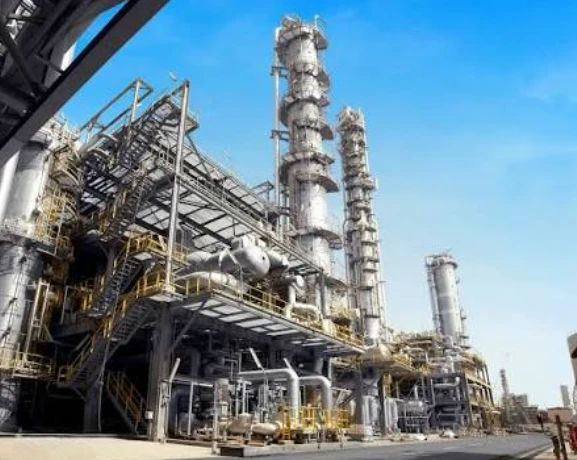
Inconel 718 Size Specification Table
Inconel 718 round bars are typically available in a wide range of specifications:
| Product Form | Supply Size Range | Surface Condition | Delivery Condition |
|---|---|---|---|
| Forged round bar | Diameter φ6mm ~ φ400mm | Black forged surface | Solution annealed / Solution annealed + aged |
| Cold-drawn bright round bar | Diameter φ6mm ~ φ100mm (typical) | Ground / bright | Solution annealed / Solution annealed + aged |
| Hot-rolled black round bar | Diameter φ50mm ~ φ250mm (typical) | Black | Solution annealed |
| Turned (machined) round bar | Diameter φ20mm ~ φ350mm | Turned bright | Solution annealed / Aged |
Inconel 718 Forging Round Bar Process Parameter Table
| Process Parameter | Recommended Value | Description |
|---|---|---|
| Ingot breakdown (forging) heating temperature | ≤1120℃ | Exceeding this temperature causes grain coarsening |
| Suitable hot working temperature range | 1120℃ ~ 900℃ | Good plasticity within this range |
| Finish forging temperature | 930℃ ~ 950℃ | Too high or too low affects microstructure and properties |
| Final working temperature at 20% deformation | ≥960℃ | Ensures plasticity during processing |
| Cooling method | Water quench or other rapid cooling | Timely annealing required after hot working for optimal performance |
Forging Process Requirements:
| Process Step | Specific Requirements |
|---|---|
| Heating environment | Furnace atmosphere must be neutral or weakly alkaline; avoid fluctuations between oxidizing and reducing conditions; fuel sulfur content must be low |
| Surface cleanliness | Remove oil, paint, chalk marks, and other contaminants before heating; sulfur, phosphorus, lead and other low-melting-point metals cause embrittlement |
| Homogenization pretreatment | 1160℃, 20-30h + 1180~1190℃, 110-130h, to eliminate niobium segregation and break up network δ phase |
| Post-hot-working treatment | Timely annealing with water quenching or other rapid cooling method |
Recommended Process Sequence:
- Melt via VIM (vacuum induction melting) + ESR (electroslag remelting) or VIM + VAR (vacuum arc remelting) for high cleanliness.
- Uniform homogenization ensures complete dissolution of the L phase in the ingot, eliminating niobium segregation.
- Breakdown heating not exceeding 1120°C; control deformation amount and finish forging temperature during forging.
- Timely solution treatment after hot working, preparing for subsequent aging strengthening
Inconel 718 Forged Round Bar Key Characteristics
1. High-Strength Precipitation Hardening Mechanism
Strengthened primarily by the γ″-Ni₃Nb phase, supplemented by the γ′-Ni₃(Al,Ti) phase.After standard double aging treatment (solution annealing + two-step aging at 720°C/620°C), room-temperature tensile strength reaches 1,240–1,515 MPa and yield strength reaches 1,030–1,240 MPa. At 650°C, tensile strength remains ≥1,000 MPa. Yield strength increases by more than 30% after aging treatment compared to the annealed condition - more than double that of Inconel 625. Its yield strength ranks first among wrought superalloys below 650°C.
2. Wide-Temperature Adaptability
Long-term service range: -253°C to 700°C (704°C per AMS specifications), with short-term use up to 800°C.At -253°C (liquid hydrogen temperature), the alloy maintains stable chemical properties and impact toughness. Oxidation resistance is maintained up to 980–1,000°C. Melting range: 1,260–1,336°C. Density: 8.19–8.20 g/cm³.
3. Corrosion Resistance
Resists stress corrosion cracking and pitting in both high- and low-temperature environments, including chloride-ion and H₂S-containing sour gas environments.Complies with NACE MR0175 (Level IV) and API 6A718 standards for sour service. The chromium content (17–21%) forms a protective Cr₂O₃ oxide scale that shields the base metal from oxidation at high temperatures. Performs reliably in saltwater, moderate-concentration acids, and alkalis.
4. Weldability
Weldable by TIG (GTAW), MIG (GMAW), electron beam, seam welding, and spot welding.The niobium addition enables a sluggish aging response that prevents post-weld cracking during fabrication. The alloy can be welded in the fully aged condition without losing its strengthening effect, and weld areas achieve high strength after aging treatment. No intergranular cracking or sensitization occurs during welding.
5. Workability and Formability
Hot working temperature range: 950–1,150°C (forging or rolling),with the recommended range of 1,120–900°C for optimal plasticity. The work-hardening rate is higher than austenitic stainless steel, requiring intermediate annealing during cold working. Solution-annealed 718 has good machinability; the aged high-hardness state (36–44 HRC) requires coated carbide or ceramic tooling with controlled cutting speeds and rigid equipment.
6. Long-Term Microstructural Stability
Maintains long-term structural stability below 650°C, the maximum stability temperature of the γ″ strengthening phase.Homogenization treatment (1,160°C for 20–30h + 1,180–1,190°C for 110–130h) effectively eliminates niobium segregation and ensures material uniformity. The microstructure is particularly sensitive to hot working processes, requiring precise control of phase precipitation and dissolution behavior to prevent heat treatment cracking.
Why Choose Gnee as Your Nickel-Based Alloy Supplier?
✅ Since 2008, we have exported alloy materials to clients across Asia, Europe and other regions globally.
✅ Qualified with ISO, SGS and BV third-party certifications.
✅ Complete inspection services: PMI, UT, eddy current testing and other quality checks.
✅ Global stock of Inconel, Hastelloy, Incoloy and Monel tubes, plates & bars.
✅ Custom machining: cutting, polishing, CNC processing and tailored packaging.
✅ Stock items ship in 7–15 working days; custom orders 15–25 working days, with priority MRO scheduling.
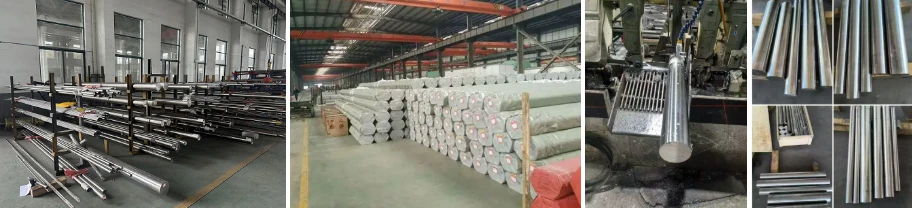
📦 Packaging and Shipping
Our nickel-based alloy products adopt industrial anti-corrosion packaging for overseas shipment:
- Heat-treated wooden pallets or solid export crates
- Multi-layer moisture-proof & rust-resistant wrapping
- Marked labels with heat number, material grade, standard and dimensions
- Global delivery options: sea freight, air freight and courier express
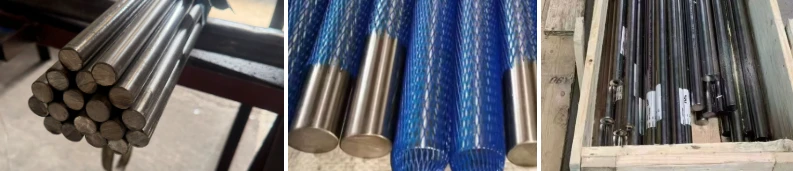
Stable UNS N07718 inventory for urgent project demands.
FAQ:
What is the ASTM standard for Inconel 718?
The primary ASTM standard for Inconel 718 (UNS N07718) depends on the product form, with ASTM B637 being the most common specification for rod, bar, forgings, and forging stock.
Is Inconel 718 a stainless steel?
No,Inconel 718 is not stainless steel.
Is 718 Inconel stronger than titanium?
Yes, Inconel 718 is generally stronger than common titanium alloys (like Grade 5 / Ti-6Al-4V) in terms of absolute mechanical strength, but titanium offers a better strength-to-weight ratio.
Is nickel 718 the same as Inconel 718?
Yes, Nickel 718 and Inconel 718 are the exact same high-performance, nickel-based superalloy.
Can Inconel be welded to stainless steel?
Yes, Inconel can be successfully welded to stainless steel, but it is a dissimilar metal weld that requires specific techniques and filler materials.


