

What Is the Relationship Between Inconel 600, UNS N06600 and NCF600?
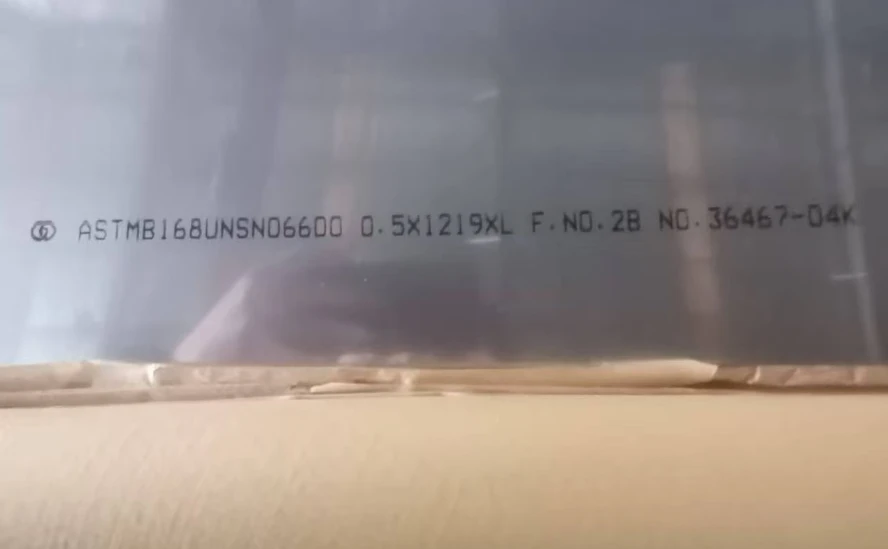
Inconel 600 is the commercial trade name of a nickel‑chromium‑iron alloy. UNS N06600 is its unified number assigned by the Unified Numbering System for metals, serving as a globally recognized material identifier. NCF600 is the Japanese JIS grade designation for this identical alloy. All three labels refer to the same material with consistent chemical composition and mechanical properties; they only differ in naming systems used by brand, US standard and Japanese industrial specification.
Global Inconel 600 Equivalent Grade Master Table
Multiple standard systems correspond to Inconel 600 worldwide, divided into full equivalent and similar substitute categories. Full equivalent grades feature identical chemical composition, mechanical properties and manufacturing standards, supporting direct interchange. Similar substitutes have partial parameter deviations and cannot replace Inconel 600 in strict engineering projects.
|
Standard System |
Grade Designation |
Equivalence Type |
|---|---|---|
|
UNS (USA) |
N06600 |
Standard Base Grade |
|
DIN / W.Nr |
2.4816 |
Full Equivalent |
|
EN Standard |
NiCr15Fe |
Full Equivalent |
|
JIS (Japan) |
NCF600 |
Full Equivalent |
|
BS (UK) |
NA14 |
Full Equivalent |
|
AFNOR (France) |
NC15Fe |
Full Equivalent |
|
GOST (Russia) |
ХН78Т |
Similar Substitute |
|
Chinese GB |
GH3600 |
Full Equivalent |
Chemical Composition Comparison of Equivalent Grades
The core reason for the interchangeability of full equivalent grades is the consistent chemical element limit. This table compares the main element content of Inconel 600 and its mainstream equivalent grades, with all data based on official standard limit values.
|
Grade |
Ni (%) |
Cr (%) |
Fe (%) |
C (%) |
Mn (%) |
Si (%) |
|---|---|---|---|---|---|---|
|
Inconel 600 (N06600) |
≥72.0 |
14.0–17.0 |
6.0–10.0 |
≤0.15 |
≤1.0 |
≤0.5 |
|
2.4816 / NiCr15Fe |
≥72.0 |
14.0–17.0 |
6.0–10.0 |
≤0.15 |
≤1.0 |
≤0.5 |
|
NCF600 |
≥72.0 |
14.0–17.0 |
6.0–10.0 |
≤0.15 |
≤1.0 |
≤0.5 |
|
GH3600 |
≥72.0 |
14.0–17.0 |
6.0–10.0 |
≤0.15 |
≤1.0 |
≤0.5 |
Inconel 600 Mechanical Property Equivalent Verification (Solution Annealed)
Mechanical properties are the key index to judge whether equivalent materials can be interchanged. All full-equivalent Inconel 600 grades adopt unified solution annealing process, with consistent room-temperature mechanical index limits.
|
Performance Index |
Standard Requirement
|
Full Equivalent Grade Consistency |
|---|---|---|
|
Tensile Strength (MPa) |
≥550 |
100% consistent |
|
0.2% Yield Strength (MPa) |
≥240 |
100% consistent |
|
Elongation (50mm gauge) |
≥30% |
100% consistent |
|
Max Hardness (HB) |
≤200 |
100% consistent |
Stable mechanical properties ensure that equivalent grades do not affect equipment structural strength and assembly accuracy. Any grade failing to meet the above mechanical limits cannot be defined as a full Inconel 600 equivalent.

Inquiry Tip: Different equivalent grades apply to different regional project standards. Send your project standard, working temperature and medium requirements to confirm the most applicable interchangeable grade and avoid inspection risks.
Inconel 600 Full Equivalent vs Similar Substitute: Strict Substitution Rules
Many procurement teams confuse similar nickel alloys with Inconel 600 equivalents, leading to engineering failures. It is necessary to distinguish full equivalent, similar substitute and non-replaceable grades clearly.
Full Equivalent Grades (100% Interchangeable): 2.4816, NiCr15Fe, NCF600, NA14, GH3600. These grades have identical composition, performance and standard specifications, supporting direct replacement in all industrial scenarios and passing full standard inspection.
Similar but Non-Replaceable Grades: Incoloy 800, Incoloy 800H and ordinary nickel-chromium alloys. These grades have nickel content below 70%, with lower high-temperature carburization resistance and stress corrosion resistance. They cannot replace Inconel 600 in high-temperature furnace and chloride corrosion environments.
Zero Equivalent Grades: Hastelloy series, 254SMO, duplex stainless steel. These alloys have completely different element systems and performance orientations, with no substitution value for Inconel 600 projects.
Inconel 600 Common Industry Standards
Inconel 600 (UNS N06600) adopts distinct ASTM, ASME and AMS standards by product form, regulating chemical composition, mechanical performance, heat treatment and inspection protocols. ASTM specifications serve general industrial pressure and corrosion scenarios, while AMS standards impose stricter quality and test thresholds for aerospace applications. These specifications form the basis for material acceptance across heat treatment, chemical, power and aviation sectors.
| Product Form | Standard Number | Scope Description |
|---|---|---|
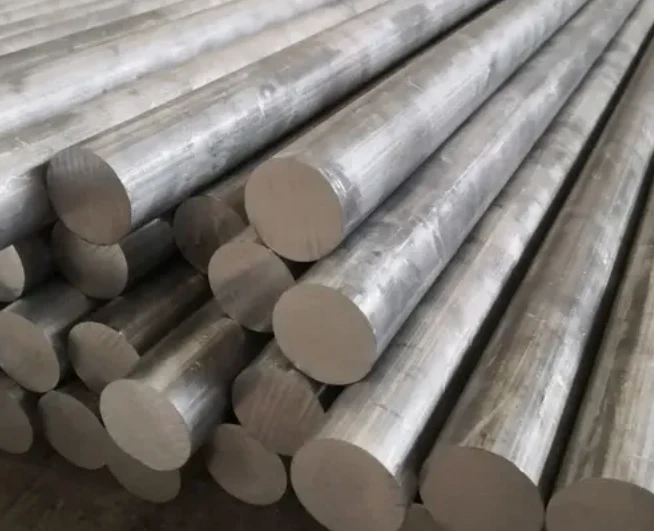
| Round bar | ASTM B166 / AMS 5687 | ASTM: hot & cold finished bars, rods; AMS 5687: aerospace-grade Inconel 600 bar |
| Plate, sheet | ASTM B168 / AMS 5540 | ASTM: hot rolled plate, cold rolled sheet/strip; AMS 5540: aerospace sheet and plate |
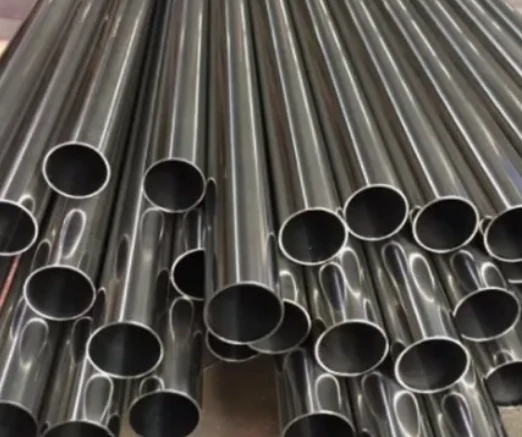
| Seamless tube & pipe | ASTM B167 / AMS 5580 | ASTM: seamless tubing for pressure service; AMS 5580: aerospace seamless tube |
| Welded tube | ASTM B705 | Welded nickel alloy tube with supplementary NDT requirements |
| Forgings | ASTM B564 / AMS 5766 | ASTM: hot-worked industrial forgings; AMS 5766: aerospace forgings |

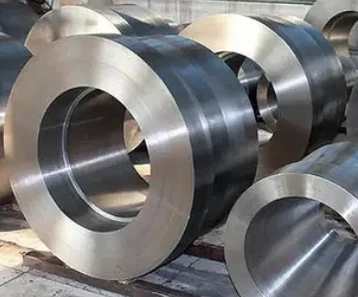
Inconel 600 (UNS N06600) Typical Applications
✅ Chemical & Petrochemical Processing Used for heat exchanger tubes, reactor internals, acid-resistant vessel linings and distillation trays. It handles chloride-containing and mildly corrosive process fluids under moderate high-temperature operating conditions.
✅ Heat Treatment & Industrial Furnace Fabricated into furnace muffles, radiant tubes, roller rails and fixture racks. It resists oxidation and thermal cycling during continuous high-temperature heating and quenching cycles.
✅ Power Generation Equipment Applied to boiler superheater components, gas turbine combustion liners and flue gas duct parts. It maintains stability in high-temperature flue gas and thermal fluctuation environments.
✅ Aerospace & Aviation Systems Manufactured into engine exhaust ducts, turbine shrouds and aircraft heat shield assemblies. It serves thermal protection components under cyclic high heat and oxidation loads.
✅ Food & Pharmaceutical Processing Made into sterilizer trays, vessel jackets and sanitary heat exchange coils. It avoids contamination and withstands repeated hot cleaning and steam sterilization cycles.
✅ Nuclear Energy Industry Used for reactor control rod components, heat transfer sleeves and primary circuit auxiliary fittings. It retains stable performance under high temperature and radiation exposure.
Inconel 600 (UNS N06600) Key Characteristics
✅ Excellent oxidation resistance at elevated temperatures It forms a stable protective oxide layer, resisting scaling in air up to approximately 1095°C under cyclic thermal conditions.
✅ Good resistance to chloride stress corrosion cracking Its nickel-rich matrix lowers susceptibility to chloride-induced SCC in warm water and mild corrosive aqueous environments.
✅ Stable mechanical properties across wide temperature range It retains consistent tensile strength and ductility from cryogenic temperatures up to high-heat operating conditions.
✅ Strong workability and flexible fabrication performance The alloy supports hot forming, cold stamping and machining; it can be readily welded without mandatory post-weld heat treatment.
✅ Resistance to many organic and mild inorganic corrosives It maintains stability against dilute acids, alkaline solutions and most organic compounds in chemical process environments.
✅ Non-magnetic feature for special engineering needs It stays non-magnetic at room and elevated temperatures, suitable for equipment requiring non-magnetic structural parts.
FAQ:
Are alloy 600 and Inconel 600 the same?
Yes, alloy 600 and Inconel 600 are the exact same material.
What is the material N06600?
UNS N06600 (commonly known as Inconel 600 or Alloy 600) is a high-performance nickel-chromium-iron superalloy designed for oxidation and corrosion resistance at extreme temperatures.
What are the key differences between Inconel 601 and Inconel 600?
Inconel 600 and Inconel 601 are both nickel-chromium alloys, but Inconel 601 includes added aluminum and higher chromium for superior high-temperature oxidation resistance, whereas Inconel 600 has higher nickel content for better general aqueous and chloride-ion stress-corrosion resistance.
What are the key differences between Inconel 600 and Inconel 750?
Inconel 600 is a solid-solution strengthened alloy, while Inconel X-750 is a precipitation-hardenable alloy enhanced with aluminum and titanium for much higher strength.
What are the key differences between Inconel 600 and Inconel 718?
Inconel 600 is designed for extreme high-temperature oxidation resistance up to 2000°F (1095°C), while Inconel 718 is a precipitation-hardened alloy built for superior mechanical strength and load-bearing performance up to 1200°F (650°C).


