

What is Inconel 600 UNS N06600?
Inconel 600, designated UNS N06600 and W.Nr. 2.4816, is a nickel-chromium-iron wrought alloy. Nickel forms the base matrix, delivering inherent resistance to chloride stress corrosion cracking and reducing brittleness at cryogenic and elevated temperatures. Chromium forms a stable chromium oxide surface layer, providing oxidation resistance up to approximately 1095 °C. Iron is added to balance material cost while retaining compatible ductility.
This alloy is not precipitation-hardened; its performance relies on solid-solution strengthening. Common product forms include Inconel 600 tube, sheet, plate and forgings. It maintains stable mechanical properties under cyclic thermal loading, resisting corrosion in many neutral and alkaline environments. It is widely selected for aerospace thermal shielding, chemical processing equipment and high-temperature furnace components.

ASTM B163 / ASME SB163 UNS N06600 Nickel Alloy Seamless Heat Exchanger Tubes
ASTM B163 / ASME SB-163 Standard Requirements
ASTM B163 (ASME SB-163) covers seamless nickel and nickel-alloy heat exchanger and condenser tubes, including UNS N06600 Inconel 600. This specification governs seamless tube production, heat treatment state, dimensional rules and mechanical acceptance criteria. Two dimension marking methods are defined: outside diameter with average wall thickness, and outside diameter with minimum wall thickness.
The standard's regular dimensional scope limits outer diameter up to 3 in (76.2 mm), with corresponding wall thickness constraints. Buyers must confirm the standard revision version before order placement, as requirement revisions may alter acceptance thresholds.
ASTM B163 Dimensional Marking Definition for UNS N06600 Tube
| Dimension Marking Type | Definition | Tolerance Logic |
|---|---|---|
| OD + Average Wall Thickness | Wall thickness measured at multiple circumferential points, calculated average value | Tolerance applies to average wall; individual local thin spot is allowed within specified limit |
| OD + Minimum Wall Thickness | Every measured wall point shall not fall below the stated minimum thickness | No wall measurement can be less than the specified minimum wall |
Practical Example:
Take Inconel 600 seamless tube: OD 25.4 mm, nominal wall 2.11 mm.
Case 1: OD + Average Wall (±10% wall tolerance)
Multiple wall readings: 1.92 mm, 2.05 mm, 2.18 mm, 2.29 mm
Average = 2.11 mm. This tube is acceptable, even though one reading (1.92 mm) is thinner than nominal wall.
Case 2: OD + Minimum Wall, specified minimum wall = 1.90 mm
All measured wall points must ≥1.90 mm. If any single reading is 1.86 mm, the tube is rejected, regardless of average value.
Note: Minimum wall specification brings stricter quality control, commonly selected for high-pressure heat exchanger and corrosion service.
Inconel 600 Seamless Nickel Alloy Tubes Outside Diameter And Wall Thickness Tolerances
| Material | Nominal Outside Diameter, In. (Mm) | Permissible Variations [Note(1)] | |||||
|---|---|---|---|---|---|---|---|
| Outside Diameter, In. (Mm) | Wall Thickness, % | ||||||
| Anerage Wall | Minimum Wall | ||||||
| + | – | + | – | + | – | ||
| UNS N02200, UNS N02201, And UNS N04400 | Average Wall | 0.005(0.13) | 0 | 12.5 | 12.5 | 25.0 | 0 |
| 8/5 To 1 1/2(15.9 To 38.1), Incl | 0.005(0.13) | 0.005(0.13) | 10.0 | 10.0 | 20.0 | 0 | |
| Over 1 1/2 To 3(38.1 To 76.2), Incl | 0.010(0.25) | 0.010(0.25) | 10.0 | 10.0 | 22.0 | 0 | |
| UNS N06600, UNS N066090, UNS N06045, UNS N06025, UNS N08800, UNS N08810, UNS N08811, UNS N08801, And UNS N08825 |
1/2 To 5/8 (12.7 To 15.9), Excl | 0.005(0.13) | 0.005(0.13) | 12.5 | 12.5 | 25.0 | 0 |
| 8/5 To 1 1/2 (15.9 To 38.1), Incl | 0.0075(0.19) | 0.0075(0.19) | 10.0 | 10.0 | 20.0 | 0 | |
| Over 1 1/2 To 3 (38.1 To 76.2), Incl | 0.010(0.25) | 0.010(0.25) | 10.0 | 10.0 | 22.0 | 0 | |
ASTM B163 UNS N06600 Seamless Nickel Alloy Tubes Chemical Composition
| Grade | Ni | Cu | Fe | Mn | C | Si | S | Cr |
| UNS N06600 | 72.0 min. | 0.50 max | 6.0-10.0 | 1.0 max | 0.15 max | 0.50 max | 0.015 max | 14.0-17.0 |
ASTM B163 UNS N06600 Seamless Nickel Alloy Tubes Mechanical Properties
| Grade |
Tensile Strength min, ksi (MPa) |
Yield Strength min, ksi (MPa) |
Elongation in 2 in. or 50mm, min (%) |
| UNS N06600 | 80(552) | 35(241) | 30 |
Why Use Inconel 600 in Heat Exchangers?
Inconel 600 heat exchanger tube applications rely on three core material properties that address common failure risks for shell-and-tube heat exchangers.
Corrosion Resistance: UNS N06600 offers reliable resistance to chloride stress corrosion cracking in neutral water, alkaline fluids and mild organic media. It is not suitable for strong reducing acids such as concentrated hydrochloric acid. This property prevents tube cracking under stagnant or fluctuating chloride environments in heat exchange loops.
Oxidation Resistance:The 14–17% chromium content forms a continuous, adherent Cr₂O₃ oxide film on the alloy surface. This passive layer blocks oxygen diffusion, delivering stable oxidation protection at continuous temperatures up to 1095°C for high-temperature heat exchanger service.
Thermal Service Performance: It retains consistent ductility and mechanical strength under cyclic thermal loading. Material suitability is evaluated by operating temperature, design pressure, fluid composition and thermal cycling frequency. The alloy resists thermal fatigue, reducing tube leakage risk during repeated heating and cooling cycles.
UNS N06600 Seamless Tube Manufacturing and Quality Control
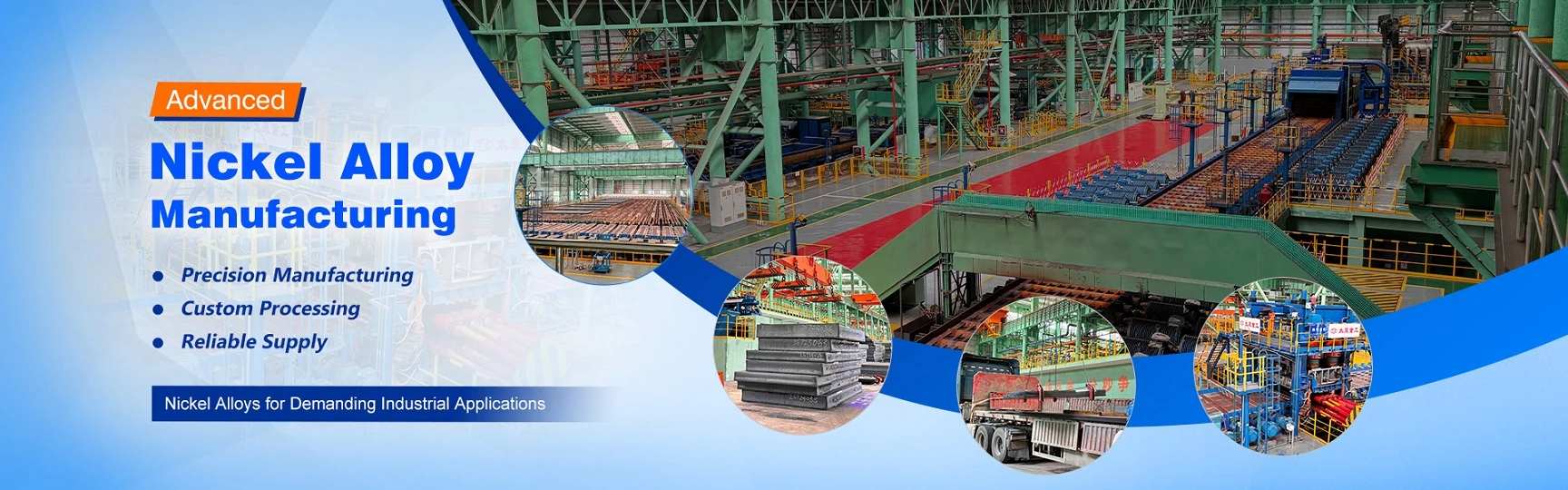
The Inconel 600 seamless tube manufacturing process covers sequential production and inspection steps: raw material verification, hot working, piercing, cold working, heat treatment, straightening, cut-to-length cutting, final inspection and export packaging.
First, raw bar stock undergoes PMI composition and surface inspection before production. The billet is heated and pierced to form hollow tube shells, followed by cold drawing or cold rolling to achieve target OD and wall thickness. Solution annealing heat treatment is applied to restore ductility and meet ASTM B163 requirements. Tubes are then straightened and cut to specified lengths.
Dimensional checks, PMI and non-destructive testing are completed before packing. This workflow serves as a general schematic; actual procedures vary by factory, so refer to your supplier's real production specifications.
What Tests and Certificates Are Required?
For UNS N06600 heat exchanger tubes per ASTM B163, mandatory tests and documentation are required before shipment. Chemical composition verification via PMI or lab spectroscopy confirms Ni, Cr and Fe content. Dimensional inspection checks outer diameter, wall thickness and length tolerances. Mechanical tests include tensile and hardness testing.

Non-destructive examinations cover eddy current test and hydrostatic test. Standard mill test certificate (MTC 3.1) records all test data. MTC 3.2 requires independent third-party witness. All records maintain full material traceability. Test packages shall match the ordered standard and purchase specification.

Where Are UNS N06600 Heat Exchanger Tubes Used?
UNS N06600 heat exchanger tubes are widely deployed in equipment facing high temperature and chloride-containing process fluids.
- Chemical processing: shell & tube heat exchangers for caustic environments, evaporators and process cooling loops.
- Power generation: boiler heat exchange tubes and flue gas recovery systems resisting high-temperature oxidation.
- Petrochemical industry: process heat exchangers for refining units under thermal cycling.
- Special industrial furnace equipment: radiant and heat transfer tubes operating at elevated temperatures. These tubes are selected when stainless steel fails from stress corrosion cracking or high-temperature oxidation.
Contact us for the latest export price quote for UNS N06600

FAQ:
What are the key differences between Inconel 600 and Inconel 718?
Inconel 600 and Inconel 718 are both nickel-chromium superalloys, but they differ significantly in strengthening mechanisms, mechanical strength, cost, and ideal operating environments.
What are the key differences between Inconel 600 and 601?
The primary difference is that.Inconel 600 is designed for general corrosion and chloride stress-corrosion resistance, while
Inconel 601 contains added aluminum and higher chromium to deliver superior high-temperature oxidation, carburization, and thermal cycling resistance.
What are the key differences between Inconel 600 and Inconel 750?
The key difference between Inconel 600 and Inconel X-750 is how they gain strength:Inconel 600 is a solid-solution strengthened alloy that cannot be hardened by heat treatment, whereas Inconel X-750 (often referred to simply as Inconel 750) contains added aluminum and titanium to allow precipitation hardening (age hardening).
What material is equivalent to Inconel 600?
Inconel 600 (also known as Alloy 600) is equivalent to several international standards and alternative commercial grade names.
What are the key differences between Inconel 600 and 625?
Inconel 600 and Inconel 625 are both nickel-based superalloys, but Inconel Alloy 600 VS Inconel Alloy 625 shows that Alloy 625 offers significantly higher mechanical strength and superior resistance to pitting, crevice corrosion, and marine environments due to the addition of molybdenum and niobium, whereas Alloy 600 excels in high-temperature oxidation and carburization resistance.


