

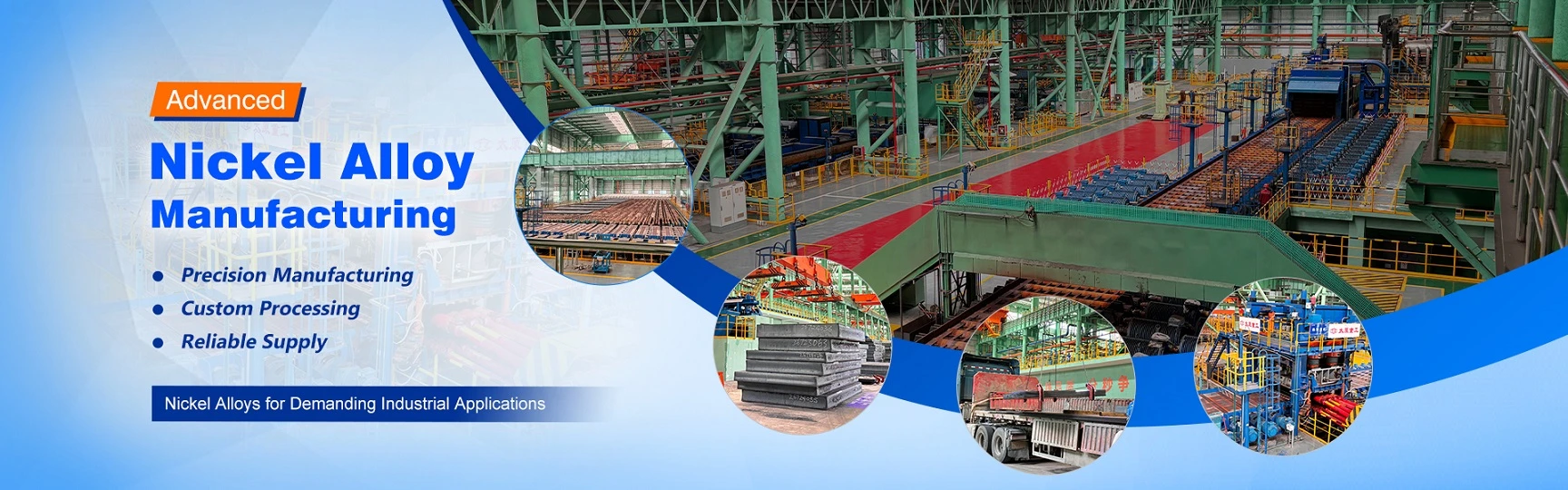
Nickel-based alloy manufacturers: How to choose alloy materials that suit your needs
Nickel-based alloy manufacturers: How to choose alloy materials that suit your needs
In today's industrial field, nickel-based alloys have attracted much attention due to their excellent high temperature resistance and corrosion resistance. Whether it is aerospace, chemical or energy industry, nickel-based alloys are widely used. However, facing many nickel-based alloy manufacturers, how to choose alloy materials that suit your needs? Don't worry, today we will talk about this knowledge to help you make a wise choice.


What is nickel-based alloy?
Nickel-based alloy, as the name suggests, is an alloy material based on nickel as the basic element. This material usually adds other metal elements, such as chromium, molybdenum, aluminum, etc. to enhance its performance. Imagine that nickel is like an excellent captain, leading other metal elements to fight together. The composition ratio of the alloy and the corresponding processing technology will directly affect its physical and chemical properties.
Advantages of nickel-based alloys
You may ask, why should we choose nickel-based alloys? It has more than one or two advantages:
1. **High temperature resistance**: Nickel-based alloys can still maintain excellent mechanical strength at high temperatures, which makes it particularly important in high-temperature environments such as aircraft engines.
2. **Corrosion resistance**: In corrosive environments such as chemical industries, nickel-based alloys can resist the erosion of various chemical media and extend the service life of equipment.
3. **Good processability**: Nickel-based alloys show good plasticity during processing, which is easy to form and process.
4. **Oxidation resistance**: In high-temperature oxidizing environments, the oxidation resistance of nickel-based alloys ensures the stability of the material.
Choose the right nickel-based alloy manufacturer
Choosing the right nickel-based alloy manufacturer is not an easy task. You may wonder: "Where should I start?" First, you need to understand your specific needs, such as the application environment, required performance, etc. This is like buying clothes. You have to know what occasion you are going to wear in order to choose the right style.
Clear your needs
Before choosing an alloy, you must first clarify your needs. Ask yourself:
- **Usage environment**: What kind of environment will your equipment be in? Is there high temperature or corrosiveness?
- **Performance requirements**: What specific requirements do you have for the strength, toughness and oxidation resistance of the alloy?
- **Budget constraints**: What is your budget range? The price of nickel-based alloys is relatively high, and a reasonable budget can allow you to find products with high cost performance.
Evaluate the strength of the manufacturer
Next, it is very critical to evaluate the strength of the nickel-based alloy manufacturer. You may want to know: Does this manufacturer have rich production experience? How is the quality of their products? You can start from the following aspects:
- **Production capacity**: Understand the manufacturer's production equipment, technical level and production process. Manufacturers with advanced equipment and mature technology can usually provide better products.
- **Certification and standards**: Check whether the manufacturer has passed relevant quality management system certification, such as ISO9001. Such certification can guarantee product quality to a certain extent.
- **Customer evaluation**: Learn about other customers' evaluation and feedback on the manufacturer through the Internet, industry forums and other channels. Satisfied customers are often the best spokespersons for the manufacturer.
Sample testing and communication
After identifying several potential nickel-based alloy manufacturers, it is recommended to communicate with them and ask about the possibility of sample testing. Through testing, you can understand the actual performance of the alloy more intuitively. At the same time, communicating with the manufacturer's technical team can help you understand the application characteristics and advantages and disadvantages of the material in more detail.
In addition, good communication skills are also an important criterion for evaluating manufacturers. A manufacturer who is willing to listen and can provide professional advice can make you trust more.
Summary
It is not easy to choose a suitable nickel-based alloy manufacturer, but as long as you clarify your needs, evaluate your strength, and actively communicate, you can find the most suitable alloy material for you. Nickel-based alloys are widely used due to their unique properties. Only by choosing the right manufacturer can your project proceed smoothly. I hope that through the sharing of this article, you can have a clearer understanding of how to choose a nickel-based alloy manufacturer.


