

Engineers often face the challenge of choosing between Inconel 625 vs inconel 718 when seeking high-performance materials. Inconel 625 stands out as the superalloy with superior corrosion resistance, showing minimal weight loss and no visible corrosion after 200 hours in salt spray tests. In contrast, Inconel 718 delivers unmatched strength and resistance at elevated temperatures, making it the preferred alloy for demanding applications like turbine blades and nuclear reactors. Both inconel alloys demonstrate excellent resistance and performance, but the best choice depends on whether corrosion resistance or mechanical strength is the top priority.
Inconel 625 vs Inconel 718: Quick Comparison

Inconel 625 vs. Inconel 718
Inconel 625 vs inconel 718 represents a classic comparison between two high-performance superalloys. Both alloys belong to the nickel-chromium family, but they serve different needs in engineering and manufacturing. Inconel 625 offers outstanding corrosion resistance, especially in chloride-rich and acidic environments. This superalloy maintains its mechanical properties and resistance up to 980°C, making it a top choice for marine and chemical processing applications.
In contrast, inconel 718 stands out for its exceptional mechanical strength and heat resistance. Engineers often select this alloy for aerospace engines, turbine blades, and nuclear reactors. Its unique precipitation-hardening mechanism allows it to retain high tensile and yield strength up to 700°C. While inconel 718 provides good oxidation resistance, it does not match the corrosion resistance of inconel 625 in aggressive environments.
Key Differences
The following table summarizes the main differences in composition, mechanical properties, and typical uses for inconel 625 vs inconel 718:
| Property/Parameter | Inconel 625 | Inconel 718 |
|---|---|---|
| Main Alloying Elements | Ni, Cr, Mo, Nb | Ni, Cr, Fe, Nb, Mo, Al, Ti |
| Tensile Strength (MPa) | 690–930 | 930–1530 |
| Yield Strength (MPa) | 276 (typical) | 827–1034 |
| Ductility (Elongation) | Up to 42.5% (more ductile) | Lower than Inconel 625 |
| Microhardness (HV) | 294 ± 10 HV0.2 | 513 ± 10 HV0.5 |
| Temperature Resistance | Maintains properties up to 980°C | Retains strength up to 700°C |
| Corrosion Resistance | Superior in chloride-rich and acidic media | Good oxidation resistance; less effective in chloride-rich or acidic environments |
| Heat Treatment | Solution treatment (solid solution strengthened) | Solution + Aging (precipitation hardened) |
| Density (g/cm³) | 8.44 | 8.19 |
| Melting Range (°C) | 1290 – 1350 | 1260 – 1336 |
| Typical Applications | Marine, chemical processing, subsea equipment | Aerospace engines, turbine blades, nuclear reactors |
What is Inconel 625?
Inconel 625 is a nickel-based superalloy known for its outstanding resistance to corrosion and oxidation. Engineers often select this alloy for challenging environments where other metals fail. The composition of inconel 625 includes nickel, chromium, molybdenum, and niobium. These elements work together to create a material that resists pitting, crevice corrosion, and stress-corrosion cracking.
What is Inconel 718?
Inconel 718 is another nickel-based superalloy, but it offers a different set of properties. This alloy contains nickel, chromium, iron, niobium, molybdenum, aluminum, and titanium. The unique feature of inconel 718 is its precipitation-hardening capability. This process forms strengthening phases within the alloy, which significantly increases its strength and hardness.
Inconel 718 performs well in high-stress and high-temperature environments, such as jet engines and gas turbines. The alloy retains its mechanical properties up to 700°C. It also provides good resistance to oxidation and corrosion, though not at the same level as inconel 625 in highly corrosive settings.
Inconel 625 Chemical Composition
Inconel 625 features a carefully balanced chemical makeup that gives it outstanding corrosion resistance and mechanical stability. Nickel serves as the base element, making up the majority of the alloy. Chromium and molybdenum act as the primary alloying elements, providing strong resistance to oxidation and aggressive chemicals. Niobium (also known as columbium) and tantalum further enhance the alloy's strength and resistance to cracking.
The following table outlines the typical chemical composition of Inconel 625:
| Element | Minimum (%) | Maximum (%) |
|---|---|---|
| Carbon | 0.00 | 0.10 |
| Nickel | Balance | N/A |
| Chromium | 20.0 | 23.0 |
| Iron | 0.00 | 5.00 |
| Silicon | 0.00 | 0.50 |
| Manganese | 0.00 | 0.50 |
| Sulfur | 0.00 | 0.015 |
| Phosphorus | 0.00 | 0.015 |
| Molybdenum | 8.00 | 10.0 |
| Titanium | 0.00 | 0.40 |
| Cobalt | 0.00 | 1.00 |
| Columbium + Tantalum | 3.15 | 4.15 |
| Aluminum | 0.00 | 0.40 |
Inconel 718 Chemical Composition
Inconel 718 uses a more complex chemical profile to achieve its high strength and heat resistance. Nickel remains the dominant element, but the alloy also contains significant amounts of chromium, iron, and molybdenum. Aluminum and titanium play a critical role in precipitation hardening, which boosts the alloy's mechanical properties. Niobium is essential for forming strengthening phases that give Inconel 718 its unique performance.
The table below summarizes the main chemical groupings and their typical weight percentage ranges in Inconel 718:
| Element Grouping | Elements Included | Weight Percentage Range (wt.%) |
|---|---|---|
| Major Elements | Ni, Co, Cu, Fe | 69.0 – 72.7 (sum) |
| Cr, Mn, Si, Mo | 19.8 – 22.8 (sum) | |
| Precipitation Elements | Nb, Al, Ti | 8.7 – 9.8 (sum) |
Nickel and chromium content in Inconel 718 is slightly lower than in Inconel 625, while aluminum and titanium are higher. These chemical differences explain why Inconel 718 excels in strength and heat resistance, while Inconel 625 leads in corrosion resistance.
Purity Comparison
Purity plays a critical role in the performance of superalloys like Inconel 625 and Inconel 718. Engineers define purity by the amount of unwanted elements, or impurities, present in the alloy. Lower impurity levels often lead to better mechanical properties and improved corrosion resistance.
Both Inconel 625 and Inconel 718 maintain strict controls on impurity content. Manufacturers follow industry standards to limit elements such as sulfur, phosphorus, and lead. These impurities can weaken the alloy or cause problems during welding and fabrication.
| Alloy | Typical Sulfur (%) | Typical Phosphorus (%) | Other Notable Impurities (%) |
|---|---|---|---|
| Inconel 625 | ≤ 0.015 | ≤ 0.015 | Si ≤ 0.50, Mn ≤ 0.50 |
| Inconel 718 | ≤ 0.015 | ≤ 0.015 | Si ≤ 0.35, Mn ≤ 0.35 |
Inconel 625 usually contains slightly higher levels of silicon and manganese than Inconel 718. However, both alloys keep these elements well below levels that would affect performance. High purity ensures that Inconel 625 can withstand aggressive chemical environments. Inconel 718 benefits from low impurity content by achieving high strength after heat treatment.
Engineers often select the alloy with the highest purity for critical applications. For example, aerospace and nuclear industries require materials with minimal impurities to avoid failure. Purity also affects weldability. Alloys with fewer impurities produce cleaner welds and reduce the risk of defects.
Standards Comparison
Industry standards play a vital role in ensuring the quality and reliability of Inconel 625 and Inconel 718 products. These standards define chemical composition, mechanical properties, and testing requirements for each alloy. Manufacturers and engineers rely on these guidelines to guarantee that materials meet strict performance criteria in demanding environments.
Both Inconel 625 and Inconel 718 must comply with a range of international standards. These standards vary depending on the product form, such as pipe, tube, bar, or plate. The table below summarizes the most common standards for each alloy:
| Product Form | Inconel 625 Standards | Inconel 718 Standards |
|---|---|---|
| Seamless Pipe and Tube | ASTM B444, ASTM B829 | SAE AMS 5589, SAE AMS 5590 |
| Welded Pipe | ASTM B705, ASTM B775 | N/A |
| Welded Tube | ASTM B704, ASTM B751 | N/A |
| Welded Fittings | ASTM B366 | N/A |
| Rod and Bar | ASTM B446 | ASTM B637, SAE AMS 5662, SAE AMS 5663, SAE AMS 5664 |
| Forgings | ASTM B564 | ASTM B637, SAE AMS 5662, SAE AMS 5663, SAE AMS 5664 |
| Plate, Sheet, and Strip | ASTM B443 | ASTM B670, ASTM B906, SAE AMS 5596, SAE AMS 5597, SAE AMS 5950 |
| Round Bar and Wire | N/A | SAE AMS 5962 |
| Welding Wire | N/A | SAE AMS 5832 |
ASTM standards, such as ASTM B444 for seamless pipe and ASTM B443 for plate, set the benchmark for Inconel 625. These standards specify requirements for chemical composition, mechanical strength, and testing procedures. Inconel 718, on the other hand, often follows SAE AMS and ASTM B637 standards, especially for aerospace and high-stress applications. SAE AMS 5662 and AMS 5663 outline criteria for bars and forgings, ensuring consistent performance.
FAQ
What makes Inconel 625 ideal for marine environments?
Inconel 625 resists pitting, crevice corrosion, and stress-corrosion cracking in seawater. Its high nickel, chromium, and molybdenum content protects against aggressive saltwater and harsh chemicals. Engineers often select it for subsea equipment and marine hardware.
Can Inconel 718 be welded easily?
Inconel 718 offers good weldability for a precipitation-hardened alloy. Specialized welding techniques and post-weld heat treatments help prevent cracking and maintain mechanical strength. Fabricators often use advanced methods for best results.
Which alloy is more cost-effective for high-temperature applications?
Inconel 718 provides higher strength at elevated temperatures, which can reduce material thickness and weight. This efficiency often offsets its higher initial cost. For applications below 700°C, Inconel 625 may offer better value due to its corrosion resistance.
Are both alloys suitable for additive manufacturing?
Both Inconel 625 and Inconel 718 perform well in additive manufacturing processes. Engineers use them to create complex, high-performance parts for aerospace, energy, and chemical industries. Proper process control ensures optimal mechanical properties and microstructure.
How do these alloys compare to stainless steel?
Inconel 625 and Inconel 718 outperform stainless steel in corrosion resistance, strength, and temperature stability. They maintain integrity in extreme environments where stainless steel may fail. These superalloys serve critical roles in aerospace, marine, and chemical processing sectors.
Our factory

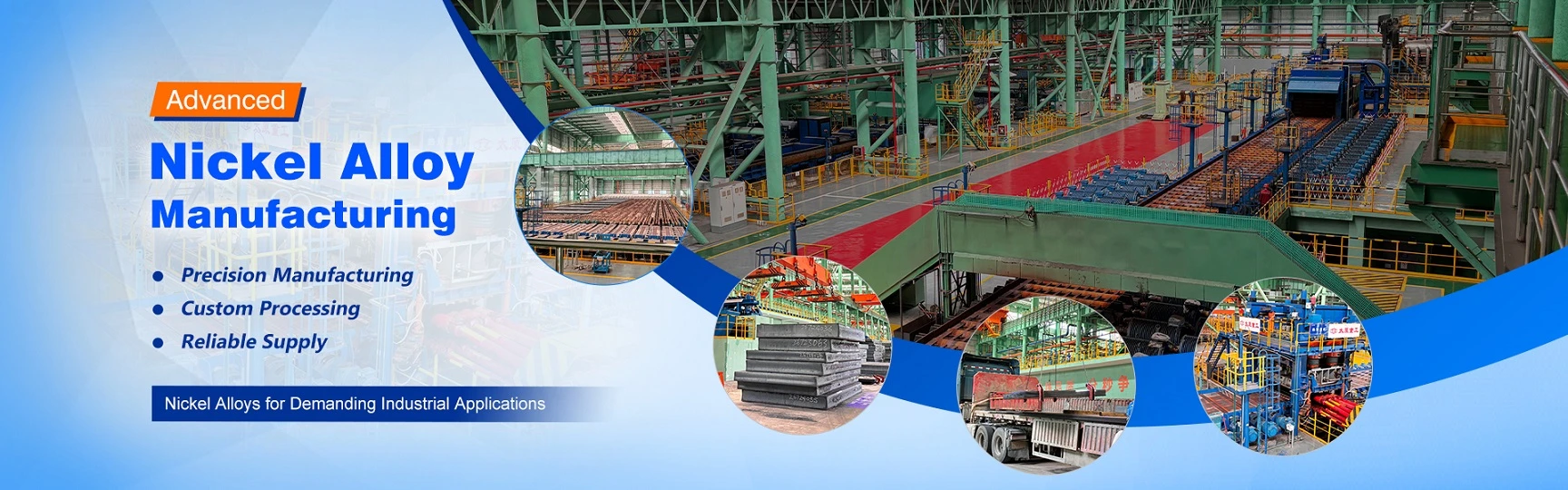
Our nickel-based alloy products originate from a modern precision manufacturing base. The factory is equipped with fully automated vacuum induction melting (VIM), electroslag remelting (ESR), and multi-directional forging hydraulic units, ensuring that every step from melting to forming meets aerospace-grade standards. Through a digital process control system, we achieve precise control over composition purity, grain size, and mechanical properties. Each batch of products is accompanied by traceable melting reports and third-party certifications (such as DNV-GL, ABS, aerospace standards, etc.), ensuring the authenticity and reliability of performance data.
Packaging and shipping

We adopt the highest industry standards for protective packaging: all rods/plates are treated with anti-rust protection and reinforced with waterproof film and wooden crates; precision components are packaged with custom foam dividers and vacuum sealing. Through our proprietary logistics coordination system, we promise that standard specification products will be prepared and shipped within 7-15 working days after order confirmation and technical details are finalized.


