

What are the main differences between Inconel 625 and Inconel 718?
Inconel 625 offers superior corrosion resistance, while Inconel 718 provides higher strength and heat resistance. The former excels in marine and chemical environments, whereas the latter is ideal for aerospace and high-stress applications due to its precipitation-hardening mechanism.
Can Inconel 625 and Inconel 718 be welded easily?
Both alloys exhibit excellent weldability. Inconel 625's composition ensures minimal cracking during welding. Inconel 718, with its controlled silicon and manganese content, also welds effectively. However, post-weld heat treatment may be necessary for Inconel 718 to optimize its mechanical properties.
Which alloy is better for high-temperature applications?
Inconel 718 performs better in high-temperature environments due to its enhanced creep rupture strength and stability at 1,300°F. Inconel 625, while resistant to oxidation up to 2,000°F, is more suited for environments requiring corrosion resistance rather than extreme mechanical stress.
Are Inconel 625 and Inconel 718 resistant to seawater corrosion?
Inconel 625 demonstrates exceptional resistance to seawater corrosion, making it ideal for marine applications. Inconel 718 also resists corrosion but is less effective in prolonged saltwater exposure compared to Inconel 625. Its strength makes it better suited for high-stress environments.
How should one choose between Inconel 625 and Inconel 718?
The choice depends on the application. For environments requiring corrosion resistance, such as marine or chemical settings, Inconel 625 is preferable. For high-stress or high-temperature applications, such as aerospace engine components, Inconel 718 offers superior performance.
Our factory

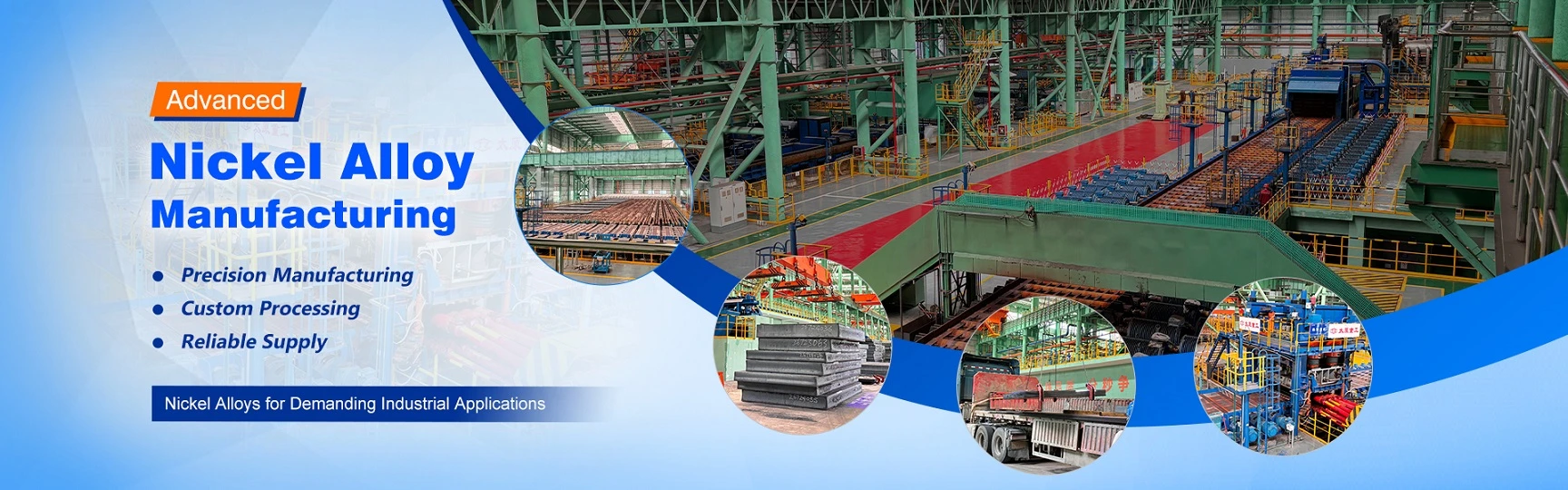
Our nickel-based alloy products originate from a modern precision manufacturing base. The factory is equipped with fully automated vacuum induction melting (VIM), electroslag remelting (ESR), and multi-directional forging hydraulic units, ensuring that every step from melting to forming meets aerospace-grade standards. Through a digital process control system, we achieve precise control over composition purity, grain size, and mechanical properties. Each batch of products is accompanied by traceable melting reports and third-party certifications (such as DNV-GL, ABS, aerospace standards, etc.), ensuring the authenticity and reliability of performance data.
Packaging and shipping

We adopt the highest industry standards for protective packaging: all rods/plates are treated with anti-rust protection and reinforced with waterproof film and wooden crates; precision components are packaged with custom foam dividers and vacuum sealing. Through our proprietary logistics coordination system, we promise that standard specification products will be prepared and shipped within 7-15 working days after order confirmation and technical details are finalized.


