

Hastelloy C-276 (UNS N10276) seamless tube and P265GH seamless steel tube serve different material-selection requirements in industrial pressure equipment. Hastelloy C-276 is a nickel-chromium-molybdenum-tungsten alloy developed for demanding corrosive environments, while P265GH is a non-alloy pressure-purpose steel specified for elevated-temperature service under applicable European standards.
For superheater applications, the decision should not depend on temperature alone. Steam pressure, metal temperature, flue-gas composition, corrosion mechanisms, allowable stress and applicable boiler codes must all be considered. C-276 may offer a significant advantage where corrosion resistance is a primary concern, but it is not automatically superior in every high-temperature pressure application.

What Are Hastelloy C-276 and P265GH Seamless Tubes?
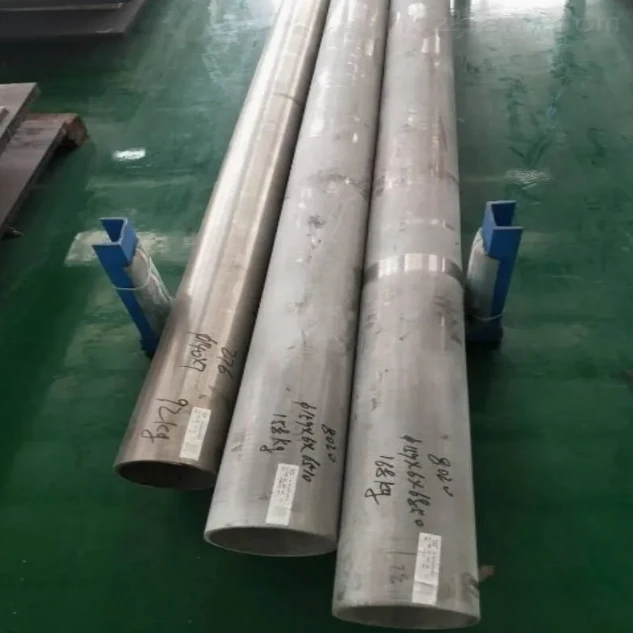
Hastelloy C-276 is a nickel-based alloy identified by UNS N10276 and European material number 2.4819. ASTM B622 covers seamless pipe and tube made from specified nickel and nickel-cobalt alloys, including UNS N10276. The alloy is commonly selected for chemical processing equipment and components exposed to aggressive corrosive media.
P265GH, identified by material number 1.0425, is a non-alloy pressure-purpose steel. EN 10216-2 specifies seamless steel tubes for pressure purposes at elevated temperatures. Its mechanical properties and delivery requirements are defined by the applicable standard and product dimensions.
| Comparison item | Hastelloy C-276 | P265GH |
|---|---|---|
| Material family | Nickel-based corrosion-resistant alloy | Non-alloy pressure steel |
| Material designation | UNS N10276 | EN 1.0425 |
| Relevant seamless tube standard | ASTM B622 | EN 10216-2 |
| Primary selection consideration | Resistance to specific aggressive corrosive environments | Pressure and elevated-temperature service within design limits |
| Relative material cost | Generally higher | Generally lower |
| Main verification requirement | Corrosion compatibility and code acceptance | Temperature-dependent allowable stress and code compliance |
Purchasers should specify the complete material designation, product standard, dimensions, delivery condition and inspection requirements. Compliance with ASTM B622 or EN 10216-2 alone does not establish suitability for every superheater design.
Hastelloy C‑276 vs P265GH Seamless Tube: High-Temperature Performance Comparison
P265GH (EN 10216‑2 carbon pressure vessel steel) has a recommended continuous service limit of 350°C, with short peak tolerance up to 400°C. Long-term exposure above 425°C triggers graphitization and accelerated creep, making it unsafe for loaded pressure components.
Hastelloy C‑276 (UNS N10276, Ni‑Cr‑Mo‑W alloy) tolerates short oxidation exposure up to 1038°C. For pressure-bearing service, its stable long-term limit is 650°C. Operation between 650°C–760°C is permitted only with service-life review, as brittle mu-phase precipitates gradually reduce ductility.
In creep performance: P265GH reaches ~60 MPa rupture strength at 350°C for 10⁵ hours. At 650°C, C‑276 achieves 110 MPa rupture strength for 10 000 hours, with far lower creep strain under identical load. Its single-phase austenitic matrix avoids phase transformation and graphitization risks that plague P265GH at elevated temperatures.
For oxidation and thermal cycling: P265GH forms loose iron oxide above 400°C and suffers fast thermal fatigue crack growth. C‑276 builds a tight chromium-rich passive scale, resisting oxidation even in sulfur- and chloride-bearing hot flue gas, with superior thermal fatigue resistance.
| Item | P265GH (EN10216‑2) | Hastelloy C‑276 (UNS N10276) |
|---|---|---|
| Recommended long‑term pressure service temperature | ≤350°C | ≤650°C |
| Short‑term temperature limit | 400°C | 1038°C (oxidation only, no sustained load) |
| Creep rupture strength at 650°C for 10,000 h | No valid pressure-bearing strength | 110 MPa |
| Microstructure risk at high temperature | Cementite spheroidization, graphitization | Mu‑phase precipitation with prolonged holding at 650–870°C |
| High-temperature oxidation resistance | Suitable only for dry steam | Resists oxidation in hot flue gas containing sulfur and chloride |
Chemical Composition: Why C-276 Offers a Corrosion Advantage?
The most significant compositional difference is the high concentration of nickel, chromium and molybdenum in Hastelloy C-276, together with tungsten. These alloying elements provide a corrosion-resistant material system that differs fundamentally from the predominantly iron-based composition of P265GH.
| Element | Hastelloy C-276 typical specification range | Main contribution |
|---|---|---|
| Nickel (Ni) | Balance | Forms the alloy matrix |
| Chromium (Cr) | 14.5–16.5% | Contributes to corrosion and oxidation resistance |
| Molybdenum (Mo) | 15.0–17.0% | Improves resistance to localized corrosion and many reducing environments |
| Tungsten (W) | 3.0–4.5% | Contributes to resistance in selected aggressive chemical environments |
| Carbon (C) | 0.010% maximum | Helps limit carbide-related concerns during fabrication and thermal exposure |
Values are typical ASTM B622 / UNS N10276 specification limits. Confirm the applicable standard edition and material test certificate for the ordered product.
P265GH does not contain comparable concentrations of chromium, molybdenum and tungsten. Its material design prioritizes the required mechanical properties and pressure-service performance rather than the broad corrosion resistance associated with high-alloy nickel materials.
For a superheater exposed to aggressive deposits, corrosive condensates or other chemically severe conditions, this difference can be important. However, actual corrosion performance depends on the chemical species, temperature, concentration, exposure duration and surface conditions.
Hastelloy C276 vs P265GH:Corrosion Resistance in Superheater
A superheater transfers heat to steam above its saturation temperature. Its tubes may experience different conditions on the steam side and the flue-gas side, making the location and mechanism of corrosion essential to material selection.
P265GH can be appropriate when the operating environment is controlled and the selected grade meets the design requirements. However, if corrosion-related wall thinning, localized attack or repeated tube replacement becomes a significant risk, a higher-alloy material may warrant evaluation.
Hastelloy C-276 offers resistance to many reducing and oxidizing chemical environments, including selected hydrochloric-acid and chloride-containing conditions. Its high molybdenum content contributes to resistance against pitting and crevice corrosion. These properties may be valuable in components exposed to corrosive condensates or specific chemical contaminants.
Nevertheless, aqueous chloride resistance must not be confused with resistance to every form of high-temperature flue-gas corrosion. Hot corrosion can involve complex reactions among metal surfaces, deposits, sulfur compounds, chlorides and oxygen.
| Operating condition | P265GH assessment | C-276 assessment |
|---|---|---|
| Conventional steam service with controlled chemistry | May be suitable when design requirements are met | May be unnecessary without a demonstrated corrosion requirement |
| Aggressive acidic condensate | Requires corrosion-rate assessment | May provide an advantage, depending on acid chemistry |
| Chloride-containing aqueous environment | Requires localized-corrosion evaluation | Worth evaluating for its pitting and crevice-corrosion resistance |
| High-temperature flue-gas deposits | Depends on gas and deposit chemistry | Requires specific hot-corrosion evidence |
| Corrosion-driven maintenance problems | May require reassessment of material selection | May be considered where compatibility data support its use |
The key purchasing question is not simply which alloy contains more alloying elements. It is whether the selected material can control the identified failure mechanism under the actual service conditions.
Hastelloy C‑276 VS P265GH Seamless Tube: Cost & Economic Comparison
The economic gap between Hastelloy C‑276 and P265GH originates from raw material base and manufacturing complexity. P265GH carbon steel has a low upfront purchase cost. Hastelloy C‑276 carries much higher initial cost due to nickel, molybdenum, tungsten alloying elements and special melting. However, C‑276 delivers far longer service life in high-temperature corrosive environments, cutting shutdown, replacement and maintenance expense over the asset lifecycle.
| Item | P265GH (EN10216‑2) | Hastelloy C‑276 (UNS N10276) |
|---|---|---|
| Upfront material cost | Low, baseline carbon steel price | 8–12 × the cost of P265GH |
| Fabrication cost | Low; standard carbon steel cutting & forming | Higher; requires low‑heat‑input process, skilled welder & dedicated consumables |
| Service life in clean steam ≤350℃ | Long, cost competitive | Over-spec, poor economic return |
| Service life in hot corrosive flue gas | Short, frequent replacement | Extended run time, reduces downtime loss |
| Lifecycle cost | Good only for mild clean service | Lower total cost for aggressive high‑temp corrosion conditions |
Hastelloy C‑276 VS P265GH Seamless Tube: Weldability Comparison
Welding behaviours differ greatly between carbon steel P265GH and nickel alloy Hastelloy C‑276. P265GH has forgiving welding performance with widely available filler metals. Hastelloy C‑276 is weldable, yet prone to heat-affected zone segregation if heat input is uncontrolled. Matching C‑276 welding wire must be used, and strict interpass temperature control is mandatory to avoid intergranular corrosion and brittle phase precipitation.
| Item | P265GH (EN10216‑2) | Hastelloy C‑276 (UNS N10276) |
|---|---|---|
| Welding nature | Good, forgiving carbon steel weldability | Weldable, but sensitive to improper thermal cycle |
| Recommended filler | ER70S‑6 / E7018, widely stocked | Matching Hastelloy C‑276 filler metal |
| Max interpass temperature | ≤350℃ | ≤93℃ (critical requirement) |
| HAZ risk | Hardening if rapid cooling; no corrosion susceptibility | Risk of molybdenum segregation, intergranular corrosion |
| Post weld heat treatment | Stress relief at 580–620℃ is common | Normally supplied solution annealed; PWHT is generally NOT recommended |
| Welder qualification requirement | General carbon steel welding certificate | Special nickel‑base alloy welding procedure & welder approval |
Why Select GNEE STEEL as Your Nickel Alloy Supplier?
Stock & Inventory
We maintain ready stock of common nickel alloy grades including Hastelloy C-276, Inconel 600, 625 in tube, plate and bar forms to support fast order dispatch and short lead times.



Nondestructive Testing
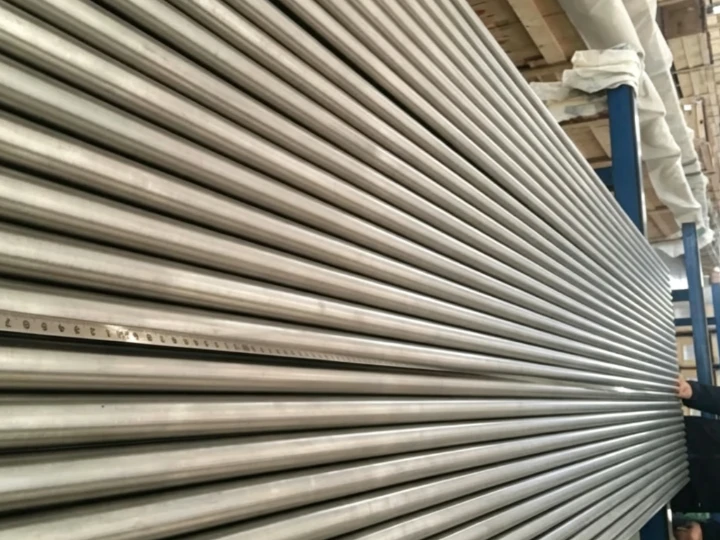
All nickel alloy products can undergo UT, MT and PMI inspection. Full test records are issued to verify chemical composition and internal integrity before shipment.


Packing & Shipment
We adopt waterproof wrapping, anti-collision padding and reinforced export wooden cases. Custom marking is applied to prevent damage during long-sea transportation.


Machining Service
We provide precision cutting, sawing, bending and finishing service. We process materials strictly per drawings to meet your dimensional and tolerance requirements.


Contact us for the latest export price quote for C-276 Alloy
FAQ:
What are the key differences between Hastelloy C276 and Inconel 625?
Hastelloy C-276 excels in severe chemical and reducing acid environments, while Inconel 625 offers higher mechanical strength and superior performance in high-stress or oxidizing conditions.
What are the key differences between Hastelloy C22 and C276?
Hastelloy C22 and C276 are high-performance nickel-chromium-molybdenum alloys. The main difference lies in their chemical balance: Hastelloy C22 features higher chromium (about 22%) for superior resistance to oxidizing acids and pitting, while Hastelloy C276 features higher molybdenum (about 16%) for better performance in reducing environments and general industrial acids
What is the ASTM standard equivalent of Hastelloy C276 pipe?
The primary ASTM standard equivalents for Hastelloy C276 pipe depend on the manufacturing method:
- Welded Pipe: ASTM B619 (UNS N10276)
- Welded Tube (Annealed): ASTM B626 (UNS N10276)
- General Requirements for Welded Pipe: ASTM B775
- Electric Fusion-Welded Pipe: ASTM B474
- Seamless Pipe and Tube: ASTM B622 (UNS N10276)


