

GH4169 (Inconel 718) Weldability and Machining Guidelines

GH4169 (Inconel 718) Weldability and Machining Guidelines
GH4169 (Inconel 718) is a nickel-based superalloy known for its high strength at 650-700℃, excellent creep resistance, and high oxidation and corrosion resistance. Although it is considered one of the superalloys with good weldability, its high work hardening rate and low thermal conductivity make it difficult to process.
What is the processability rating of Inconel 718?
However, this superior performance also results in high manufacturing costs: Inconel 718 scores only 12% in the AISI processability index, making it one of the most difficult materials to reliably process.

1. GH4169 Alloy Chemical Composition (Wt%)
| Element | Content (%) | Standard Requirement | Function |
|---|---|---|---|
| Nickel (Ni) | 50.0 – 55.0 | 50.0 – 55.0 | Matrix element; provides high-temperature stability and corrosion resistance |
| Chromium (Cr) | 17.0 – 21.0 | 17.0 – 21.0 | Oxidation and corrosion resistance |
| Iron (Fe) | Balance (~18-20) | Balance | Fe-Ni-Cr base alloy |
| Niobium (Nb) | 4.75 – 5.50 | 4.75 – 5.50 | Core strengthening element – forms γ″ phase (Ni₃Nb) |
| Molybdenum (Mo) | 2.80 – 3.30 | 2.80 – 3.30 | Solid-solution strengthening; enhances pitting and creep resistance |
| Titanium (Ti) | 0.65 – 1.15 | 0.65 – 1.15 | Forms γ′ strengthening phase (Ni₃(Al,Ti)) |
| Aluminum (Al) | 0.20 – 0.80 | 0.20 – 0.80 | Forms γ′ strengthening phase |
| Carbon (C) | ≤ 0.08 | ≤ 0.08 | Low carbon for weldability and toughness |
| Manganese (Mn) | ≤ 0.35 | ≤ 0.35 | Deoxidizer |
| Silicon (Si) | ≤ 0.35 | ≤ 0.35 | Deoxidizer |
| Phosphorus (P) | ≤ 0.015 | ≤ 0.015 | Ensures toughness |
| Sulfur (S) | ≤ 0.015 | ≤ 0.015 | Ensures hot workability |
| Boron (B) | 0.002 – 0.006 | 0.002 – 0.006 | Grain boundary strengthener; improves stress rupture life |
| Cobalt (Co) | ≤ 1.00 | ≤ 1.00 | Residual element |
| Copper (Cu) | ≤ 0.30 | ≤ 0.30 | Residual element |
Click to download the GH4169 alloy PDF file now
2. Room temperature mechanical properties of GH4169 alloy
Condition: Solution Treated + Aged (Hard – Recommended for Service)
| Property | Value | Test Standard |
|---|---|---|
| Tensile Strength, Ultimate (Rm) | ≥ 1275 MPa (185 ksi) | ASTM E8 / GB/T 228 |
| Tensile Strength, Yield (Rp0.2) | ≥ 1035 MPa (150 ksi) | ASTM E8 / GB/T 228 |
| Elongation at Break (A) | ≥ 12% (gauge length 4D or 50mm) | ASTM E8 / GB/T 228 |
| Reduction of Area (Z) | ≥ 15% | ASTM E8 / GB/T 228 |
| Hardness (Rockwell C) | 35 – 40 HRC | ASTM E18 / GB/T 230 |
| Hardness (Brinell) | 330 – 380 HBW | ASTM E10 / GB/T 231 |
| Modulus of Elasticity (E) | ~200 GPa (29.0 × 10⁶ psi) | ASTM E111 |
| Poisson's Ratio (ν) | 0.29 – 0.30 | – |
Condition: Solution Treated (Soft – for Forming)
| Property | Value |
|---|---|
| Tensile Strength, Ultimate | ≥ 965 MPa (140 ksi) |
| Tensile Strength, Yield | ≥ 550 MPa (80 ksi) |
| Elongation | ≥ 30% |
| Hardness | ≤ 24 HRC |
Click to view our professional certificates for GH4169 alloy
3. GH4169 (Inconel 718) Weldability Guidelines
GH4169 exhibits good weldability in both annealed and aged states, but strict control of the welding process is required to avoid microcracks and Laves phase segregation.
Recommended Welding Methods: Gas-shielded tungsten inert gas (GTAW/TIG) welding is the most commonly used method, allowing for high-precision control. Electron beam welding (EBW) and laser beam welding (LBW) are used for precise, high-energy-density welding.
Welding Wire: Use matched welding wire (e.g., Inconel 718 wire/AWS A5.14 ERNiFeCr-2) to maintain alloy integrity.
Surface Treatment: Welding is best performed in the solution-annealed state to minimize cracking.
Crack Suppression: To prevent strain-aging cracking and liquefaction cracking in the heat-affected zone (HAZ), maintain a low heat input and use continuous weld beads (avoid wobbling weld beads).
Pre-weld treatment: Thoroughly clean the surface to remove oil, grease, and oxide layers to prevent contamination.
Post-weld heat treatment (PWHT): Post-weld solution annealing and aging are crucial for restoring strength. A typical heat treatment process is: hold at 720°C for 8 hours, furnace cool to 620°C, hold at 620°C for 8 hours, and then air cool.
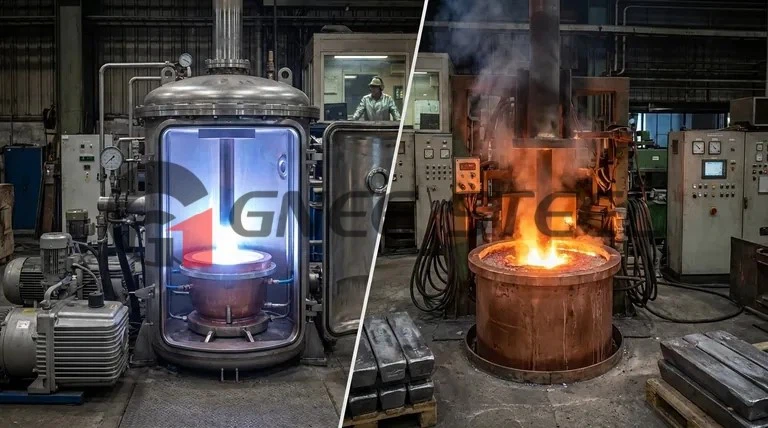
GH4169 (Inconel 718) Weldability and Machining
4. GH4169 (Inconel 718) Machining Guidelines
Inconel 718 is classified as a difficult-to-machine material, ranking only around 12% in the AISI Machinability Index.
Machine Rigidity: Use a highly rigid and powerful machine tool to minimize vibration and chatter, thus avoiding work hardening.
Tools: Use sharp, positive rake angle carbide tools (PVD or CVD coated). Ceramic tools can be used for high-speed finishing.
Cutting Speed and Feed Rate:
Low Speed: Use low cutting speeds, typically in the range of 15–30 m/min (higher speeds can be used with special tools).
High/Constant Feed Rate: Use a high and constant feed rate to ensure the tool tip is always ahead of the work-hardened area created by the previous cut.
Depth of Cut: The depth of cut must be sufficient to penetrate the work-hardened layer formed during the previous cut.
Coolant: High-pressure, high-flow-rate coolant is crucial for effective heat dissipation and chip removal.
Tool life management: Tools should be inspected frequently, as rapid work hardening and high temperatures can cause premature tool wear.
Contact us to customize GH4169 products to fit your project dimensions
5. Why source raw materials from Gnee Alloy?
The quality of your weld is only as good as the surface of the metal. We provide commercial advantages that ensure Industrial Durability:
✅️Optimized Surface Finishes: We provide bright-annealed or precision-pickled surfaces that enhance weld bead adherence and prevent gas porosity.
✅️Global Compliance: Fully compliant with AMS 5596, AMS 5589, and ASTM B637 standards.
✅️MTC 3.1 Traceability: Full heat-analysis reports provided with every order to ensure chemical homogeneity.
✅️Wholesale Pricing: Benefit from Direct Factory Price on both small-batch R&D and large-scale engine production.

Gnee Steel GH4169(inconel 718) Certificate
📦 Packaging and Shipping
All Nickel Based Alloy products are packaged using the following methods:
Wooden pallets or crates
Moisture-proof packaging
Labels with furnace number, standard, and size labels
Shipped worldwide by sea, air, or express
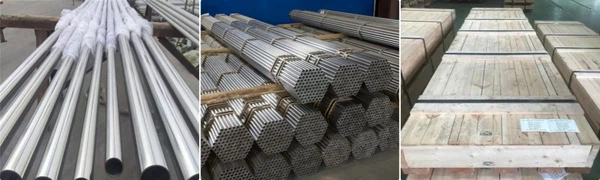
Gnee Steel GH4169 Product Packing
Contact us for the latest export price quote for GH4169 Alloy
FAQ
Q1: Do I need post-weld heat treatment (PWHT) for GH4169?
A: Yes. While it won't crack during cooling, GH4169 must undergo a full Solution + Double Aging cycle after welding to reach its peak yield strength (≥1030 MPa) and ensure the weld zone matches the base metal's properties.
Q2: What filler metal should I use for GH4169 tubing?
A: We recommend using matching Alloy 718 (ERNiCrMo-2) filler wire. For some applications, ERNiCr-3 (Inconel 82) can be used, but the weld strength will be lower than the parent metal at 700°C.
Q3: Is GH4169 suitable for automated orbital welding?
A: Absolutely. Due to its stable molten pool and excellent wetting characteristics, our GH4169 seamless tubes are the premier choice for automated orbital welding in aerospace fuel lines.
Q4: Can I weld GH4169 to 316L Stainless Steel?
A: Yes. It has excellent metallurgical compatibility with austenitic stainless steels. It is often used as a high-strength transition joint in industrial reactors.


