

Can GH3030 truly replace Nimonic 75?
For international purchasing managers and engineers, the biggest pain point lies in the risk of substitution. When a project specifies the use of Nimonic 75 (UNS N06075), if the supply chain points to GH3030, the following questions inevitably arise:
Does Chinese-made GH3030 meet the same global compliance standards?
Will its high-temperature oxidation resistance be affected?
Are its mechanical properties the same in actual use environments?
From a technical perspective, GH3030 and Nimonic 75 are equivalent grades. Nimonic 75 is a traditional British grade (developed by Henry Wiggin & Co.), while GH3030 is a Chinese standardized grade conforming to GB/T 14992. Gnee Steel's GH3030 pipes can directly replace Nimonic 75 and offer high performance, providing a cost-effective solution for global high-temperature applications.
Get a Quote for Nimonic 75 / GH3030 Equivalent Tubes
Difference between GH3030 and Nimonic 75 tube

Difference between GH3030 and Nimonic 75 tube
Both GH3030 and Nimonic 75 tubing are nickel-chromium-based high-temperature alloy tubing designed for high-temperature applications, commonly used in heat exchangers, combustion chambers, and aerospace components. While they share similar applications and high-temperature oxidation resistance, they differ in chemical composition, specific heat capacity, and country of origin standards.
What is the yield strength of NIMONIC 75?
Yield strength: 152 MPa. Tensile strength: 286 MPa. Elongation: 75%

1. Chemical composition of GH3030/Nimonic 75 alloy
The properties of these alloys originate from the 80/20 nickel-chromium alloy matrix. Both alloys have small amounts of titanium and carbon added for solid solution strengthening.
| Element | GH3030 (GB/T 14992) | Nimonic 75 (BS HR5 / UNS N06075) |
| Nickel (Ni) | Balance (approx. 75-78%) | Balance (approx. 75-78%) |
| Chromium (Cr) | 19.0% - 22.0% | 18.0% - 21.0% |
| Titanium (Ti) | 0.15% - 0.35% | 0.20% - 0.60% |
| Iron (Fe) | ≤ 1.5% | ≤ 5.0% |
| Carbon (C) | ≤ 0.12% | 0.08% - 0.15% |
| Silicon (Si) | ≤ 0.8% | ≤ 1.0% |
While Nimonic 75 allows for slightly more Iron, our GH3030 is produced via VIM + ESR (Electroslag Remelting), which keeps impurities like Iron and Sulfur exceptionally low, often exceeding the purity of standard Nimonic 75.
Click to download the GH3030 alloy PDF file now
2. GH3030 Mechanical Properties: Performance at 800°C
Engineers needed to ensure that structural integrity remained unchanged. Both alloys were optimized for operating temperatures up to 800°C.
| Property (at 20°C) | GH3030 Seamless Tube | Nimonic 75 Bar/Tube |
| Tensile Strength (MPa) | ≥ 590 | ≥ 650 (Typical) |
| Yield Strength (0.2% MPa) | ≥ 245 | ≥ 300 (Typical) |
| Elongation (%) | ≥ 35 | ≥ 35 |
| Hardness (HB) | 130 - 180 | 140 - 190 |
For static high-temperature components (combustion chamber lining, furnace), the differences in mechanical properties are negligible. GH3030 provides the exact same industrial durability required for aerospace propulsion and heat treatment.
Download GH3030 vs Nimonic 75 Comparison PDF
3. GH3030 Alloy Global Standard Equivalent Table
To ensure your project complies with international engineering standards, please refer to the following standard mapping:
| Country | Specification | Grade Name |
| China | GB/T 15062 / GB/T 14992 | GH3030 |
| UK / Europe | BS HR5 / HR203 / HR403 | Nimonic 75 |
| USA | ASTM B167 / UNS N06075 | Alloy 75 |
| Germany | DIN 17750 / W.Nr. 2.4951 | NiCr20Ti |
Click to view Gnee Steel GH3030 inventory list
4. Applications of N06075 Nimonic 75 Nickel Alloy Tubing
N06075 Nimonic 75 seamless nickel alloy tubing is widely used in a variety of demanding industrial and aerospace applications due to its superior mechanical properties. Its high-temperature resistance and oxidation resistance make it an ideal material for components operating in extreme environments. Common applications include:
Aerospace: For turbine blades, combustion chambers, and other engine components operating in high-temperature environments.
Power Generation: Suitable for gas turbines, heat exchangers, and other critical components subjected to high stress and high temperatures.
Chemical Industry: Suitable for reactors, piping, and other equipment exposed to corrosive chemicals and high-temperature environments.
Marine Industry: For components exposed to seawater and high-temperature marine environments where corrosion resistance is crucial.


Why Source GH3030 from a Tier-1 Chinese Manufacturer?
✅️Global Compliance: We manufacture to both GB and ASTM standards, ensuring your material is accepted worldwide.
✅️MTC 3.1 Traceability: Every tube is delivered with a Mill Test Certificate documenting chemical and mechanical verification.
✅️Advanced Melting: Using VIM (Vacuum Induction Melting) + ESR ensures a refined grain structure and Superior Weldability.
✅️Short Lead Times: We maintain a large Wholesale Inventory of seamless GH3030 pipes, ready for Fast Shipping.

Gnee Steel GH3030 Certificate
📦 Packaging and Shipping
All Nickel Based Alloy products are packaged using the following methods:
Wooden pallets or crates
Moisture-proof packaging
Labels with furnace number, standard, and size labels
Shipped worldwide by sea, air, or express
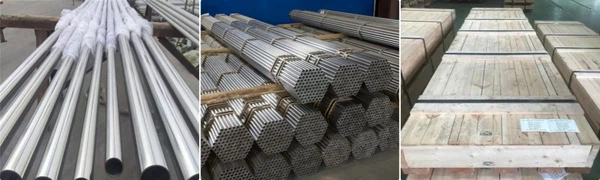
Gnee Steel GH3030 Product Packing
Contact us for the latest export price quote for GH3030 Alloy
FAQ
Q1: Is GH3030 considered "Aerospace Grade"?
A: Yes. GH3030 was originally developed for aero-engine combustion chambers. Our factory is AS9100 certified, making our tubes suitable for high-end aerospace and nuclear applications.
Q2: Will using GH3030 affect the welding procedure if the project calls for Nimonic 75?
A: No. Since the chemical compositions are nearly identical, the welding parameters remain the same. You can use standard Nimonic 75 filler metals (like ERNiCr-3) to weld GH3030 tubes.
Q3: Why is GH3030 more cost-effective than Nimonic 75?
A: By sourcing directly from our factory in China, you eliminate brand premiums and middleman markups while benefiting from our large-scale production efficiencies.
Q4: Can you provide third-party inspections (SGS/TUV)?
A: Absolutely. We welcome Third-Party Inspections to verify that our GH3030 tubes meet all the requirements of Nimonic 75 specifications.


