

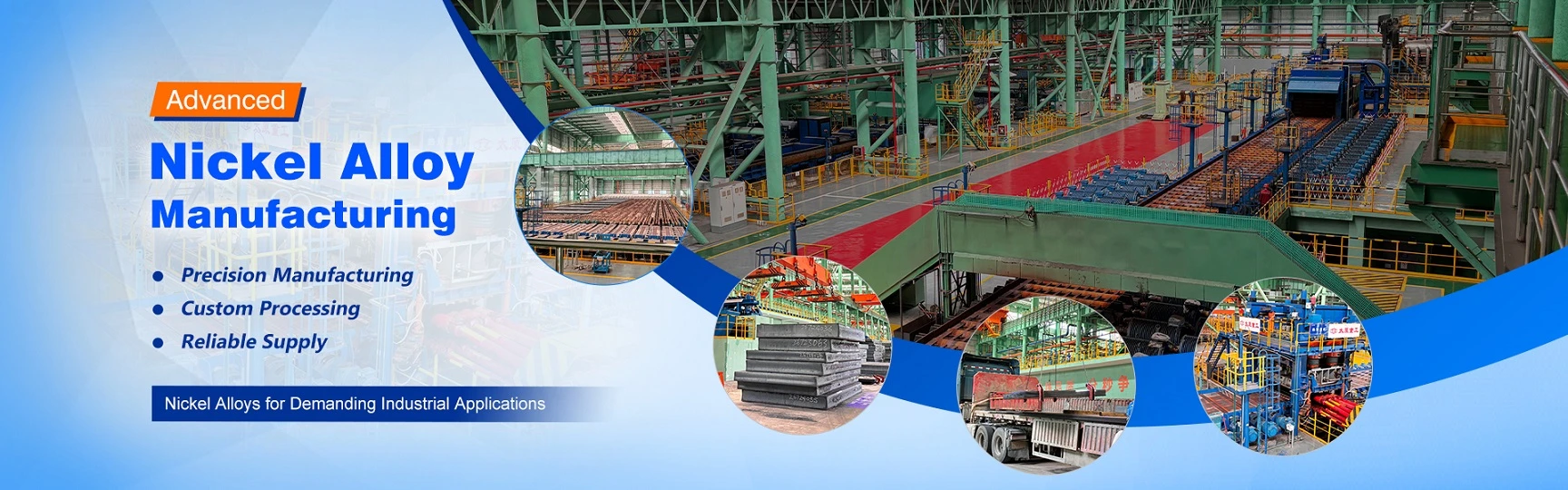
For engineers in the aerospace propulsion and petrochemical industries, the biggest challenge in welding GH4169 pipes lies in the "weak link" phenomenon. During welding, extremely high temperatures create a heat-affected zone (HAZ), damaging the fine-grained structure of the base material.
Risks of improper welding:
Heat-affected zone cracking: Residual stress in the weld area can lead to immediate cracking or cracking during service.
Strength mismatch: Without special aging treatment, the weld hardness is much lower than the pipe wall, causing localized bulging under pressure.
Premature fatigue: If the microstructure is not homogenized, vibration and thermal cycling can induce cracks at the fusion line.
At Gnee Steel, we eliminate these risks. Our ASME SB168 GH4169 welded pipes utilize a proprietary optimized double aging process to ensure the weld area achieves the same superior mechanical properties as the base material.
Get GH4169 tube price nowContact now
ASME SB168 GH4169 Guidelines for Aging Heat Treatment of Welded Steel Pipes

ASME SB168 GH4169 Guidelines for Aging Heat Treatment of Welded Steel Pipes
Aging heat treatment of welded GH4169 (Inconel 718) pipes according to ASME SB168/SB163 (or equivalent standards) requires a two-stage process to optimize precipitate (γ) formation, thereby improving high-temperature strength. This process typically involves aging at 720°C for 8 hours, cooling to 620°C and holding for 8 hours, followed by air cooling. Proper aging can restore tensile strength (≈ 1287 - 1447 MPa) and improve the toughness of the heat-affected zone.
What is the composition of GH4169 alloy?
The chemical composition of GH4169 alloy is as follows: Ni 53.44%, Cr 18.56%, Mo 3.02%, Nb 5.3%, Al 0.44%, Ti 1.04%, C 0.026%, P 0.005%, S 0.001%, B 0.002%, Fe balance (wt.%).

1. GH4169 pipe supply and size range
| Feature | Specification Range | Commercial Advantage |
| Designation | GH4169 / Inconel 718 / UNS N07718 | Global Standard Compatibility. |
| Outside Diameter (OD) | 150 mm to 1200 mm | Ideal for heavy-duty exhaust ducting. |
| Wall Thickness (WT) | 2.0 mm to 30.0 mm | High-Pressure rated structural support. |
| Standard Compliance | ASME SB168, AMS 5596, GB/T 15062 | Certified for international projects. |
2. ASME SB168 GH4169 Pipe Chemical Composition (by weight)
| Element | Content (%) | Standard Requirement | Notes |
|---|---|---|---|
| Nickel (Ni) | 50.0 – 55.0 | 50.0 – 55.0 | Matrix element |
| Chromium (Cr) | 17.0 – 21.0 | 17.0 – 21.0 | Oxidation and corrosion resistance |
| Iron (Fe) | Balance (~18-20) | Balance | Fe-Ni-Cr base alloy |
| Niobium (Nb) | 4.75 – 5.50 | 4.75 – 5.50 | Primary γ″ strengthening element |
| Molybdenum (Mo) | 2.80 – 3.30 | 2.80 – 3.30 | Solid-solution strengthening |
| Titanium (Ti) | 0.65 – 1.15 | 0.65 – 1.15 | γ′ strengthening phase |
| Aluminum (Al) | 0.20 – 0.80 | 0.20 – 0.80 | γ′ strengthening phase |
| Carbon (C) | ≤ 0.08 | ≤ 0.08 | Low carbon for weldability |
| Manganese (Mn) | ≤ 0.35 | ≤ 0.35 | Deoxidizer |
| Silicon (Si) | ≤ 0.35 | ≤ 0.35 | Deoxidizer |
| Phosphorus (P) | ≤ 0.015 | ≤ 0.015 | Low for toughness |
| Sulfur (S) | ≤ 0.015 | ≤ 0.015 | Low for hot workability |
| Boron (B) | 0.002 – 0.006 | 0.002 – 0.006 | Grain boundary strengthener |
| Cobalt (Co) | ≤ 1.00 | ≤ 1.00 | Residual element |
| Copper (Cu) | ≤ 0.30 | ≤ 0.30 | Residual element |
3. ASME SB168 GH4169 Pipe Physical Properties
| Property | Value |
|---|---|
| Density | 8.19 g/cm³ |
| Melting Range | 1260 – 1336°C |
| Thermal Conductivity (20°C) | 11.4 W/m·K |
| Coefficient of Thermal Expansion (20-100°C) | 13.0 × 10⁻⁶/°C |
| Specific Heat (20°C) | 435 J/kg·K |
| Modulus of Elasticity | ~200 GPa |
| Poisson's Ratio | 0.29 – 0.30 |
| Magnetic Properties | Slightly magnetic |
Click to download the GH4169 alloy PDF file now
4. GH4169 Welded Pipe Process Stages
GH4169 (equivalent to Inconel 718) is a precipitation-hardening alloy. To restore the structural integrity of the weld, we employ a multi-stage thermal cycling process in a vacuum or controlled atmosphere furnace.
| Process Stage | Temperature | Duration | Metallurgical Result |
| Solution Anneal | 940°C - 1010°C | 1 - 2 Hours | Dissolves brittle phases & resets grain structure. |
| Primary Age | 718°C (1325°F) | 8 Hours | Controlled precipitation of
γ′′γ′′ (Gamma Double Prime). |
| Secondary Age | 621°C (1150°F) | 8 Hours | Stabilizes the matrix & completes the hardening. |
This precise 16-hour aging cycle ensures a uniform hardness of 36-44 HRC across the entire pipe circumference, providing maximum Industrial Durability.
5. 100% Non-Destructive Testing (NDT) for Gnee Steel GH4169 Pipes
As a Tier 1 manufacturer, Gnee Steel understands that "good enough" is not enough in high-pressure environments. We verify every meter of welded pipe using the following methods:
100% X-ray Inspection (RT): We guarantee that the welds are free of porosity, slag inclusions, and incomplete fusion.
Hydraulic Pressure Testing: Verified to withstand internal pressure conforming to ASME B31.3 standards.
Finite Penetrant Testing (FPI): Even tiny surface cracks in the fusion zone can be identified.
Traceability: Each pipe comes with an EN 10204 3.1 Factory Test Certificate (MTC), which details the specific welding heat treatment process.

Gnee Steel GH4169(inconel 718) Certificate
📦 Packaging and Shipping
All Nickel Based Alloy products are packaged using the following methods:
Wooden pallets or crates
Moisture-proof packaging
Labels with furnace number, standard, and size labels
Shipped worldwide by sea, air, or express
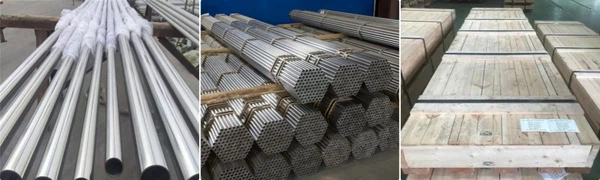
Gnee Steel GH4169 Product Packing
Contact us for the latest export price quote for GH4169 Alloy
FAQ
Q1: Can your welded GH4169 pipe replace a seamless pipe in a turbine engine?
A: Yes, for specific applications like large-diameter exhaust systems, structural rings, and lower-pressure fuel manifolds. When produced to ASME SB168 standards with 100% RT testing and proper aging, our welded pipes offer a Cost-effective Solution with comparable high-temp performance.
Q2: Does the double-aging process prevent "Strain-Age Cracking"?
A: Absolutely. By performing a high-temperature solution anneal before the aging cycle, we relieve the residual stresses from the welding process, which is the primary cause of strain-age cracking in nickel-based superalloys.
Q3: Can you provide the actual heat treatment temperature chart with the order?
A: Yes. We provide full Quality Assurance transparency. Every order includes the electronic time/temperature log from our vacuum furnace to verify the aging cycle was performed correctly.
Q4: Do you offer bulk discounts for petrochemical refinery overhauls?
A: Yes. As a Reliable Supplier for major energy programs, we provide attractive tiered pricing for volume procurement.


