



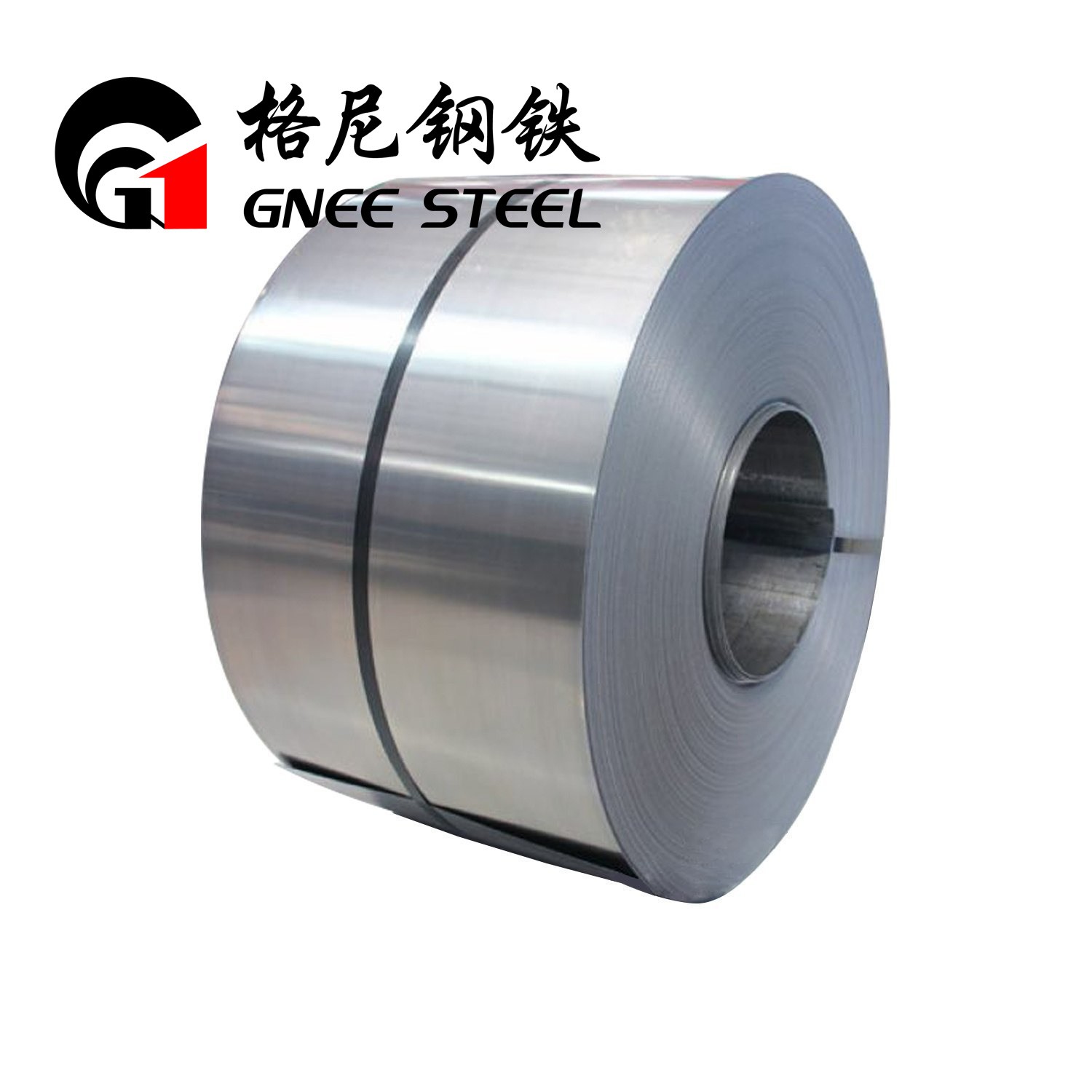
Q345d Hot Rolling Steel Coils
As a leading supplier and manufacturer in China, GNEE Steel provides cost-effective nickel-based alloy products.
- Send E-mail: ss@gneesteel.com
Gnee Super Alloy (Tianjin) Co., Ltd. is one of the most professional manufacturers and suppliers of q345d hot rolling steel coils in China. If you're going to wholesale high quality q345d hot rolling steel coils made in China, welcome to get free sample from our factory. Good service and reasonable price are available.
Hot rolling principle
1. The theory of rolling: Rolling is a method in which the friction of the rotating rollers is used to drag the workpiece into the room between the rollers, and at the same time, the pressure exerted by the rollers causes the workpiece to undergo compression deformation between two or more rollers. Material processing methods.
2. Rolling parameters: During the rolling deformation process, compression in the thickness direction is the dominant deformation. When the thickness direction of the rolled piece is compressed by the roll, the metal will flow longitudinally and transversely, but the longitudinal extension deformation always greatly exceeds the transverse expansion. This is because the friction of the roll surface always hinders the widthwise flow. Greater than the longitudinal direction, that is to say, compared with the longitudinal direction, the transverse width is always smaller. The deformation index during rolling is mainly:
1) Absolute reduction: Indicates the absolute change in thickness of the rolled piece before and after rolling, which facilitates direct adjustment of the roll gap value in production operations.
2) Processing rate: used to record the approximate degree of deformation.
3) Width: Used at the production site to express the absolute added value of width.
The most basic parameters involved in the production site are the above. Others such as elongation, elongation coefficient, etc. are only for theoretical analysis. Therefore, what is most commonly used on site is to calculate the length after rolling, processing rate, etc. based on the volume invariance condition of metal plastic deformation.



FAQ
Q: Can you provide sample?
A: Yes, for regular sizes sample is free but buyer need to pay freight cost.
Q:How can I get a quotation from you?
A:You can leave us message, and we will reply every message in time. Or we may talk on line by trade manager. And you can also find our contact information on contact page.
Q: Do you accept the third party inspection?
A: Yes absolutely we accept.
Q:About product prices?
A:Prices vary from period to period due to cyclical changes in the price of raw materials.
Hot Tags: q345d hot rolling steel coils, China q345d hot rolling steel coils suppliers, 304 316 316l SS Cold Rolled Steel Coils, 316L Stainless Steel Coil, 2507 Stainless Steel Coil, AISI430 Stainless Steel Foil
You Might Also Like


Send Inquiry