


In jet engines and industrial gas turbines, Inconel 713C (UNS N07713) is the recognized primary material for high-temperature environments of 1800°F (982°C). However, with rising turbine inlet temperatures and changes in fuel quality, engineers often seek alternatives to Inconel 713C to address specific challenges such as sulfidation or extreme centrifugal stress.
Gnee Alloy, as a one-stop shop for high-temperature alloys, offers this comparative guide from our technical sales team to help you choose between the basic reliability of 713C, the high strength of MAR-M-246, and the superior corrosion resistance of Inconel 738.
Click to get an Inconel 713C quote
Inconel 713C Alternatives: Is MAR-M-246 or Inconel 738 Better for Your Project?

Inconel 713C Alternatives: Is MAR-M-246 or Inconel 738 Better for Your Project?
The choice between MAR-M-246 and Inconel 738 (IN738) as an alternative to Inconel 713C depends primarily on whether your project requires maximum structural strength or maximum corrosion resistance.
What are the alternatives to Inconel 713C?
Alternatives to Inconel 713C include Inconel 718, Rene 77, and Mar-M247. Inconel 718 has higher tensile strength, making it ideal for low-temperature applications, but less suitable for prolonged high-temperature use.

Properties of other alternative alloys to Inconel 713

MAR-M-246 Alloy
MAR-M-246 is a nickel-based superalloy commonly used in high-boost, high-temperature racing turbocharger applications as an upgraded replacement for Inconel 713C.
Best Use: Achieving high mechanical stress and creep resistance at extreme temperatures.
Advantages: Superior fatigue performance and higher tensile strength (1800°F (982°C)) compared to 713C.
Disadvantages: More difficult to cast than 713C, potentially leading to lower yield and increased scrap costs.
Inconel 738 Alloy information
IN738 is commonly used in industrial gas turbines, where components often come into contact with "dirty" fuels (high sulfur or high salt).
Best Use: Excellent high-temperature corrosion and oxidation resistance.
Advantages: Better long-term environmental degradation performance compared to 713C while maintaining high strength.
Disadvantages: It is more expensive than MAR-M-246 and has lower creep strength at absolute peak temperature.
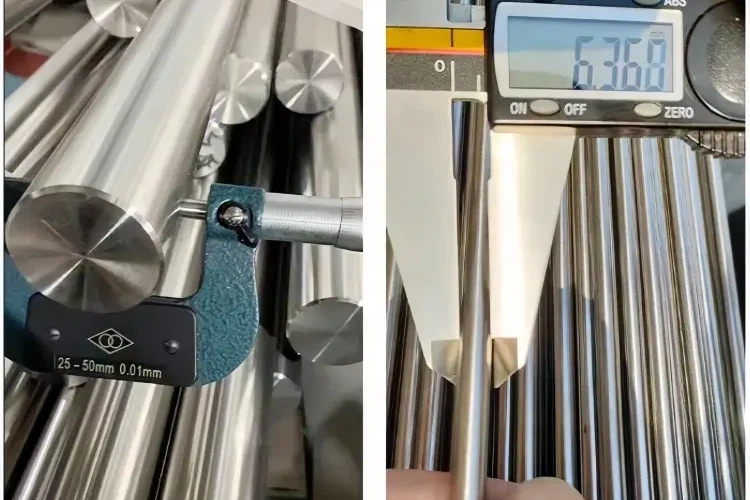
5. Comparison of 713C Alternatives
| Feature | Inconel 713C (Baseline) | MAR-M-246 (Strength Focus) | Inconel 738 (Corrosion Focus) |
|---|---|---|---|
| Primary Strength | Good (< 900°C) | Excellent (1800°F+ / 980°C+) | High (up to 982°C) |
| Creep / Fatigue | Excellent | Very High (Better than 713C) | Very High |
| Corrosion / Oxidation | Good | Moderate / Good | Superior (High Cr / Al) |
| Castability | Good | Difficult (Prone to defects) | Difficult (Prone to cracking) |
| Cost | Moderate | High (Tantalum content) | High (Tantalum / Cobalt) |
Contact our professionals to recommend the right alloy for your project
6. Comparison table of chemical composition of Inconel 713C and other alloys
| Element (Wt. %) | Inconel 713C | Inconel 738 (LC) | MAR-M-246 | Role in Performance |
| Nickel (Ni) | Balance | Balance | Balance | Base matrix. |
| Chromium (Cr) | 12.0 - 14.0 | 15.7 - 16.3 | 8.0 - 10.0 | IN738 has the best corrosion resistance. |
| Cobalt (Co) | 1.0 Max | 8.0 - 9.0 | 9.0 - 11.0 | Co improves phase stability & price. |
| Aluminum (Al) | 5.5 - 6.5 | 3.2 - 3.7 | 5.3 - 5.7 | Key for
γ′γ′ strengthening. |
| Titanium (Ti) | 0.5 - 1.0 | 3.2 - 3.7 | 1.3 - 1.7 | Al+Ti ratio dictates creep life. |
| Tantalum (Ta) | - | 1.5 - 2.0 | 1.3 - 1.7 | Ta enhances high-temp strength. |
| Tungsten (W) | - | 2.4 - 2.8 | 9.0 - 11.0 | W provides elite solid solution strength. |
7. Mechanical properties of Inconel 713C and other alloys
| Mechanical Property | Inconel 713C | Inconel 738 | MAR-M-246 |
| Max Service Temp | 982°C (1800°F) | 982°C (1800°F) | 1010°C (1850°F) |
| Creep Rupture (at 982°C / 152 MPa) | ~30 Hours | ~35 Hours | ~50+ Hours |
| Hot Corrosion Resistance | Moderate | Excellent (High Cr) | Low (High W/Low Cr) |
| Casting Yield (Foundry) | High (Easy to Cast) | Moderate | Low (Prone to cracking) |
Click to download the Inconel 713C alloy PDF file now
8. How to Choose Between Inconel 713C and Other Alloys?
If you require higher tensile strength and creep resistance for first-stage aerospace blades, choose MAR-M-246. It contains tungsten and tantalum, offering excellent structural integrity.
If your turbine operates in a polluted environment (such as marine or industrial gases) where high-temperature corrosion (sulfidation) is a major threat, choose Inconel 738 (IN738LC).
If you need the most cost-effective solution for turbocharger rotors and standard aerospace blades, requiring temperatures up to 1800°F (982°C), and do not want to pay the high prices of cobalt or tantalum, then Inconel 713C should still be chosen.
Click to get Inconel 713C samples for purchase
9. Cost-Effectiveness Comparison of Inconel 713C and Other Alloys
Gnee Alloy, as a trusted nickel alloy consultant, helps you strike a balance between performance and profitability.
Inconel 713C: The most cost-effective solution. It contains no expensive cobalt or tantalum, making it the preferred choice for automotive turbocharger wholesalers.
Inconel 738: Significantly more expensive due to its high chromium and cobalt content. Only suitable for applications requiring long-term use in corrosive gases.
MAR-M-246: An alloy where performance is paramount. Its high price and casting difficulty (low yield) limit its application to high-end military and commercial aerospace sectors.
Why choose to partner with Gnee Alloy?
✅️VIM Melting Purity: Whether it's 713C, 738, or 246, our master alloy sticks feature ultra-low gas content (O, N < 10ppm).
✅️Comparative RFQs: Our technical sales team provides side-by-side quotes, helping you hedge against Nickel and Cobalt price volatility.
✅️Full Traceability: Every shipment includes an MTC 3.1 Certified report, ensuring compliance with AMS 5391 or equivalent standards.

Gnee Steel 713C Certificate
📦 Packaging and Shipping
All Nickel Based Alloy products are packaged using the following methods:
Wooden pallets or crates
Moisture-proof packaging
Labels with furnace number, standard, and size labels
Shipped worldwide by sea, air, or express

Gnee Steel 713C Product Packing
Contact us for the latest export price quote for 713C Alloy
FAQ
Q: Can I swap Inconel 713C for Inconel 738 without changing my wax molds?
A: In most cases, yes, as both are investment casting alloys. However, the shrinkage rates and pouring temperatures differ slightly. We recommend a technical consultation before switching production heats.
Q: Which alloy has the best "Wholesale Price per KG"?
A: Inconel 713C is consistently the most affordable among these three. MAR-M-246 and 738 prices fluctuate heavily with the Cobalt and Tantalum markets.
Q: Are these alloys weldable for casting repairs?
A: All three are considered "difficult-to-weld" due to high Al+Ti content. However, Inconel 738LC (Low Carbon) was specifically designed to offer slightly better weldability for engine overhaul repairs.


