

What is EN 2.4856 Material?
EN 2.4856, commonly known as Alloy 625, is a nickel-based superalloy known for its excellent corrosion resistance, high-temperature strength, and weldability. It is composed primarily of nickel (58-67%), with significant amounts of chromium (20-23%), molybdenum (8-10%), and niobium (3.15-4.15%). This alloy is widely used in extreme environments, such as in chemical processing, aerospace, and marine industries, due to its resistance to oxidation, pitting, and crevice corrosion.
What is the Equivalent of EN 2.4856?
The equivalent of EN 2.4856 (Alloy 625) in other standards includes:
ASTM B625 / UNS N06625: A widely recognized designation in the U.S. for Alloy 625.
DIN 17744: The German equivalent.
JIS NCF 625: The Japanese equivalent for the same material.
These equivalents share similar chemical compositions and properties for use in high-stress, high-corrosion applications.
What is the composition of Inconel 2.4856?
Inconel 2.4856 is primarily composed of the following elements: nickel 58-67%, chromium 20-23%, molybdenum 8-10%, and niobium 3.15-4.15%. It also contains small amounts of iron and other elements to enhance its properties.
| Alloy 625 ESU 2.4856 |
C | Si | Mn | P | S | Cr | Mo | Ni |
|---|---|---|---|---|---|---|---|---|
| min. | 0,03 | 20,00 | 8,00 | 58,0 | ||||
| max. | 0,10 | 0,50 | 0,50 | 0,020 | 0,015 | 23,00 | 12,00 |
| Alloy 625 ESU 2.4856 |
Fe | Al | Co | Nb | Ti |
|---|---|---|---|---|---|
| min. | 3,15 | ||||
| max. | 5,00 | 0,40 | 1,00 | 4,15 | 0,40 |
EN 2.4856 Mechanical properties at room temperature (solution annealed / quenched):
| Rp0,2 | A | Hardness | KV |
| N/mm2 | % | HRC | J |
| ≥ 345 | ≥ 25 | max. 35 | ≥ 100 |
EN 2.4856 Physical Properties:
| Density (kg/dm3 ) | 8,4 |
| Thermal conductivity at 100°C (W/m K) | 12,4 |
| Thermal conductivity at 800°C (W/m K) | 26,8 |
| Specific heat capacity at 100°C (J/kg K) | 496 |
| Specific heat capacity at 800°C (J/kg K) | 663 |
| Specific heat capacity at 1200°C (J/kg K) | 705 |
| Elasticity module at 20°C (MPa) | 209000 |
| Elasticity module at 800°C (MPa) | 153000 |
EN 2.4856 alloy Heat treatment
| Temperature in °C | Cooling | |
| Hot forming | 1150 - 950 | air, water |
| Solution heat treatment (+ AT) | 1080 - 1160 | air, water |
What is the differences between Hastelloy 2.4819 and Inconel 2.4856?
Hastelloy 2.4819 (UNS N10276) is a corrosion-resistant alloy primarily composed of nickel (58%), molybdenum (15-17%), and chromium (14-17%). Inconel alloy 2.4856 (Alloy 625, UNS N06625) contains nickel (58-67%), chromium (20-23%), and molybdenum (8-10%). Hastelloy 2.4819 exhibits superior resistance to chemical corrosion, especially in reducing environments, while Inconel alloy 2.4856 performs exceptionally well in high-temperature oxidation applications.
What is the cost of Inconel 2.4856?
The price of Inconel 2.4856 can vary depending on factors such as market demand, material form (plate, sheet, tube, etc.), and supplier. Generally, it is considered more expensive than other common alloys due to its specialized high-temperature and corrosion-resistant properties.
What are the differences between Inconel 625 and Inconel 718?
Inconel 2.4856 (Alloy 625) possesses excellent resistance to high-temperature oxidation and carburization, making it ideal for extremely high-temperature environments. On the other hand, Inconel 718 is designed to maintain high strength at low to moderate temperatures, but its oxidation resistance is not as good as that of Inconel 2.4856.

who choose us?
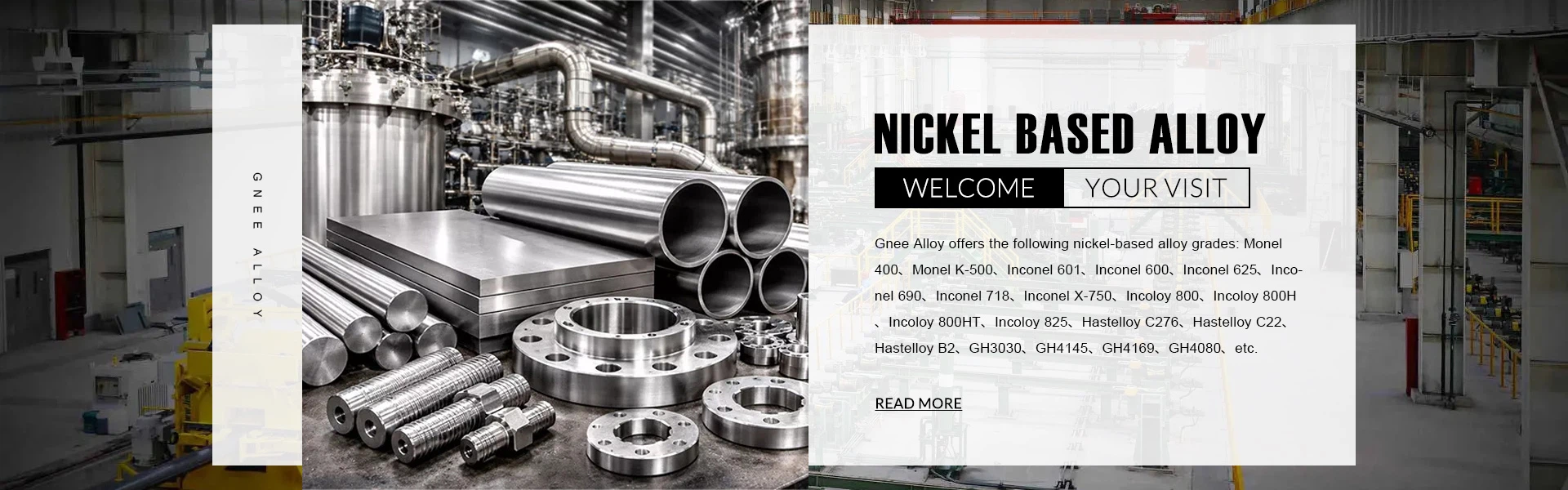
If you have project requirements for 2.4856 stainless steel bars, we welcome your order. GNEE has a large inventory of popular products for you to choose from. It can be processed into various practical product forms, including plates, coils, tubes, bars, wires, etc. For detailed chemical composition and free samples, please contact our factory immediately. We offer competitive prices and excellent service.


