

Choosing the right nickel-based superalloy is crucial for balancing project performance and cost-effectiveness. While Nimonic 75, Nimonic 80A, and Nimonic 90 all belong to the nickel-chromium alloy family, their metallurgical structures and performance ranges differ significantly.
Gnee Steel, a leading ISO-certified alloy manufacturer and global stocker, provides this purchasing guide to help purchasing managers and engineers make data-driven decisions.
💰 Get a Tiered Price List for Nimonic Alloys
Nimonic 75, 80A, and 90: A Comparison of High-Temperature Nickel Alloys

Nimonic 75, 80A, and 90: A Comparison of High-Temperature Nickel Alloys
Nimonic 75, 80A, and 90 are all nickel-chromium superalloys, each with different strengthening mechanisms and applications. Nimonic 75 is a solid solution-strengthened, high-oxidation-resistant alloy, suitable for medium-strength components. Nimonic 80A is a precipitation-hardening alloy with excellent creep resistance at temperatures up to 815°C. Nimonic 90, with the addition of cobalt, exhibits even higher creep rupture strength at temperatures up to 920°C.
What is equivalent to NIMONIC 75?
Other designations that are equivalent to nimonic 75 alloy include the following: DIN 2.4630. DIN 2.4951.

1. Nimonic 75 vs Nimonic 80A vs Nimonic 90 Comparison Table: Performance and Specifications
In short, the performance comparison of Nimonic 75, 80A, and 90 is as follows:
| Feature | Nimonic 75 (Alloy 75 / GH3030) | Nimonic 80A (Alloy 80A / GH4080A) | Nimonic 90 (Alloy 90 / GH4090) |
| Strengthening Method | Solid Solution | Precipitation (Gamma Prime) | Co-Cr-Ni Hardened |
| Service Temp (Load) | Up to 800°C | Up to 815°C | Up to 920°C |
| Oxidation Resistance | Excellent (Superior) | Very Good | Good |
| Creep Strength | Moderate | High | Superior (Extreme) |
| Fabricability | Excellent (Easy to weld/form) | Moderate | Difficult (Requires care) |
| Primary Forms | Sheets, Tubes, Bars | Bars, Forgings, Fasteners | Forged Bars, Springs, Blades |
| Cost Factor | Lowest (Budget Friendly) | Mid-Range | Premium |
Contact our professionals to recommend alloys suitable for your project
2. Which material is best suited for your application?

Nimonic 75 Alloy
Nimonic 75 is the preferred material for components subjected to extreme temperatures but with moderate mechanical stress. Its titanium stabilization treatment gives it excellent ductility and ease of machining.
Best Applications: Furnaces, radiant tubes, and aerospace combustion chamber linings.
Our Advantages: We are a high-volume manufacturer of Nimonic 75 plates and seamless tubes with short lead times.


Nimonic 80A Alloy
Nimonic 80A is produced using a precipitation hardening process with aluminum and titanium. Compared to Nimonic 75, it offers significantly improved tensile strength and creep rupture strength.
Best Applications: Gas turbine blades, engine valves, and high-temperature fasteners.
Our Advantages: Our Nimonic 80A forged bars undergo 100% ultrasonic testing to ensure zero defects in high-stress applications.


Nimonic 90 Alloy
With the addition of cobalt, Nimonic 90 maintains superior strength and creep resistance even at high temperatures where other alloys fail.
Optimal Applications: Turbine disks, high-temperature springs, and aerospace components subjected to ultra-high stress.
Our Advantages: We specialize in producing complete Nimonic 90 spring steel wire and forgings conforming to EN 10204 3.1 MTC standards.


📊 Download Comparative Data Sheet (PDF)
3. How to Choose Nimonic 75/80A/90 Alloys
When sourcing these alloys from factory direct suppliers, consider the following purchasing logic:
If your sole objective is oxidation resistance: Choose Nimonic 75 to maximize your budget.
If your parts must withstand high internal pressure or vibration: Upgrade to Nimonic 80A.
If operating under high loads above 850°C: Nimonic 90 is the only reliable option.
As a professional manufacturer, Gnee Steel offers highly competitive wholesale prices for Nimonic 75, 80A, and 90 type hooks.
Request a Bill of Materials Quotation
Why Choose Gnee as Your Nickel-Based Alloy Supplier
✅ Over 18 years of export experience, products sold to more than 80 countries
✅ Certified by ISO, SGS, and BV
✅ Global inventory of Inconel, Hastelloy, Incoloy, and Monel alloy tubing, plates, and bars
✅ Custom processing services available – including cutting, polishing, CNC machining, and packaging
✅ Fast delivery within 7-15 days, supported by global logistics partners

Gnee Steel GH3030 Certificate
📦 Packaging and Shipping
All Nickel Based Alloy products are packaged using the following methods:
Wooden pallets or crates
Moisture-proof packaging
Labels with furnace number, standard, and size labels
Shipped worldwide by sea, air, or express
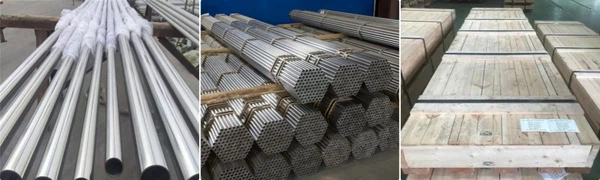
Gnee Steel GH3030 Product Packing
Contact us for the latest export price quote for GH3030 Alloy
FAQ
Q1: Can I replace Nimonic 75 with Nimonic 80A in my furnace project?
A: While Nimonic 80A is stronger, it is more expensive and harder to weld. If your project doesn't require high creep strength, staying with Nimonic 75 is more cost-effective.
Q2: Which alloy has the best weldability?
A: Nimonic 75 is the easiest to weld due to its solid-solution structure. Nimonic 80A and 90 require strict pre-heat and post-weld heat treatments (PWHT) to prevent cracking.
Q3: Do you provide equivalents for GH3030, GH4080A, and GH4090?
A: Yes! We manufacture all three alloys to international standards (ASTM, BS, DIN) and can certify them as GH3030, GH4080A, and GH4090 for the Asian and international markets.
Q4: What is the typical lead time for these Nimonic alloys?
A: For stocked bars and sheets, we ship within 7-10 days. For custom forged components or precision tubes, lead times are generally 4-6 weeks.


