


Melting point, magnetic properties and chemical composition of nickel-based alloy Incoloy 800HT
Incoloy 800HT is a fully austenitic low-carbon nickel-iron-chromium alloy in the same series as Incoloy 800. The cobalt content in the alloy can be strictly controlled below 0.01%.
Incoloy 800HT further improves the high temperature performance based on Incoloy 800H (ASME grade: SB409UNS NO8810). The allowable stress values of the two are the same below 593℃ (1100F), but above 593℃ (1100F), the high temperature performance of Incoloy 800HT is improved.
Incoloy 800HT is resistant to many corrosive media. Its high nickel content makes it very resistant to stress corrosion cracking in aqueous corrosive conditions. The high chromium content gives it better resistance to pitting and crevice corrosion cracking. This alloy has good corrosion resistance to nitric acid and organic acids, but has limited corrosion resistance in sulfuric acid and hydrochloric acid. In addition to the possibility of pitting corrosion in halides, it has good corrosion resistance in oxidizing and non-oxidizing salts. It also has good corrosion resistance in water, steam and mixtures of steam, air and carbon dioxide.
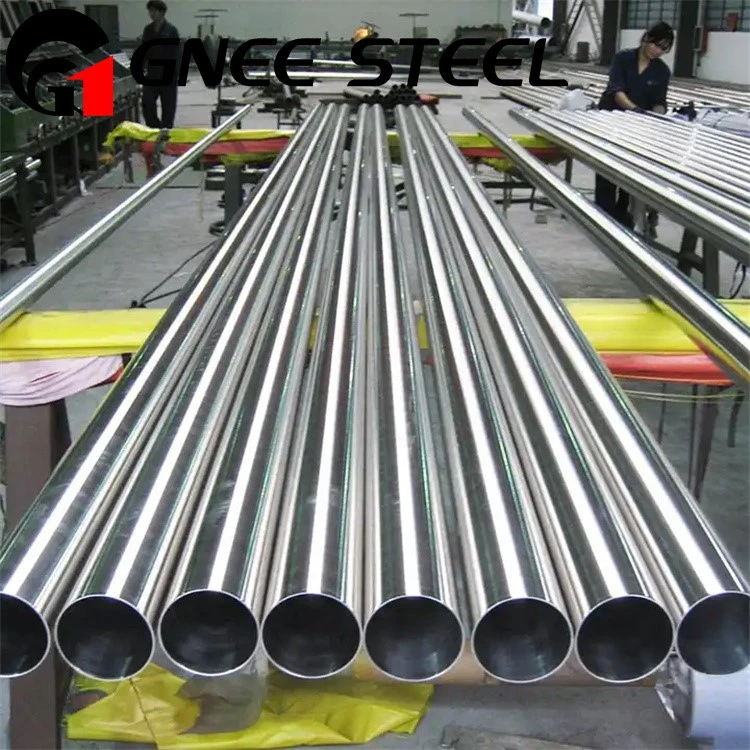

This is mainly due to changes in its chemical composition: the lower limit of carbon content is controlled from 0.05 to 0.06; the total amount of aluminum + titanium is controlled at 0.85~1.2, Incoloy 800H does not have this requirement; and through appropriate heat treatment to obtain grade 5 or coarser (not larger than Grade 3) grain size. Therefore, Incoloy 800HT has better high-temperature creep resistance and oxidation resistance, as well as higher metallurgical stability in long-term high-temperature applications. It is an ideal high-temperature Equipment materials.
Incoloy 800HT is a high-alloy austenitic heat-resistant steel that has high hot crack susceptibility during welding. Hot cracks are welding cracks that occur when the metal in the weld and heat-affected zone cools to a high temperature near the solidus during the welding process. The main reason is that the liquid low-melting point eutectic accumulated at the grain boundary or the center of the weld cracks under the action of the tensile stress generated during the cooling process of the weld. To prevent the occurrence of thermal cracks, the following aspects must be controlled.
Incoloy800HT density
Density: ρ=8.0g/cm3 When choosing welding materials, it is necessary to limit the content of easily segregated elements and harmful impurities in the welding materials. In particular, the content of impurities such as sulfur and phosphorus should be minimized and the carbon content should be reduced; by adjusting the chemistry of the weld metal Ingredients, improve the weld structure, refine the weld grains to improve its plasticity, reduce or disperse the degree of segregation, and control the harmful effects of low melting point eutectics.
Incoloy800HT melting temperature range
Melting temperature range: 1350~1400℃
Control the welding process parameters during the welding process, improve the weld forming coefficient, use multi-layer and multi-pass welding methods to reduce heat input, use as small a line energy as possible, speed up post-weld cooling, avoid center line segregation, and prevent center line cracks . Take various process measures to reduce welding stress.
Incoloy800HT welding
Incoloy 800HT is suitable for welding using any traditional welding process, such as tungsten electrode inert gas shielded welding, plasma arc welding, manual sub-arc welding, metal pole inert gas shielded welding, melting pole inert gas shielded welding, shielded gas arc welding, etc.
The cleanliness of the weldment surface is an important requirement for welding nickel-based corrosion-resistant alloys. The pollutants on the surface of weldments are mainly surface oxide scales and elements that cause embrittlement. The melting point of the oxide scale on the surface of the nickel-based corrosion-resistant alloy is much higher than that of the base material (the melting point of nickel is about 1446°C, while the melting point of nickel oxide is about 2090°C), and slag inclusions or fine discontinuous oxides may often be formed. This type of oxide is discontinuous but extremely small, and generally cannot be detected by penetrant inspection. For example, S, P.Pb, Sn, Zn, Bi, Sb, and As are all elements that can form a low melting point eutectic with Ni. Harmful elements. These elements increase the tendency of nickel-based corrosion-resistant alloys to undergo hot cracking. These harmful elements often exist in materials such as grease, paint, and rust. Therefore, before welding, clean the oil, paint, dirt, rust, etc. within the groove surface and both sides and within 50mm of the outer wall until it emits a metallic luster. And clean it with acetone or 95% alcohol.


