

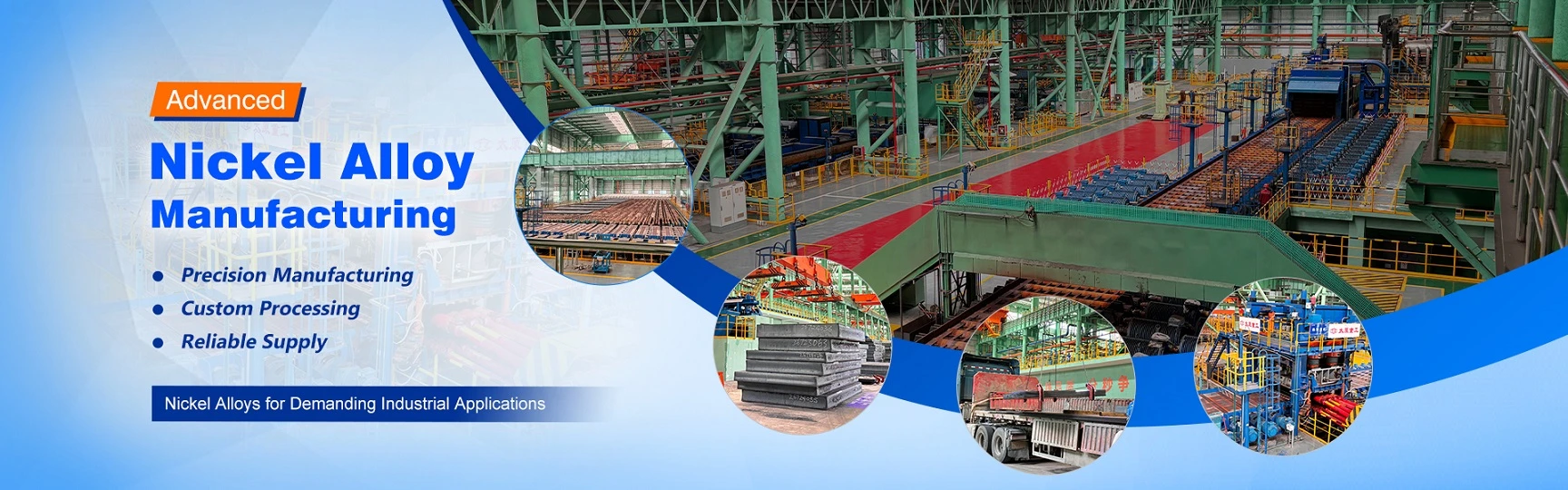
Are you concerned about the internal integrity of high-temperature shafts or turbine disks? When sourcing GH3030 round bars (with performance comparable to Nimonic 75/ХН78Т) ranging from 10 mm to 300 mm in diameter, the manufacturing process is just as important as the 80Ni-20Cr matrix chemistry of the alloy.
Core engineering challenges often boil down to internal integrity: "Does my 200 mm diameter bar have a uniform, fine-grained structure from surface to center? Or am I at risk of premature failure due to centerline porosity or segregation?" As a direct manufacturer specializing in high-temperature alloys, Gnee Steel offers advanced manufacturing process insights to help you select rolled or forged GH3030 bars for your most demanding applications.
Request technical consultation and forging bar quotation
Comparison of mechanical properties between forged and rolled GH3030 round bars

Comparison of mechanical properties between forged and rolled GH3030 round bars
Forged GH3030 (UNS GH30 / XH78T) round bars generally exhibit superior mechanical properties compared to rolled round bars, particularly in terms of high-temperature fatigue strength and structural integrity. GH3030 round bars are a nickel-chromium-based solid solution strengthened superalloy widely used in components operating at temperatures below 800°C to 1100°C.
What is GH3030 material?
GH3030 is a high-temperature nickel-based superalloy primarily used in components requiring high oxidation resistance and thermal stability. Due to its excellent performance in high-temperature environments, GH3030 is widely used in the aerospace and power generation industries.

1. Key Information on GH3030 Rolled and Forged Bars
Both product forms utilize our high-purity vacuum ion melting (VIM) + electroslag remelting (ESR) refined steel ingots. The difference lies in how the deformation process shapes the final microstructure and mechanical properties.
Rolled GH3030 Bars
Diameter range: Typically 10mm – 100mm
Process: Hot rolling – a continuous and efficient deformation method
Mechanical Properties: Creates uniform longitudinal grain flow lines and excellent surface quality. For high-volume, standard-diameter applications, rolling is the most cost-effective solution.
Optimal Applications: High-temperature fasteners, support rods, industrial furnace pins, and components where cost-effectiveness is a primary driver.


Forged GH3030 Bars
Diameter range: Typically 80mm – 300mm (and larger)
Process: Open or closed forging using hydraulic pressure – effectively eliminates internal voids and breaks up the as-cast structure.
Mechanical Properties: Excellent grain refinement, enhanced impact toughness, and significantly improved resistance to thermal fatigue-critical for components operating at 800°C or higher.
Most Suitable Applications: Large-diameter turbine shafts, heavy-duty furnace rollers, aerospace structural hubs, and any component subjected to high-temperature mechanical cycles.


2. Chemical composition of GH3030 round bars (VIM+ESR high purity)
Our advanced manufacturing processes ensure that whether you choose rolled or forged GH3030, you will obtain material that meets the highest metallurgical quality standards.
| Element | GH3030 Content | Metallurgical Function |
|---|---|---|
| Nickel (Ni) | Balance (~80.0%) | Provides matrix stability, high plasticity, and oxidation resistance |
| Chromium (Cr) | 19.0 – 22.0% | Forms a stable, protective oxide layer at elevated temperatures |
| Titanium (Ti) | 0.15 – 0.35% | Stabilizes carbides to control grain growth during service |
| Iron (Fe) | ≤ 1.5% | Minimized to reduce risk of brittle phase formation |
3. Comparison of mechanical properties of GH3030 round bars
| Property | Rolled Bar (Standard) | Forged Bar (Premium) |
|---|---|---|
| Tensile Strength (Rₘ) | ≥ 735 MPa | ≥ 750 – 800 MPa |
| Yield Strength (Rₚ₀.₂) | ≥ 245 MPa | ≥ 260 – 300 MPa |
| Elongation (A₅) | ≥ 35% | ≥ 35% (uniform through section) |
| Center‑Line Integrity | Standard (suited for smaller diameters) | Excellent - zero porosity, fully dense |
| Thermal Fatigue Life | High | Maximum - ideal for cyclic high‑temperature service |
Click to download the GH3030 alloy PDF file now
4. GH3030 Full Product Range
As a large manufacturing company, Gnee Steel offers a full range of GH3030 products to help you build complex components:
Seamless Tubes: Outer diameter 6mm – 219mm, suitable for high-temperature fluid systems and heat exchangers
Sheet Metal: Cold-rolled (0.5–4mm) and hot-rolled (5–50mm), suitable for combustion chambers and heat shields


5. Why Choose Gnee Steel?
As your strategic supply chain partner, Gnee Steel offers vertically integrated manufacturing advantages:
✅️VIM + ESR Refining: All materials undergo vacuum induction melting and electroslag remelting to ensure ultra-low gas content (O, N, H) and a uniform, inclusion-free microstructure.
✅️Surface Finish Options: Offers h9/h10 grade bright ground surfaces suitable for CNC machining; and peeled surfaces suitable for forging or heavy machining.
✅️Full Certification: Every order includes EN 10204 3.1 certification and provides actual test data traceable to specific heat and batch.

Gnee Steel GH3030 Certificate
📦 Packaging and Shipping
All Nickel Based Alloy products are packaged using the following methods:
Wooden pallets or crates
Moisture-proof packaging
Labels with furnace number, standard, and size labels
Shipped worldwide by sea, air, or express
Contact us for the latest export price quote for GH3030 Alloy
FAQ
Q1: At what diameter should I switch from rolled to forged bar for critical parts?
A: For components where internal integrity is mission‑critical, we recommend forged bar for diameters above 80–100mm. Forging ensures uniform grain structure and eliminates center‑line porosity, which becomes increasingly difficult to guarantee with rolling at larger diameters.
Q2: Is forged bar significantly more expensive than rolled bar?
A: The wholesale price of a forged bar is higher due to the additional processing steps. However, for large‑diameter or safety‑critical applications-such as a 300mm turbine shaft-the cost of a single material‑related failure far exceeds the incremental investment in a forged solution.
Q3: Can you supply GH3030 bars with precision tolerances for CNC machining?
A: Yes. For rolled bars up to 100mm, we offer bright ground finishes with h9 or h10 precision tolerances, making them ready for automatic bar feeders and Swiss‑type lathes.
Q4: How do you verify internal quality on large‑diameter forged bars?
A: We perform 100% ultrasonic testing (UT) in accordance with aerospace standards (e.g., AMS 2154) to ensure every bar is free from internal cracks, voids, inclusions, or segregation.


