


For engineers in the aerospace and gas turbine industries, the biggest bottleneck in high-temperature piping applications lies in weldability. Hot cracking frequently occurs in welds when standard "commercial-grade" GH4169 or GH3044 pipes are welded into complex manifolds or linings.
Cause: During the weld cooling phase, trace impurities such as phosphorus (P) and sulfur (S) migrate to the grain boundaries, forming low-melting-point films. These films can peel off, leading to cracking.
At Gnee Steel, we eliminate this risk at the atomic level. Our manufacturing process employs a dual-vacuum refining strategy to produce ultra-high purity materials, ensuring a smooth manufacturing process and maximizing the fatigue life of your parts.
Request a GH4169 pipe price quote
Manufacturing process guidelines for GH4169 and GH3044

Manufacturing process guidelines for GH4169 and GH3044
The manufacturing process guidelines for GH4169 (equivalent to Inconel 718) tubes and GH3044 high-temperature alloys focus on controlling their high-temperature strength, work hardening, and oxidation resistance. Key technologies include precise hot forming, specialized machining processes (such as micro-lubrication or ultrasonic machining), and rigorous heat treatment processes.
What is GH4169 equivalent to?
Inconel 718
GH4169 (equivalent to the American brand Inconel 718) is a precipitation-hardening nickel-based superalloy widely used in the aerospace industry due to its excellent mechanical properties (Lu et al., 2014).

1. Chemical composition (weight %) of GH4169 tube and GH3044 seamless tube
| Element | GH4169 | GH3044 | Key Difference |
|---|---|---|---|
| Nickel (Ni) | 50.0 – 55.0 | Balance (≥ 65.0) | GH3044 has higher Ni content |
| Chromium (Cr) | 17.0 – 21.0 | 23.5 – 26.5 | GH3044 higher |
| Tungsten (W) | – | 13.0 – 16.0 | GH3044 unique – primary strengthener |
| Iron (Fe) | Balance (~18-20) | ≤ 4.0 | GH4169 has much higher Fe |
| Molybdenum (Mo) | 2.80 – 3.30 | ≤ 1.5 | GH4169 slightly higher |
| Niobium (Nb) | 4.75 – 5.50 | – | GH4169 unique – γ″ former |
| Titanium (Ti) | 0.65 – 1.15 | 0.30 – 0.70 | GH4169 higher |
| Aluminum (Al) | 0.20 – 0.80 | 0.50 max | Similar |
| Carbon (C) | ≤ 0.08 | ≤ 0.10 | Similar |
| Manganese (Mn) | ≤ 0.35 | ≤ 0.50 | Similar |
| Silicon (Si) | ≤ 0.35 | ≤ 0.80 | Similar |
| Phosphorus (P) | ≤ 0.015 | ≤ 0.013 | Similar |
| Sulfur (S) | ≤ 0.015 | ≤ 0.013 | Similar |
| Boron (B) | ≤ 0.006 | – | GH4169 unique |
| Cerium (Ce) | – | ≤ 0.020 | GH3044 unique |
| Cobalt (Co) | ≤ 1.00 | – | GH4169 may contain |
2. Physical properties of GH4169 pipe and GH3044 seamless pipe
| Property | GH4169 | GH3044 |
|---|---|---|
| Density | 8.19 g/cm³ | 8.89 g/cm³ |
| Melting Range | 1260 – 1336°C | 1352 – 1375°C |
| Thermal Conductivity (20°C) | 11.4 W/m·K | 11.7 W/m·K |
| Coefficient of Thermal Expansion (20-100°C) | 13.0 × 10⁻⁶/°C | 12.5 × 10⁻⁶/°C |
| Coefficient of Thermal Expansion (20-900°C) | ~15.5 × 10⁻⁶/°C | ~16.6 × 10⁻⁶/°C |
| Specific Heat (20°C) | 435 J/kg·K | 450 J/kg·K |
| Electrical Resistivity | 1.25 µΩ·m | 1.30 µΩ·m |
| Magnetic Properties | Slightly magnetic | Non-magnetic |
Click to download the GH4169 alloy PDF file now
3. Comparison of manufacturing processes for GH4169 and GH3044g tubes
| Process Step | GH4169 Tube | GH3044 Tube |
|---|---|---|
| 1. Melting | VIM + ESR (or VAR for aerospace) | VIM + ESR |
| 2. Forging / Rolling | Multi-directional forging | Hot rolling / forging |
| 3. Tube Forming | Hot extrusion + cold drawing / pilgering | Hot extrusion + cold drawing / pilgering |
| 4. Intermediate Annealing | Required (multiple passes) | Required (multiple passes) |
| 5. Final Heat Treatment | Solution (954-982°C) + Aging (718°C + 621°C) | Solution (1120-1160°C) |
| 6. Pickling / Finishing | AP / BA / Polished | AP / BA / Polished |
| 7. NDT | 100% UT or ET | 100% UT or ET |
4.GH4169 (Precipitation Hardening)
GH4169 possesses high strength, excellent corrosion resistance, and high-temperature performance (up to 650°C), and is commonly used in aero-engine components.
Forming and Forging: Requires multiple hot forming processes, including pre-deformation, heat treatment, and final deformation. To refine the microstructure, aging treatment is required before final deformation to precipitate sufficient o-phase.
Spinning: Hot spinning is suitable for thin-walled parts. At temperatures above 800°C, the final thinning rate can be increased to over 70%.

GH4169 possesses
Machining:
Milling: Techniques such as rotary short-arc milling or ultrasonic vibration milling achieve optimal machining results, improving efficiency and surface quality.
Lubrication: Micro-volume lubrication (MQL) using hybrid nanofluids (e.g., GnP-ZrO2) is highly effective, reducing tool wear and cutting temperature by over 20-30%.
Finishing: Final surface polishing is crucial for improving high-cycle fatigue life because it can generate beneficial residual compressive stress of approximately -1000 MPa.
Heat Treatment: Typical aging treatment involves holding at 720°C for 8 hours, then cooling to 620°C at a rate of 50°C/h and holding at this temperature for 8 hours, followed by air cooling.
Welding: Linear friction welding (LFW) can form high-quality joints with fine grains.
GH3044 (Solid Solution Strengthened)
GH3044 is designed to maintain oxidation resistance and structural stability at temperatures ranging from 900 to 1000°C.
Rolling and Deformation: During ring rolling, constitutive equations are established using high-temperature simulation tests (e.g., using Gleeble 3800). Typical deformation temperatures are 1020°C, 1070°C, 1120°C, and 1180°C.
Spinning: Similar to GH4169, high-temperature spinning (above 800°C) yields significant results. Optimal performance is achieved using a wheel fillet radius 1 to 2 times the billet wall thickness.

GH4169 Pipeline Manufacturing Process
5. Why did we choose to source GH4169 and GH3044 from Gnee Steel?
✅️Direct Factory Pricing: Eliminate middleman markups and secure the best rates for bulk high-purity materials.
✅️Industrial Durability: Our pipes are engineered for the long haul, reducing the MTBO (Mean Time Between Overhaul) for your equipment.
✅️Total Traceability: Every pipe is marked with its heat number and accompanied by a detailed MTC 3.1 Mill Test Certificate.
✅️Global Fast Shipping: We utilize premium logistics to ensure your high-value alloys arrive safely in the USA, Europe, or Asia.

Gnee Steel GH4169(inconel 718) Certificate
📦 Packaging and Shipping
All Nickel Based Alloy products are packaged using the following methods:
Wooden pallets or crates
Moisture-proof packaging
Labels with furnace number, standard, and size labels
Shipped worldwide by sea, air, or express
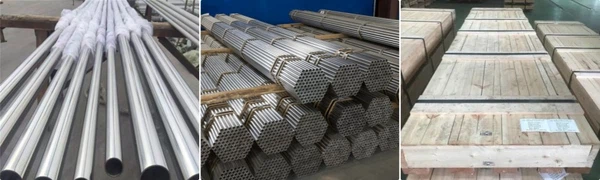
Gnee Steel GH4169 Product Packing
Contact us for the latest export price quote for GH4169 Alloy
FAQ
Q1: Why is GH3044 easier to weld than other solid-solution alloys?
A: GH3044 is a nickel-chromium based alloy with excellent oxidation resistance. By using our VIM-purified GH3044, you ensure that the carbide distribution is uniform, which prevents localized brittleness in the Heat Affected Zone (HAZ) during welding.
Q2: Does the VIM+VAR process make the material more expensive?
A: The initial cost per kg is slightly higher, but it is a Cost-effective Solution. By eliminating welding cracks and NDT rejections, you save thousands in rework and scrap costs, lowering your total production expense.
Q3: Is GH4169 interchangeble with Inconel 718 in your process?
A: Yes. GH4169 is the technical equivalent of Inconel 718. Our manufacturing process meets all requirements for AMS 5589 and ASTM B637, ensuring global compliance for your blueprints.
Q4: Can you provide non-standard custom wall thicknesses for heat exchangers?
A: Absolutely. Our precision cold-drawing facility allows for Custom Fabrication of specialized wall thicknesses with h8-h11 tolerances.


