

Is It a Metal? Yes, and Here Is the Definition
The name describes a nickel metal that has been alloyed to improve corrosion resistance, mainly through additions of molybdenum and chromium. It is a metal in the strict sense: a metallic material with metallic bonding, a crystalline structure and the conductivity, ductility and formability that follow from them, supplied as an alloy rather than as a pure element. It is produced in many grades, each with a different chemical composition chosen to optimise performance in a particular environment.
The question is reasonable, because the family sits between two familiar categories. It is not a stainless steel, since the matrix is nickel rather than iron, and it is not a pure metal, since no commercial grade is unalloyed. It is best understood as the nickel end of the corrosion-resistant alloy range, where molybdenum does the work that chromium alone cannot do in reducing acids.
What Goes Into the Melt
Because the material is an alloy, it is made by combining the constituent elements in the liquid state at high temperature. Across the commercial grades, chromium may range from 1 to 25%, molybdenum from 5 to 30% and iron from 0 to 30%, with nickel making up the remainder. Depending on the grade, further additions may include carbon, tungsten, vanadium and titanium. The wide ranges explain why two materials sold under the same family name can behave quite differently in service, and why the grade designation rather than the family name is what belongs on a purchase specification.
| Element | Typical range across the family |
|---|---|
| Ni | remainder |
| Cr | 1 to 25% |
| Mo | 5 to 30% |
| Fe | 0 to 30% |
| Optional additions | carbon, tungsten, vanadium, titanium |
| Most widely used grade | UNS N10276, written C276 |
What the Molybdenum and Chromium Additions Deliver
The high molybdenum and chromium contents are the reason these alloys outperform other specialty metal products, including the iron-nickel-chromium grades, in severely corrosive environments. Molybdenum raises resistance in reducing media and also improves overall machinability, while chromium provides the passivity needed in oxidising conditions. The result is a material with good ductility that is easy to fabricate and form. The typical property set is as follows.
Excellent corrosion resistance in both oxidising and reducing environments.
Good weldability in the common wrought product forms.
Resistance to oxidants and to a wide range of acids.
Sufficient ductility for forming, bending and flanging without cracking.
Work hardening during forming is the one behaviour to plan for: the material hardens as it is deformed, so intermediate anneals and generous bend radii are used where heavy cold reduction is required.
How the Alloy Is Produced
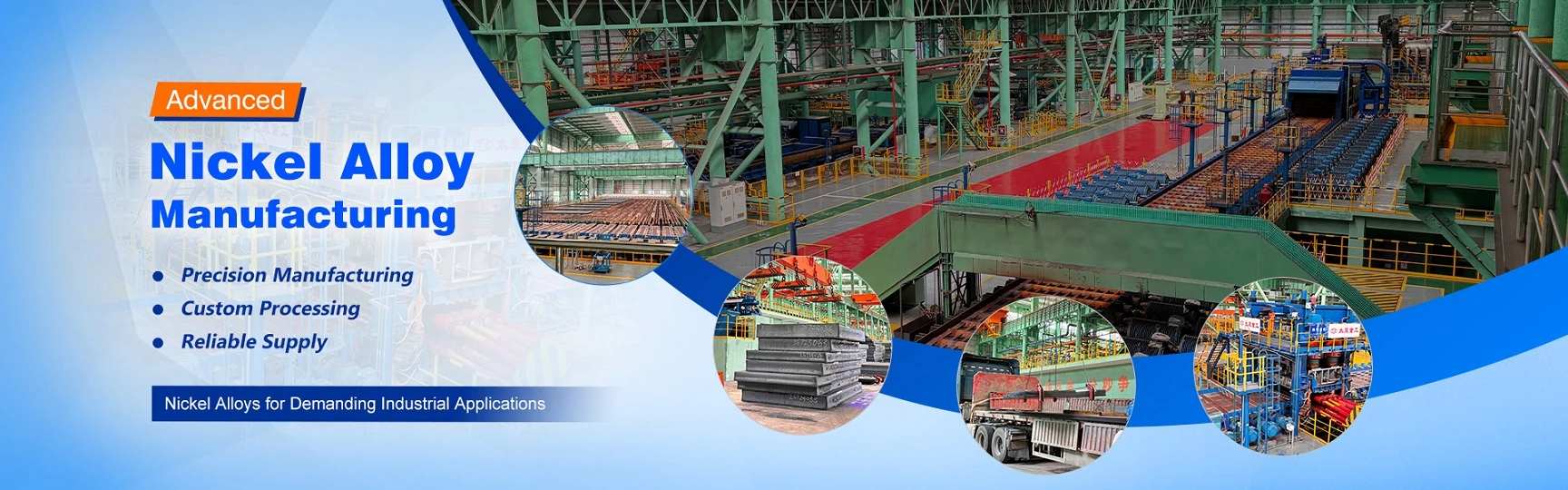
Production begins with a charge of virgin metals and clean process scrap, melted together and alloyed to the target analysis in the liquid state at high temperature. Once the elements are combined, mixed and verified against the specification, the heat is cast into ingots, slabs or continuous-cast sections for further processing, or into shaped castings where the component is to be used as cast. Cast conversion is followed by hot and cold working into plate, sheet, bar, tube, wire and forgings. Most wrought material then receives a solution anneal so that the delivered product has a uniform structure and its full corrosion resistance rather than the carbide-decorated structure left by slow cooling.
Where Nickel-Molybdenum Alloys Are Used
The material is chosen wherever corrosion resistance is the limiting factor and product life is critical, which in practice means moderate to severely corrosive service.
Piping, valves, pumps and fittings in the chemical and petrochemical industries.
Reactor vessels in the chemical and nuclear industries.
Distillation equipment, columns and reaction vessels handling mixed acids.
Pulp and paper production equipment exposed to aggressive process liquors.
Waste treatment and pollution control systems.
Heat exchangers and ducting where chlorides or oxidising salts are present.
Among the many grades available, C276 is one of the most popular. It is used in the harsh duties listed above as well as in pulp and paper production and waste treatment, and it accounts for a large share of the tubing, plate and fittings specified in chemical plant construction.
Frequently Asked Questions
Q: Is the material a metal or a non-metal?
It is a metal. The base is nickel, alloyed with molybdenum and chromium and, in some grades, with iron, tungsten, vanadium or titanium. It has metallic bonding and a crystalline structure, and it is supplied as a wrought or cast alloy rather than as a pure element.
Q: How much molybdenum and chromium does it contain?
Across the family, chromium ranges from 1 to 25% and molybdenum from 5 to 30%, with iron between 0 and 30% and nickel making up the balance. Individual grades narrow those ranges considerably to suit a specific corrosive duty.
Q: Why is molybdenum the key addition?
Molybdenum raises resistance to reducing acids and chloride-bearing media, which chromium alone does not cover well. It also improves overall machinability, while chromium supplies the passive film needed in oxidising environments.
Q: How is the alloy manufactured?
Charge materials are melted together at high temperature and alloyed to the required analysis, then cast into ingots or castings. The cast form is subsequently rolled, forged or drawn into plate, sheet, bar, tube and wire, usually followed by a solution anneal before despatch.
Q: Where is the material most often used?
In piping and valves for the chemical and petrochemical industries, in reactor vessels for chemical and nuclear service, in distillation and reaction equipment, in pulp and paper production, and in waste treatment systems where a premature failure would be costly.
Q: Which grade should be specified?
C276, designated UNS N10276, is among the most widely used because it combines the family's corrosion resistance with good fabrication behaviour. The correct choice is the grade whose composition matches the actual medium, temperature and contamination level of the duty.


