

The Critical Choice
Choosing between Inconel 625 and Inconel 718 is a big challenge for engineers in demanding industries. These are both top nickel-based superalloys, but you can't just swap one for the other. You need to understand their main differences to make the right choice.
The core difference is simple: Inconel 625 works best for fighting corrosion and is easier to work with. Inconel 718, on the other hand, gives you much better strength and hardness at high temperatures, up to about 700°C (1300°F).
This key difference determines where each material is used. You'll find 625 in marine and chemical processing equipment. 718 is mostly used in aerospace parts that must handle heavy stress. This guide will help you compare these materials based on facts. When deciding between Inconel 625 vs 718, think about whether your biggest problem is a harsh environment or mechanical pressure.
| Property | Inconel 625 | Inconel 718 |
|---|---|---|
| Primary Strength | Superior Corrosion Resistance | Superior Mechanical Strength & Hardness |
| Strengthening Mechanism | Solid Solution Hardening | Precipitation Hardening (Age-Hardenable) |
| Key Alloying Elements | High Mo & Nb | High Fe, Nb, plus Ti & Al |
| Tensile Strength (Annealed) | ~880 MPa / 128 ksi | ~1035 MPa / 150 ksi |
| Yield Strength (Annealed) | ~460 MPa / 67 ksi | ~725 MPa / 105 ksi |
| Yield Strength (Aged) | N/A (Not age-hardenable) | ~1140 MPa / 165 ksi |
| Max Service Temperature | ~980°C / 1800°F (Low Stress) | ~700°C / 1300°F (High Stress) |
| Weldability | Excellent | Good (Requires specific procedures) |
Performance Deep Dive
Chemical Composition
The performance of these alloys comes from their different chemical makeup. Each element plays a specific role in how the material performs.
Inconel 625 has a high Nickel-Chromium (Ni-Cr) base with added Molybdenum (Mo) and Niobium (Nb). These elements mix into the nickel-chrome matrix, making the material stronger and much more resistant to corrosion.
Inconel 718 also has a Ni-Cr base but contains much more Iron (Fe). The big difference is that it also has Titanium (Ti) and Aluminum (Al) along with Niobium (Nb). During heat treatment, these elements form tiny hardening particles. For more details, check these detailed chemical compositions.
Mechanical Strength
The biggest difference between Inconel 625 vs 718 is how strong they are. This comes from how they're strengthened.
When heat-treated, Inconel 718 is much stronger and harder than Inconel 625. It stays stronger from room temperature up to about 650-700°C (1200-1300°F).
This strength comes from tiny, hard particles that form inside the material during heat treatment. These particles block movement within the metal, making it very resistant to bending or breaking under pressure.
Inconel 625 gets its strength differently and isn't as strong as 718 in normal temperature ranges. But 625 keeps its strength better above 700°C. At these higher temperatures, it's often used where corrosion resistance matters more than strength.
Corrosion Resistance
This is where Inconel 625 really shines. Its chemistry is specially designed to stand up to harsh environments.
The high amounts of chromium and molybdenum in Inconel 625 provide excellent protection against many types of corrosion. It resists both general corrosion and focused attacks like pitting, especially in salty environments like seawater. It also works very well in acidic conditions.
While Inconel 718 has good corrosion resistance, it can't match 625. Also, when 718 is heat-treated for maximum strength, it can become vulnerable to cracking in certain environments. This makes 625 the safer choice when chemical attack is your main concern, as shown by recent studies on corrosion performance.
Application Scenarios
When to Use 625
Choose Inconel 625 when your main concern is fighting corrosive environments, especially when combined with high temperatures and complex fabrication.
Marine Engineering: Its resistance to salt water corrosion makes it perfect for seawater systems, propeller blades, and underwater connectors.
Chemical and Petrochemical Processing: Used for reaction vessels, pipes, and valves that handle acidic and corrosive materials.
Aerospace Exhaust and Ducting Systems: Its good workability and resistance to high-temperature oxidation make it great for engine exhaust parts, bellows, and heat exchanger casings where environment resistance matters more than strength.
When to Use 718
Choose Inconel 718 when you need the highest possible mechanical performance-strength, hardness, and resistance to deformation-at temperatures up to 700°C (1300°F).
Aerospace and Gas Turbines: This is its main use. It's used for critical, high-stress parts like turbine discs, blades, shafts, and compressor parts in jet engines.
Oil and Gas Industry: Its high strength makes it perfect for downhole tools, wellhead parts, and high-pressure fasteners used in sour gas environments where strength is crucial.
Nuclear Applications: Used for structural components and instrumentation in reactors where high strength and good corrosion resistance are needed under extreme conditions.
The decision between Inconel 625 and Inconel 718 comes down to choosing between corrosion resistance and mechanical strength.
To make the choice easier, think about the main challenge your component will face.
| If Your Priority Is... | The Better Choice Is... | Because... |
|---|---|---|
| Corrosion Resistance | Inconel 625 | Its high Cr and Mo content offers superior protection against a wide range of corrosive media. |
| Fabricability & Weldability | Inconel 625 | It is far more forgiving to weld and fabricate, reducing manufacturing complexity and cost. |
| Mechanical Strength & Hardness | Inconel 718 | Its age-hardenable nature provides significantly higher strength up to ~700°C (1300°F). |
| High-Stress Applications | Inconel 718 | It is designed to resist deformation and creep under extreme mechanical loads within its service temperature. |
Our factory
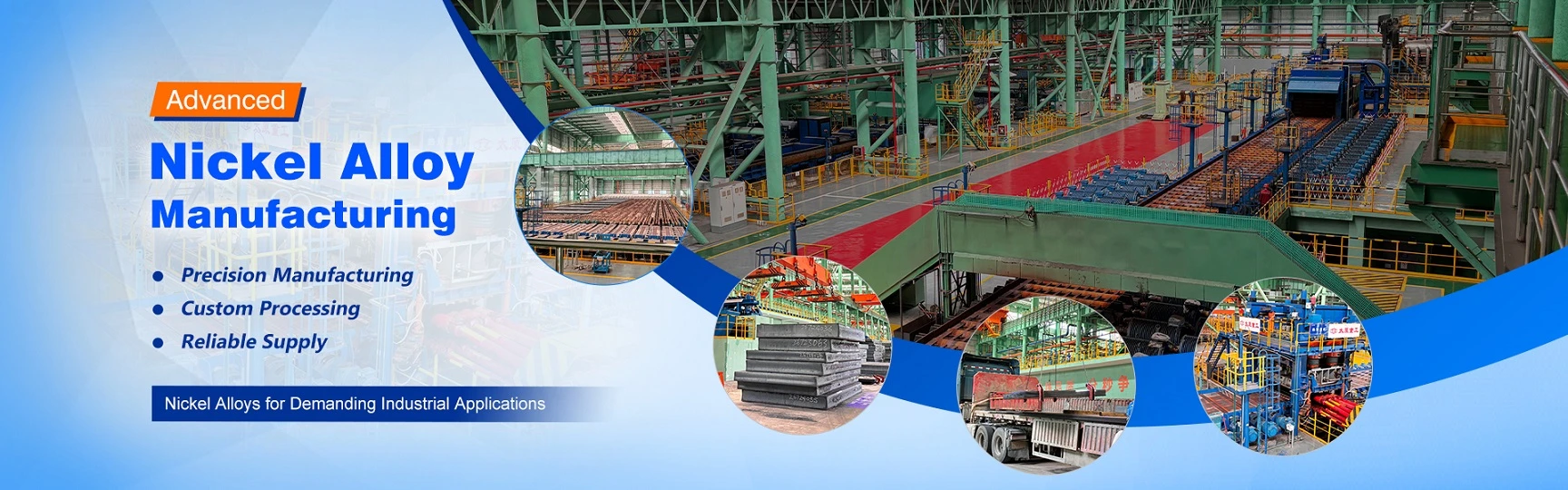
Our nickel-based alloy products originate from a modern precision manufacturing base. The factory is equipped with fully automated vacuum induction melting (VIM), electroslag remelting (ESR), and multi-directional forging hydraulic units, ensuring that every step from melting to forming meets aerospace-grade standards. Through a digital process control system, we achieve precise control over composition purity, grain size, and mechanical properties. Each batch of products is accompanied by traceable melting reports and third-party certifications (such as DNV-GL, ABS, aerospace standards, etc.), ensuring the authenticity and reliability of performance data.

Packaging and shipping
We adopt the highest industry standards for protective packaging: all rods/plates are treated with anti-rust protection and reinforced with waterproof film and wooden crates; precision components are packaged with custom foam dividers and vacuum sealing. Through our proprietary logistics coordination system, we promise that standard specification products will be prepared and shipped within 7-15 working days after order confirmation and technical details are finalized.


