

Inconel 600 vs Stainless Steel 310 – What's the Difference
Inconel 600 vs Stainless Steel 310 – What's the Difference
The main difference between Inconel 600 and stainless steel 310 lies in their composition and properties. Inconel 600 is a nickel-based alloy known for its excellent high-temperature strength, corrosion resistance, and cost advantage; while stainless steel 310 is an iron-based stainless steel, less expensive, easier to process, and suitable for general applications. The key difference is that Inconel 600 is designed for extreme high-temperature and corrosive environments, while stainless steel 310 is suitable for medium-temperature applications where cost and processing performance are more critical.
What are the uses of 310 stainless steel?
SAE 310 stainless steel is a high-alloy austenitic stainless steel suitable for high-temperature environments. Its high chromium and nickel content gives the steel excellent oxidation resistance and high-temperature strength.
Difference Between Inconel 600 and Stainless Steel 310
Comparison of composition and properties of Inconel 600 and Stainless Steel 310
| Element | Inconel 600 | Stainless Steel 310 | Key Difference / Impact |
|---|---|---|---|
| Nickel (Ni) | ≥ 72% (Balance) | 19.0 - 22.0% | Fundamental difference: 600 is nickel-based; 310 is iron-based with moderate Ni |
| Chromium (Cr) | 14.0 - 17.0% | 24.0 - 26.0% | 310 has higher Cr for better oxidation resistance |
| Iron (Fe) | 6.0 - 10.0% | Balance (~50-55%) | Primary distinction: 600 is Ni alloy; 310 is Fe alloy |
| Manganese (Mn) | ≤ 1.0% | ≤ 2.0% | Similar ranges |
| Silicon (Si) | ≤ 0.50% | ≤ 1.50% | 310 typically has higher Si for oxidation resistance |
| Carbon (C) | ≤ 0.15% | ≤ 0.25% | Higher C in 310 can affect weldability and corrosion |
| Sulfur (S) | ≤ 0.015% | ≤ 0.030% | Tighter control in 600 |
| Phosphorus (P) | - | ≤ 0.045% | Controlled impurity in 310 |
| Copper (Cu) | ≤ 0.50% | - | Present in 600, not in 310 |
| Nitrogen (N) | - | ≤ 0.10% | May be present in 310 |
Inconel 600 is a nickel-chromium alloy with extremely high corrosion resistance and oxidation resistance. It can withstand high-temperature environments up to 2000°F (1093°C). This alloy maintains its strength even at extreme temperatures, making it ideal for aerospace and marine applications. Compared to Inconel 600, 310 stainless steel contains more chromium and nickel, making it more suitable for high-temperature applications. It also has good corrosion resistance and oxidation resistance and can withstand temperatures up to 2100°F (1100°C).
Mechanical Properties Comparison
| Property | Condition | Inconel 600 | Stainless Steel 310 | Comparison Notes |
|---|---|---|---|---|
| Tensile Strength | Room Temp | 550-690 MPa (80-100 ksi) | 515-655 MPa (75-95 ksi) | Similar minimums, 600 typically stronger |
| Yield Strength | Room Temp | 240-350 MPa (35-51 ksi) | 205-310 MPa (30-45 ksi) | 600 has ~15-20% higher yield strength |
| Elongation | Room Temp | 40-55% | 40-50% | Both highly ductile |
| Hardness (Annealed) | Room Temp | RB 75-90 | RB 80-95 | Similar hardness ranges |
| Creep Strength | 815°C (1500°F) | Excellent | Good | 600 superior above 700°C (1290°F) |
| High-Temp Strength | 980°C (1800°F) | Maintains useful strength | Strength drops significantly | Critical difference for high-temp applications |
| Modulus of Elasticity | Room Temp | 207 GPa (30×10⁶ psi) | 200 GPa (29×10⁶ psi) | Similar stiffness |
| Density | - | 8.47 g/cm³ | 7.84-8.04 g/cm³ | 600 is ~5-8% denser |
Inconel 600 exhibits excellent mechanical properties, including high-temperature strength and resistance to stress corrosion cracking. It also has high resistance to thermal fatigue, making it ideal for heat exchangers, furnaces, and other high-temperature applications. On the other hand, 310 stainless steel exhibits excellent toughness and strength at high temperatures. This makes it ideal for applications requiring high strength and resistance to thermal shock.
Corrosion Resistance
Inconel 600 exhibits excellent corrosion resistance to a wide range of acids, alkalis, and other corrosive media. It possesses strong resistance to pitting and crevice corrosion, making it suitable for marine environments. Stainless steel 310 also offers good corrosion resistance, especially in acidic environments. It can withstand the attack of sulfuric acid and other strong acids, making it ideal for the chemical and petrochemical industries.
Pricing and Availability
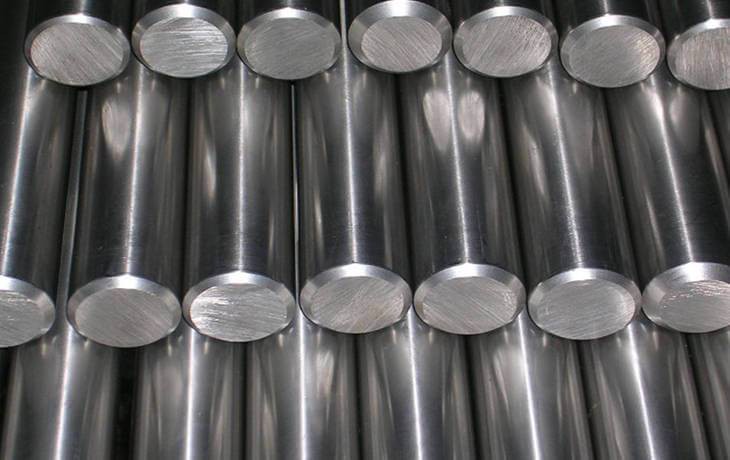
Inconel 600 is generally more expensive than stainless steel 310. This is due to its higher nickel and chromium content, which imparts superior corrosion resistance and mechanical properties. Generally, Inconel 600 is more expensive to manufacture and more difficult to process. However, both metals are available in various forms, including plates, bars, and tubes.
Applications
Inconel 600 is widely used in the aerospace, chemical, and marine industries. It is also used in heat exchangers, furnace components, and gas turbine parts. 310 stainless steel is commonly used in the chemical, petrochemical, and pharmaceutical industries. It is also used in high-temperature furnaces, heat treatment equipment, and other high-temperature processes.
| Feature | Inconel 600 | Stainless Steel 310 |
|---|---|---|
| Composition | Nickel-chromium alloy | Iron alloy with high chromium and nickel content |
| High-Temperature Performance | Excellent high-temperature strength and oxidation resistance; used in aerospace, gas turbines | Strength decreases significantly at high temperatures; suitable for medium-temperature environments |
| Corrosion Resistance | Superior resistance to extreme corrosive environments (acids, seawater, high-temperature oxidation) | Good resistance to many oxidizing acids and atmospheric conditions, but fair resistance to chlorides |
| Cost | Significantly more expensive | More affordable |
| Machinability/Fabrication | Harder to machine | Easier to process and form |
| Density | Slightly higher (8.47 g/cm38.47g/cm3) | Slightly lower (7.84−8.04 Mg/m37.84−8.04Mg/m3) |
| Applications | Aerospace, nuclear industry, chemical processing, marine engineering | Construction, medical equipment, general industrial and commercial use |
Why Choose Gnee as Your Nickel-Based Alloy Supplier
✅ Over 18 years of export experience, products sold to more than 80 countries
✅ Certified by ISO, SGS, and BV
✅ Global inventory of Inconel, Hastelloy, Incoloy, and Monel alloy tubing, plates, and bars
✅ Custom processing services available – including cutting, polishing, CNC machining, and packaging
✅ Fast delivery within 7-15 days, supported by global logistics partners
📦 Packaging and Shipping
All stainless steel products are packaged using the following methods:
Wooden pallets or crates
Moisture-proof packaging
Labels with furnace number, standard, and size labels
Shipped worldwide by sea, air, or express
Gnee Steel also supplies custom Inconel 600 products in various sizes and specifications. Please send us your drawings for a quote!
Gnee Steel is a supplier of Inconel 600 alloy, offering a wide range of products including: seamless pipe (sizes: 4-219 mm; thickness: 0.5-20 mm); welded pipe (sizes: 5.0-1219.2 mm; thickness: 0.5-20 mm); plates (thickness: 0.1 to 100 mm; width: 10-2500 mm); strips; alloy round bars (diameter: 3-800 mm); flat bars (thickness: 2-100 mm; width: 10-500 mm); hexagonal bars (size: 2-100 mm); wire rods; and extruded profiles. We collaborate with steel mills to provide our customers with Inconel 600 alloy products that meet or exceed numerous leading industry standards, including ASTM, ASME, SAE, AMS, ISO, DIN, EN, and BS standards.
Gnee Steel stocks and sells Inconel 600, pipes, plates, strips, round bars, flat bars, forged billets, hexagonal steel, wire rods, and extruded profiles. Please feel free to contact us at ss@gneesteel.com for a quote.


