

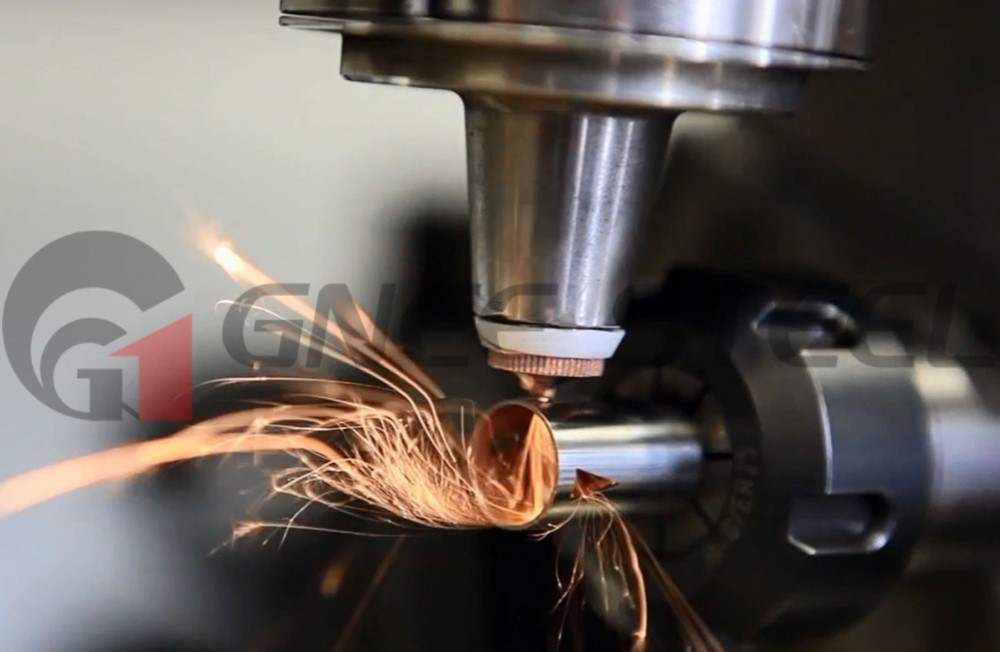
Machining GH4169 (equivalent to Inconel 718) is an extremely challenging task for machining shop owners and CNC operators. It's not uncommon for the cost of tool wear to exceed the value of the material itself.
Pain Points:
* **Rapid Work Hardening:** The material hardens instantly upon tool contact with the workpiece surface. Even a millisecond of tool dwell time can expose it to a "diamond-hard" layer, causing immediate chipping of the cutting edge.
* **Poor Thermal Conductivity:** Heat cannot dissipate through the chips and instead concentrates at the tool tip. This leads to "thermal softening" of expensive cutting tools.
* **High Abrasiveness:** Metallurgical carbides in the matrix act like sandpaper, wearing down the tool and shortening its lifespan.
At Gnee Steel, we not only sell alloys but also provide technical specifications and availability information to ensure your production remains cost-effective.
Click to get a factory quote for GH4169
GH4169 Manufacturing Process Guide
GH4169 Manufacturing Process Guide
GH4169 (similar to Inconel 718) is a high-strength, corrosion-resistant nickel-based superalloy manufactured using a combination of vacuum induction melting (VIM) and electroslag remelting (ESR) processes. Key processes include a two-stage homogenization treatment (1160℃ × 24 h + 1200℃ × 24 h) to eliminate the Laves phase, hot forging, and the use of specialized machining or additive manufacturing techniques (such as LDED/milling hybrid processes) to control the microstructure and reduce surface defects.
What is the composition of GH4169 high-temperature alloy?
The chemical composition of GH4169 alloy is as follows: Ni 53.44, Cr 18.56, Mo 3.02, Nb 5.3, Al 0.44, Ti 1.04, C 0.026, P 0.005, S 0.001, B 0.002, Fe balance (weight percentage).

1.GH4169 Standard Chemical Composition (wt%)
| Element | Content (%) | Standard Requirement | Function |
|---|---|---|---|
| Nickel (Ni) | 50.0 – 55.0 | 50.0 – 55.0 | Matrix element; provides high-temperature stability and corrosion resistance |
| Chromium (Cr) | 17.0 – 21.0 | 17.0 – 21.0 | Oxidation and corrosion resistance |
| Iron (Fe) | Balance (~18-20) | Balance | Fe-Ni-Cr base alloy |
| Niobium (Nb) | 4.75 – 5.50 | 4.75 – 5.50 | Primary γ″ strengthening element – forms Ni₃Nb |
| Molybdenum (Mo) | 2.80 – 3.30 | 2.80 – 3.30 | Solid-solution strengthening; enhances pitting resistance |
| Titanium (Ti) | 0.65 – 1.15 | 0.65 – 1.15 | Forms γ′ strengthening phase – Ni₃(Al,Ti) |
| Aluminum (Al) | 0.20 – 0.80 | 0.20 – 0.80 | Forms γ′ strengthening phase |
| Carbon (C) | ≤ 0.08 | ≤ 0.08 | Low carbon for weldability and ductility |
| Manganese (Mn) | ≤ 0.35 | ≤ 0.35 | Deoxidizer |
| Silicon (Si) | ≤ 0.35 | ≤ 0.35 | Deoxidizer |
| Phosphorus (P) | ≤ 0.015 | ≤ 0.015 | Low for toughness |
| Sulfur (S) | ≤ 0.015 | ≤ 0.015 | Low for hot workability |
| Boron (B) | 0.002 – 0.006 | 0.002 – 0.006 | Grain boundary strengthener; improves creep life |
| Cobalt (Co) | ≤ 1.00 | ≤ 1.00 | Residual element |
| Copper (Cu) | ≤ 0.30 | ≤ 0.30 | Residual element |
| Tantalum (Ta) | ≤ 0.05 | ≤ 0.05 | Residual element (often counted with Nb) |
Click to download the GH4169 alloy PDF file now
2.GH4169 Manufacturing Process and Parameters
Smelting and Casting: Initial melting is performed using vacuum induction melting (VIM), followed by electroslag remelting (ESR) to ensure high purity.
Homogenization and Forging: Homogenization is crucial for eliminating the Laves phase and refining MC carbides. Hot deformation (forging) properties vary; homogenized materials typically have a better, more uniform grain structure.
Ring Rolling: Heated ring billets are used, with strict control over the transfer time from the furnace to the mill (ideally 15-20 seconds) to prevent excessive temperature drop.
Heat Treatment: Three-stage annealing (TSRT) is recommended, offering better control over grain size and α phase content compared to standard treatments. Solution treatment is essential for eliminating work hardening and restoring formability.
Additive Manufacturing: Laser-directed energy deposition (LDED) combined with milling allows for the fabrication of thin-walled parts, reducing the Laves phase compared to additive manufacturing alone.
3. GH4169 Machining Parameter Reference Table
Note: Parameters may vary depending on the availability of GH4169 material.
| Operation | Tool Material | Cutting Speed (m/min) | Feed Rate (mm/rev) | Depth of Cut (mm) |
| Roughing | Ceramic | 150 - 250 | 0.15 - 0.25 | 1.0 - 3.0 |
| Roughing | Carbide | 20 - 40 | 0.10 - 0.20 | 0.5 - 2.0 |
| Finishing | Carbide | 30 - 60 | 0.05 - 0.12 | 0.1 - 0.5 |
Contact us to customize GH4169 products to fit your project dimensions
4. GH4169 Machining Advantages
The biggest hidden cost in machining lies in using materials with unsuitable hardness.
Our Solution: Our GH4169 bars and plates are solution-treated (hardness approximately 15-25 HRC).
Advantages: Solution treatment significantly reduces material hardness, allowing you to achieve 80% metal removal (rough machining) with minimal tool wear. Afterward, you only need a final double aging heat treatment on near-finished parts to achieve the required structural strength (36-44 HRC).
Why Partner with Gnee Alloy?
As a Reliable Supplier and Tier-1 Manufacturer, we provide:
✅️Precision Ground Bars: h8-h11 tolerances for stable CNC feeding.
✅️VIM + VAR Purity: Zero inclusions mean fewer "hard spots" that break your tools.
✅️MTC 3.1 Traceability: Full heat analysis documented to ensure consistent machinability batch-after-batch.
✅️,Wholesale Pricing: Competitive rates for bulk aerospace and energy orders.

Gnee Steel GH4169(inconel 718) Certificate
📦 Packaging and Shipping
All Nickel Based Alloy products are packaged using the following methods:
Wooden pallets or crates
Moisture-proof packaging
Labels with furnace number, standard, and size labels
Shipped worldwide by sea, air, or express
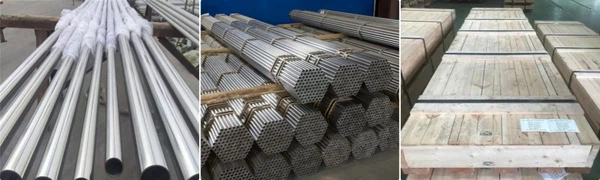
Gnee Steel GH4169 Product Packing
Contact us for the latest export price quote for GH4169 Alloy
FAQ
Q1: Why are my tools chipping at the beginning of every cut?
A: This is usually due to "Surface Glazing." Ensure your tool enters the cut with a lead angle and maintains a constant feed. Any rubbing before the cut begins will work-harden the entry point.
Q2: Is GH4169 harder to machine than Inconel 625?
A: Yes. While 625 is tough, GH4169 (718) is a precipitation-hardening alloy. Its aging phases make it much more abrasive and prone to rapid work-hardening during the machining process.
Q3: Can I machine GH4169 in its fully aged state (40 HRC+)?
A: It is possible but slow. It is only recommended for final finishing passes or for parts where post-machining heat treatment is not an option. For bulk removal, always use Solution Treated material.
Q4: Do you offer centerless grinding for bright rods?
A: Absolutely. We provide Precision Ground bright rods that reduce setup time and ensure the best Surface Integrity for your automatic Swiss-lathes.


