

In the demanding fields of aerospace propulsion and high-voltage energy systems, GH4169 is the undisputed king. As a globally recognized technical equivalent of Inconel 718 (UNS N07718 / 2.4668), this precipitation-hardening nickel-chromium alloy has revolutionized modern engineering.
Why is it so outstanding? Because it maintains exceptional strength at temperatures as high as 650°C (1200°F), while also exhibiting superior weldability compared to other high-temperature alloys. For designers, GH4169 offers a "zero-risk" solution for components that must withstand immense mechanical and thermal loads.
Click to get a GH4169 product quote
GH4169 (718 Alloy) Basics: Properties, Heat Treatment, and Machining Guide
Gnee Alloy
GH4169 (718 Alloy) Basics: Properties, Heat Treatment, and Machining Guide
GH4169, commonly known as Inconel 718 (UNS N07718 / W.Nr. 2.4668), is a precipitation-strengthened nickel-based superalloy renowned for its exceptional high-temperature strength, fatigue resistance, and corrosion resistance, especially below 650-700°C. Due to its ability to maintain high yield strength even in harsh environments, it is widely used in aerospace, turbine blades, and nuclear components.

Gnee Alloy
How to heat treat INCONEL 718 alloy?
Inconel 718 alloy is typically treated using two methods: • Solution annealing at 1700-1850°F, followed by rapid cooling (usually with water), precipitation hardening at 1325°F for 8 hours, furnace cooling to 1150°F, holding at 1150°F for 18 hours, and finally air cooling.

1. GH4169 Material Overview
| Parameter | Description |
|---|---|
| Material | GH4169 (UNS N07718 / Inconel 718) |
| Material Type | Wrought Nickel-based Superalloy |
| Strengthening Mechanism | γ″ + γ′ precipitation hardening |
| Product Forms | Bar, forging, plate, tube, strip, wire |
| Typical Applications | Turbine discs, compressor blades, fasteners, shafts, high-temperature structural components |
| Maximum Service Temperature | 650 – 700°C (load-bearing) |
2. Chemical composition of GH4169 (wt%)
| Element | Content (%) | Function |
|---|---|---|
| Nickel (Ni) | 50.0 – 55.0 | Matrix element; high-temperature stability |
| Chromium (Cr) | 17.0 – 21.0 | Oxidation and corrosion resistance |
| Iron (Fe) | Balance (~18-20) | Fe-Ni-Cr base alloy |
| Niobium (Nb) | 4.75 – 5.50 | Core strengthening element – γ″ former (Ni₃Nb) |
| Molybdenum (Mo) | 2.80 – 3.30 | Solid-solution strengthening; creep resistance |
| Titanium (Ti) | 0.65 – 1.15 | γ′ strengthening (Ni₃(Al,Ti)) |
| Aluminum (Al) | 0.20 – 0.80 | γ′ strengthening; oxidation resistance |
| Carbon (C) | ≤ 0.08 | Low carbon for toughness |
| Manganese (Mn) | ≤ 0.35 | Deoxidizer |
| Silicon (Si) | ≤ 0.35 | Deoxidizer |
| Phosphorus (P) | ≤ 0.015 | Ensures toughness |
| Sulfur (S) | ≤ 0.015 | Ensures hot workability |
| Boron (B) | 0.002 – 0.006 | Grain boundary strengthener |
| Cobalt (Co) | ≤ 1.00 | Residual element |
| Copper (Cu) | ≤ 0.30 | Residual element |
3. GH4169 Mechanical Properties(Fully Aged Condition)
| Temperature (℃/°F) | Yield Strength (0.2% MPa) | Tensile Strength (MPa) | Elongation (%) |
| 20°C (Room Temp) | ≥ 1030 MPa | ≥ 1240 MPa | ≥ 12 |
| 650°C (1200°F) | ≥ 850 MPa | ≥ 1000 MPa | ≥ 15 |
| Industrial Benefit | Resists permanent deformation | High safety factor | Prevents brittle fracture |
Click to download the GH4169 alloy PDF file now
4. GH4169 Heat Treatment Solution
| Step | Treatment | Temperature | Time | Cooling | Atmosphere |
|---|---|---|---|---|---|
| 1. Solution Treatment | Full solution | 954 – 982°C (1750-1800°F) | 1 hour per 25mm thickness | Rapid cooling (water or air) | Controlled (vacuum or protective gas) |
| 2. First Aging | Age hardening | 718°C (1325°F) ± 8°C | 8 hours ± 15 min | Furnace cool to 621°C (50-55°C/h) | Controlled |
| 3. Second Aging | Age hardening | 621°C (1150°F) ± 8°C | 8 hours ± 15 min | Air cool | – |
5. Gnee Alloy GH4169 Machining
The biggest challenge in shop floor machining is the extremely strong work-hardening property of GH4169. Even slight deviations in machining parameters can cause a hardened layer to form on the material surface, instantly damaging expensive cutting tools.
Our expert machining techniques:
Constant Feed Rate: Never allow the tool to remain on the workpiece surface. Maintaining a constant positive feed rate is crucial to prevent the tool from remaining beneath a work-hardened layer formed in the previous machining operation.
High-Pressure Cooling: Due to the low thermal conductivity of GH4169, heat concentrates at the tool tip. Immersion cooling must be used to prevent the tool from "thermally softening."
Solution Treatment: As a reliable supplier, Gnee Alloy offers solution-treated bars (hardness approximately 20-25 HRC) to significantly reduce your initial machining costs before final aging treatment.
6. Typical Applications of GH4169 Alloy
Aerospace: Aero-engine turbine disks, blades, and shafts.
Energy/Petrochemical: Gas turbine parts, nuclear reactors, and oil/gas extraction equipment.
Marine: Components requiring high stress-corrosion resistance.


Why choose to source GH4169 from Gnee Alloy factory?
✅️Direct Factory Price: Eliminate middleman markups and secure the best Wholesale Pricing for your bulk energy and defense projects.
✅️MTC 3.1 Traceability: Full heat-analysis and grain size verification (Level 8 or finer) provided with every batch.
✅️Fast Global Shipping: We maintain a massive Wholesale Inventory of forged bars, precision sheets, and seamless tubes for immediate dispatch.
✅️Certified Manufacturing: Fully compliant with AS9100 and ISO 9001 aerospace quality standards.

Gnee Alloy GH4169(inconel 718) Certificate
📦 Packaging and Shipping
All Nickel Based Alloy products are packaged using the following methods:
Wooden pallets or crates
Moisture-proof packaging
Labels with furnace number, standard, and size labels
Shipped worldwide by sea, air, or express
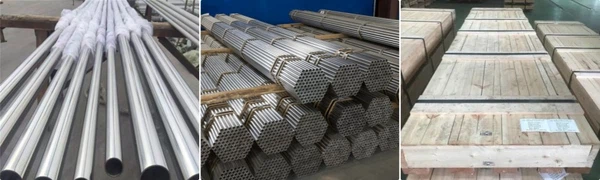
Gnee Alloy GH4169 Product Packing
Contact us for the latest export price quote for GH4169 Alloy
FAQ
Q1: Is GH4169 suitable for cryogenic applications?
A: Yes. GH4169 is exceptional for liquid hydrogen storage and structural members, maintaining high toughness down to -253°C.
Q2: What is the most common heat treatment cycle for peak strength?
A: For aerospace compliance, we recommend the Solution Treatment (940°C - 1010°C) followed by a Double-Aging cycle (720°C / 8h + 621°C / 8h) to reach a hardness of 36 - 44 HRC.
Q3: Does GH4169 have good weldability compared to Waspaloy?
A: GH4169 is far superior for welding. Its slow aging response prevents Strain-Age Cracking, making it the premier choice for complex welded engine manifolds and casings.
Q4: Can you provide h9/h10 precision ground rods for Swiss-lathes?
A: Absolutely. We offer Centerless Ground bright rods with ultra-tight tolerances ready for automated CNC feeders.


