

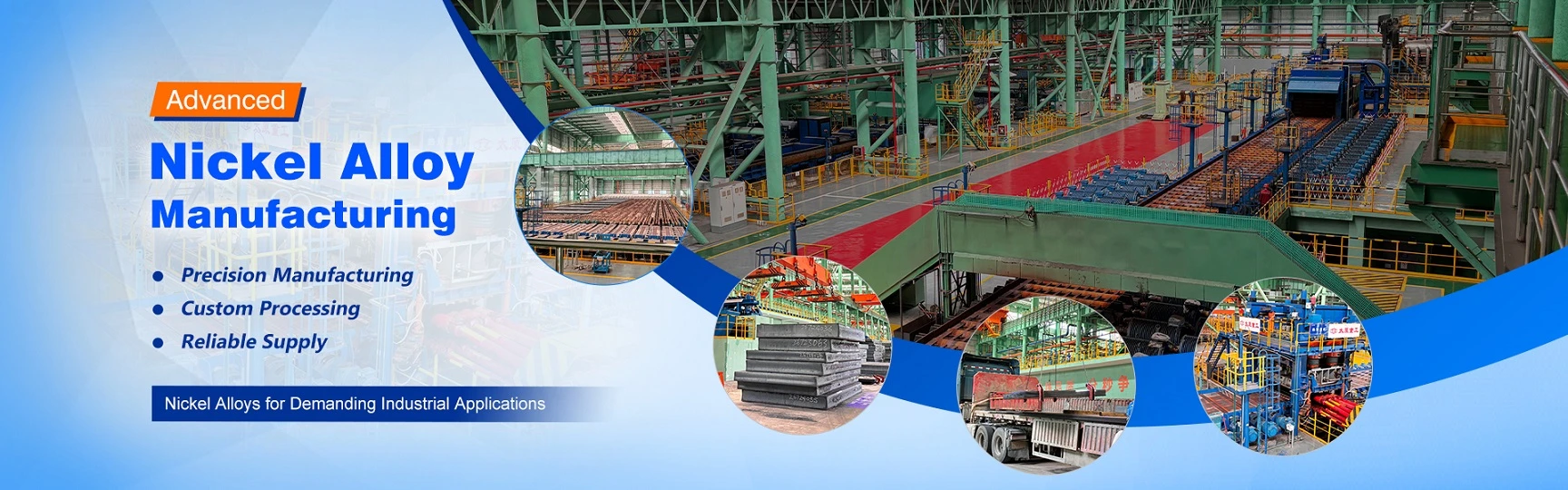
Explore nickel-based alloy processing technology
Nickel-based alloys, with their good high temperature resistance and corrosion resistance, have become indispensable materials in the chemical industry and other fields. Its processing technology covers the entire process of converting raw materials into high-performance products, including key steps such as smelting, casting, forming, heat treatment, finishing and surface treatment.


Melting is the starting point to ensure the accurate and uniform composition of the alloy, and is often carried out in a vacuum or controlled atmosphere to avoid contamination. Casting shapes the molten metal and lays the foundation for subsequent processing. Hot processing such as forging and hot rolling are used to improve the mechanical properties and microstructure of the alloy; cold processing such as cold rolling and stretching improves dimensional accuracy and surface quality.
Heat treatment, including solution treatment and aging hardening, aims to optimize the strength and toughness of the alloy. Finishing such as precision milling and grinding ensures that parts meet strict size and shape requirements. Surface treatment processes such as polishing and coating not only improve the appearance, but also increase its wear and corrosion resistance.
Quality control runs through the entire process, and non-destructive testing and mechanical property testing are used to ensure that each product meets high standards. Nickel-based alloy processing technology continues to advance to meet the needs of more demanding industrial applications.


