

Inconel 625 and Inconel 718 are two prominent nickel-based superalloys widely used in industries requiring exceptional strength, corrosion resistance, and high-temperature stability. Despite their shared lineage within the Inconel family, they exhibit distinct properties due to differences in composition, heat treatment, and application suitability. Below is a detailed analysis of their key differences.
Chemical Composition
The chemical composition fundamentally dictates their performance characteristics:
Inconel 625: Primarily composed of nickel (≥58%), chromium (20–23%), and molybdenum (8–10%), with additions of niobium (3.15–4.15%). This combination enhances its corrosion resistance, particularly in chloride-rich and acidic environments.
Inconel 718: Contains nickel (50–55%), chromium (17–21%), iron (11–22.5%), and niobium (4.75–5.5%), with small amounts of aluminum and titanium for precipitation hardening. The higher iron content and reduced chromium/molybdenum levels make it less corrosion-resistant than 625 but superior in high-temperature strength.
Mechanical Properties
Their mechanical behavior varies significantly due to alloy design:
Strength:Inconel 718 excels in tensile strength (930–1530 MPa) and yield strength (827–1034 MPa) after heat treatment, making it ideal for high-stress applications like aerospace engines.
Inconel 625 has lower tensile strength (690–930 MPa) but superior ductility (elongation up to 42.5%), suited for components requiring flexibility in corrosive environments
Temperature Resistance:
Inconel 625 maintains performance up to 980°C but is optimized for low-to-moderate temperatures (-45°C to 345°C).
Inconel 718 retains strength up to 700°C and is preferred for extreme heat applications like turbine blades, where creep resistance is critical.
Heat Treatment and Strengthening Mechanisms
Inconel 625: Relies on solid-solution strengthening via molybdenum and niobium. It undergoes solution annealing to optimize corrosion resistance and ductility without precipitation hardening.
Inconel 718: Utilizes precipitation hardening through γ' (Ni3Al/Ti) and γ'' (Ni3Nb) phases. It requires aging treatments (e.g., 720°C for 8 hours) to achieve peak strength, though this complicates welding due to crack susceptibility.
Corrosion and Oxidation Resistance
Inconel 625: Superior in corrosion resistance due to high chromium and molybdenum content. It withstands marine environments, chemical processing, and acidic media, making it ideal for subsea equipment and pollution control systems.
Inconel 718: Offers good oxidation resistance but is less effective in chloride-rich or acidic conditions. Its strength at high temperatures compensates, enabling use in aerospace combustion chambers and nuclear reactors.
Applications
Inconel 625:Marine Industry: Propeller blades, seawater piping, and offshore drilling components.
Chemical Processing: Reactors, heat exchangers, and pollution control systems.
Aerospace: Exhaust systems and engine thrust reversers
Inconel 718:Aerospace: Jet engine components (e.g., turbine disks, blades) and rocket motor casings
Power Generation: Gas turbines and high-pressure steam valves.
Automotive: High-performance racing engine parts.
Machinability and Fabrication
Machining:Both alloys are challenging to machine due to work hardening, but Inconel 625 is slightly easier owing to lower hardness.
Inconel 718 requires specialized tools (e.g., ceramic inserts) and slower speeds to manage heat and tool wear
Welding:
Inconel 625 exhibits excellent weldability with minimal cracking risks
Inconel 718 demands pre- and post-weld heat treatments to prevent stress-related cracking.
Additive Manufacturing:
Both are used in powder bed fusion (PBF) and direct energy deposition (DED). Inconel 718's precipitation hardening complicates 3D printing, while 625's solid-solution structure allows easier processing.
Cost Considerations
Inconel 718 is generally 20–30% more expensive than 625 due to complex heat treatments and higher alloying costs.
However, its extended service life in high-stress environments often justifies the cost.

Inconel 625 and 718 cater to divergent industrial needs. Inconel 625 is the go-to alloy for corrosive and cryogenic environments, while Inconel 718 dominates high-stress, high-temperature applications. Engineers must prioritize operational conditions-corrosion, temperature, mechanical load, and fabrication complexity-to select the optimal material. Advances in additive manufacturing further expand their roles in aerospace and energy sectors, underscoring their enduring relevance in extreme environments.
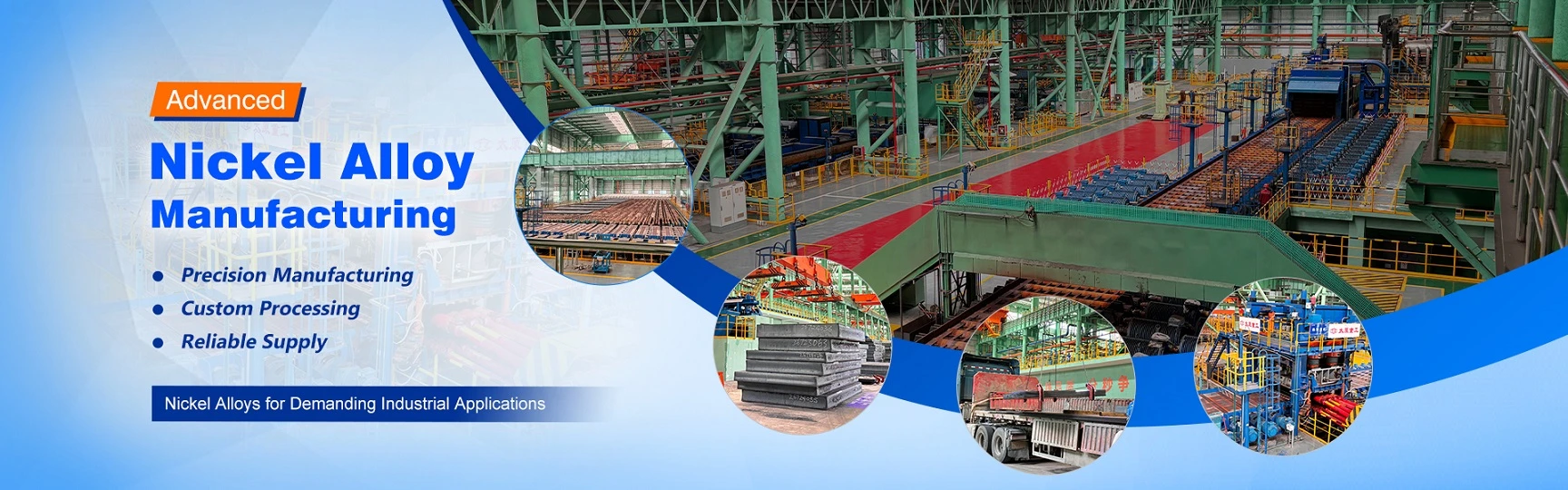
Our factory
Our nickel-based alloy products originate from a modern precision manufacturing base. The factory is equipped with fully automated vacuum induction melting (VIM), electroslag remelting (ESR), and multi-directional forging hydraulic units, ensuring that every step from melting to forming meets aerospace-grade standards. Through a digital process control system, we achieve precise control over composition purity, grain size, and mechanical properties. Each batch of products is accompanied by traceable melting reports and third-party certifications (such as DNV-GL, ABS, aerospace standards, etc.), ensuring the authenticity and reliability of performance data.

Packaging and shipping
We adopt the highest industry standards for protective packaging: all rods/plates are treated with anti-rust protection and reinforced with waterproof film and wooden crates; precision components are packaged with custom foam dividers and vacuum sealing. Through our proprietary logistics coordination system, we promise that standard specification products will be prepared and shipped within 7-15 working days after order confirmation and technical details are finalized.


