

In the world of high-performance nickel-based alloys, three names stand out for their remarkable strength, heat resistance, and corrosion protection - Nickel Alloy 716, Inconel 718, and Alloy 625. Each of these materials is engineered to perform under extreme stress, high temperature, and corrosive environments, yet they differ in their mechanical properties, heat treatment behavior, and optimal applications.
As industries such as aerospace, energy, marine, and oil & gas continue to push materials to their limits, understanding the differences between these alloys is essential for engineers and procurement specialists.
Overview of the Three Alloys
| Alloy | Type | Key Features | Typical Applications |
|---|---|---|---|
| Nickel Alloy 716 | Precipitation-hardened nickel-chromium-iron alloy | High strength, superior oxidation resistance, excellent creep performance up to 700°C | Aerospace, turbines, oil & gas, marine |
| Inconel 718 | Precipitation-hardened nickel-based superalloy | Excellent strength up to 650°C, good weldability and fatigue resistance | Jet engines, gas turbines, power generation |
| Alloy 625 | Solid-solution strengthened nickel-chromium-molybdenum alloy | Outstanding corrosion resistance, ductility, and toughness | Chemical plants, seawater systems, marine and offshore use |
Chemical Composition Comparison
| Element | Nickel Alloy 716 (%) | Inconel 718 (%) | Alloy 625 (%) |
|---|---|---|---|
| Nickel (Ni) | 50.0 – 55.0 | 50.0 – 55.0 | ≥ 58.0 |
| Chromium (Cr) | 17.0 – 21.0 | 17.0 – 21.0 | 20.0 – 23.0 |
| Iron (Fe) | Balance | Balance | ≤ 5.0 |
| Molybdenum (Mo) | 2.8 – 3.3 | 2.8 – 3.3 | 8.0 – 10.0 |
| Niobium (Nb) + Tantalum (Ta) | 4.8 – 5.5 | 4.75 – 5.50 | 3.15 – 4.15 |
| Titanium (Ti) | 0.6 – 1.15 | 0.65 – 1.15 | ≤ 0.4 |
| Aluminum (Al) | 0.2 – 0.8 | 0.2 – 0.8 | ≤ 0.4 |
| Cobalt (Co) | ≤ 1.0 | ≤ 1.0 | ≤ 1.0 |
| Carbon (C) | ≤ 0.08 | ≤ 0.08 | ≤ 0.10 |
Nickel Alloy 716 and Inconel 718 have nearly identical base compositions, both utilizing precipitation hardening for strength, while Alloy 625 relies primarily on solid-solution strengthening.
Alloy 625 contains significantly more molybdenum, making it more resistant to pitting, crevice corrosion, and chloride attack, but with lower overall strength.
Nickel Alloy 716 is optimized for higher service temperatures (up to 700°C), offering better creep resistance than Inconel 718.
Strengthening Mechanisms
Nickel Alloy 716
Strengthened by the controlled precipitation of γ′ (Ni₃(Al,Ti)) and γ″ (Ni₃Nb) phases during aging. These phases create obstacles to dislocation motion, resulting in exceptional strength and creep resistance at elevated temperatures.
Inconel 718
Also hardened through γ′ and γ″ precipitation, but with slightly less phase stability above 650°C. It provides excellent fatigue resistance and weldability, making it ideal for aerospace fasteners and jet engine components.
Alloy 625
Relies on solid-solution strengthening from molybdenum and niobium within the nickel matrix. While it offers superior corrosion resistance and ductility, it does not achieve the same high-temperature strength as 716 or 718.
Mechanical Properties Comparison
| Property | Nickel Alloy 716 | Inconel 718 | Alloy 625 |
|---|---|---|---|
| Tensile Strength (MPa) | 1250 – 1500 | 1200 – 1350 | 830 – 950 |
| Yield Strength (MPa) | 900 – 1100 | 850 – 1000 | 450 – 620 |
| Elongation (%) | 12 – 20 | 15 – 25 | 30 – 40 |
| Hardness (HB) | 330 – 380 | 320 – 360 | 200 – 240 |
| Density (g/cm³) | 8.19 | 8.19 | 8.44 |
| Operating Temperature (°C) | Up to 700 | Up to 650 | Up to 600 |
Nickel Alloy 716 Round Bar demonstrates the highest tensile and yield strength, especially above 650°C, making it ideal for continuous high-heat applications.
Inconel 718 provides excellent strength at slightly lower temperatures and superior weldability, making it suitable for complex structural assemblies.
Alloy 625 offers the best ductility and fabricability, but is not designed for extreme mechanical loading at high temperatures.
Heat Treatment Comparison
Nickel Alloy 716 and Inconel 718
Both alloys undergo a two-step heat treatment process to achieve maximum mechanical strength:
Solution Annealing:
Temperature: 980–1010°C (1800–1850°F)
Purpose: Dissolves precipitates and homogenizes the structure.
Aging (Precipitation Hardening):
Temperature: 720–760°C (1325–1400°F)
Duration: 8–10 hours
Purpose: Promotes formation of γ′ and γ″ phases for strength.
Nickel Alloy 716, however, exhibits better phase stability during aging, allowing it to retain its properties at slightly higher temperatures compared to 718.
Alloy 625
Does not require precipitation hardening.
Strength depends on solid-solution strengthening, so it only undergoes annealing (870–980°C) followed by rapid cooling.
Simplifies fabrication and welding but limits high-temperature strength.
Corrosion and Oxidation Resistance
| Type of Resistance | Nickel Alloy 716 | Inconel 718 | Alloy 625 |
|---|---|---|---|
| General Corrosion | Excellent | Excellent | Outstanding |
| Pitting and Crevice Corrosion | Very Good | Good | Excellent |
| Oxidation Resistance (up to 700°C) | Excellent | Very Good | Good |
| Sulfidation Resistance | Excellent | Very Good | Very Good |
| Stress Corrosion Cracking (SCC) | Excellent | Excellent | Excellent |
Performance in High-Temperature Environments
Nickel Alloy 716 maintains high strength and oxidation resistance up to 700°C, making it ideal for continuous high-heat service such as turbine blades, fasteners, and exhaust systems.
Inconel 718 performs well up to 650°C, suitable for aircraft engines and gas turbines where fatigue strength and weldability are crucial.
Alloy 625 is typically limited to 600°C for mechanical applications but excels in chemical plants and offshore systems due to its corrosion protection.
Applications by Industry
| Industry | Nickel Alloy 716 | Inconel 718 | Alloy 625 |
|---|---|---|---|
| Aerospace | Turbine shafts, compressor discs, bolts | Engine casings, turbine wheels | Ducts and bellows |
| Oil & Gas | Subsea valves, completion tools | Drilling tools, wellhead equipment | Seawater piping, risers |
| Power Generation | Steam turbines, nuclear components | Gas turbine parts | Heat exchangers, condensers |
| Chemical Processing | High-pressure reactors | Acid-resistant components | Reactors, distillation columns |
| Marine Engineering | Offshore connectors | Turbine housings | Pumps, fittings, flanges |
Cost and Fabrication Considerations
| Factor | Nickel Alloy 716 | Inconel 718 | Alloy 625 |
|---|---|---|---|
| Cost | Moderate | Moderate | High |
| Machinability | Good after annealing | Excellent | Good |
| Weldability | Good | Excellent | Excellent |
| Availability | Moderate | Very High | High |
Conclusion
When comparing Nickel Alloy 716, Inconel 718, and Alloy 625, it becomes clear that each has its strengths:
Nickel Alloy 716 Round Bar offers the best high-temperature strength and oxidation resistance.
Inconel 718 provides excellent weldability and fatigue strength for structural aerospace applications.
Alloy 625 delivers outstanding corrosion resistance and fabricability for chemical and marine environments.
For industries requiring a combination of high mechanical strength, thermal endurance, and corrosion stability, Nickel Alloy 716 Round Bar stands out as the superior choice.
Our factory
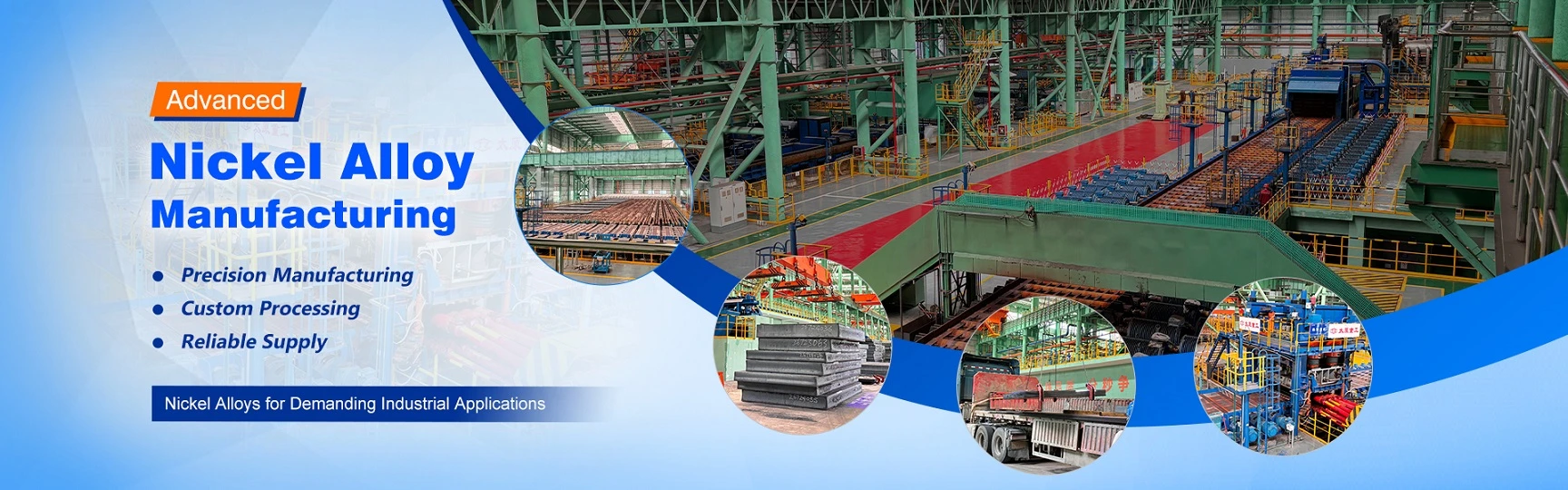
Our nickel-based alloy products originate from a modern precision manufacturing base. The factory is equipped with fully automated vacuum induction melting (VIM), electroslag remelting (ESR), and multi-directional forging hydraulic units, ensuring that every step from melting to forming meets aerospace-grade standards. Through a digital process control system, we achieve precise control over composition purity, grain size, and mechanical properties. Each batch of products is accompanied by traceable melting reports and third-party certifications (such as DNV-GL, ABS, aerospace standards, etc.), ensuring the authenticity and reliability of performance data.

Packaging and shipping
We adopt the highest industry standards for protective packaging: all rods/plates are treated with anti-rust protection and reinforced with waterproof film and wooden crates; precision components are packaged with custom foam dividers and vacuum sealing. Through our proprietary logistics coordination system, we promise that standard specification products will be prepared and shipped within 7-15 working days after order confirmation and technical details are finalized.


