

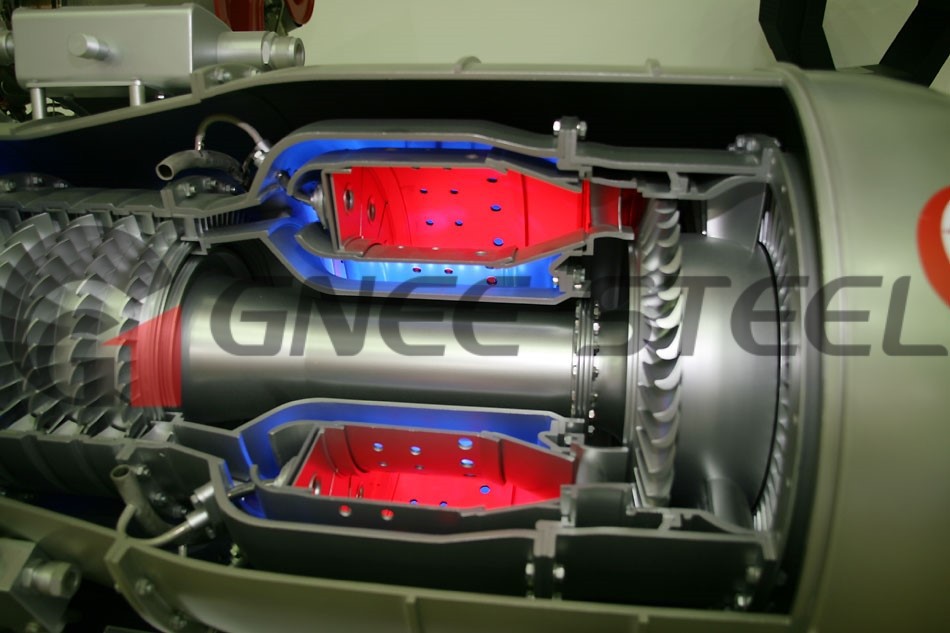
GH3030 (equivalent to Nimonic 75) was chosen as the material for rotating components because it is classified as a "high-temperature superalloy." While GH3030 performs well in terms of fire resistance and oxidation resistance, its use in rotating turbine blades is a fundamental design flaw that could lead to immediate failure. At high speeds and temperatures up to 700°C, the insufficient mechanical strength of GH3030 creates a "weak link," jeopardizing the structural integrity of the entire system.
Please consult Gnee Steel for professional high-load components
Can GH3030 be used for rotary turbine blades?

Can GH3030 be used for rotary turbine blades?
Yes, GH3030 (also known as CrNi78Ti) can be used in rotating turbine blades, especially for applications requiring high-temperature resistance, oxidation resistance, and corrosion resistance. However, its application is usually limited to specific types of turbines or low-stress stages.
What is GH3030 material?
GH3030 is a high-temperature nickel-based superalloy primarily used in components requiring high oxidation resistance and thermal stability. Due to its excellent performance in high-temperature environments, GH3030 is widely used in the aerospace and power generation industries.

1. Chemical composition (wt%) of GH3030 and GH4169 alloys
| Element | GH3030 | GH4169 | Key Difference |
|---|---|---|---|
| Nickel (Ni) | Balance (≥ 75.0) | 50.0 – 55.0 | GH3030 has much higher Ni |
| Chromium (Cr) | 19.0 – 22.0 | 17.0 – 21.0 | GH3030 slightly higher |
| Iron (Fe) | ≤ 1.5 | Balance (~18-20) | GH4169 has much higher Fe |
| Niobium (Nb) | – | 4.75 – 5.50 | GH4169 unique – γ″ former |
| Molybdenum (Mo) | – | 2.80 – 3.30 | GH4169 unique |
| Titanium (Ti) | 0.15 – 0.35 | 0.65 – 1.15 | GH4169 higher |
| Aluminum (Al) | ≤ 0.15 | 0.20 – 0.80 | GH4169 higher |
| Carbon (C) | ≤ 0.12 | ≤ 0.08 | GH4169 lower |
| Manganese (Mn) | ≤ 0.70 | ≤ 0.35 | GH3030 higher |
| Silicon (Si) | ≤ 0.80 | ≤ 0.35 | GH3030 higher |
| Phosphorus (P) | ≤ 0.030 | ≤ 0.015 | GH4169 stricter |
| Sulfur (S) | ≤ 0.020 | ≤ 0.015 | GH4169 stricter |
| Boron (B) | – | ≤ 0.006 | GH4169 unique |
| Cobalt (Co) | – | ≤ 1.00 | GH4169 may contain |
| Copper (Cu) | ≤ 0.20 | ≤ 0.30 | Similar |
2. Comparison of mechanical properties of GH3030 and GH4169 alloys at 700°C (1292°F)
| Feature | GH3030 (Liner Grade) | GH4169 (Inconel 718) | Waspaloy (Elite Grade) |
| Strengthening Method | Solid Solution | Precipitation Hardening | Precipitation Hardening |
| Yield Strength (σp0.2) | **~ 180 MPa** | ≥ 850 MPa | ≥ 800 MPa |
| Creep-Rupture Life | Very Low | High (>100h at 690MPa) | Elite (>100h at 550MPa/815°C) |
| Primary Use Case | Static Liners/Baffles | Turbine Discs/Blades | High-Stress Gas Turbines |
Click to download the GH4169 alloy PDF file now
3. Physical Properties of GH3030 and GH4169 Alloys
| Property | GH3030 | GH4169 |
|---|---|---|
| Density | 8.4 g/cm³ | 8.19 g/cm³ |
| Melting Range | 1374 – 1420°C | 1260 – 1336°C |
| Thermal Conductivity (20°C) | 14 – 15 W/m·K | 11.4 W/m·K |
| Coefficient of Thermal Expansion (20-100°C) | 12.8 × 10⁻⁶/°C | 13.0 × 10⁻⁶/°C |
| Coefficient of Thermal Expansion (20-600°C) | ~14.0 × 10⁻⁶/°C | ~14.5 × 10⁻⁶/°C |
| Specific Heat (20°C) | 460 – 500 J/kg·K | 435 J/kg·K |
| Electrical Resistivity | 1.20 – 1.30 µΩ·m | 1.25 µΩ·m |
| Magnetic Properties | Non-magnetic | Slightly magnetic |
4. Why does GH3030 soften under stress?
The main difference between "heat-resistant lining materials" and "turbine blade materials" lies in their strengthening mechanisms.
GH3030 (an incorrect choice of rotor material): It is a solid solution-strengthened alloy (Ni-Cr-Ti). Its strength depends on the lattice distortion of the alloying elements. It lacks the critical γ′ (γ') or γ″ precipitates required to pin grain boundaries under strong mechanical loads.
Failure scenario: Under 700°C (1292°F) and high centrifugal force, GH3030 undergoes instantaneous creep deformation. The metal begins to flow like wax, causing the blades to stretch, impact the turbine casing, and ultimately break.
Contact us to customize GH3030 products to fit your project dimensions
5. GH3030 and GH4169 Application Guidelines
To ensure industrial durability and prevent engine failure, we recommend the following selection strategy:
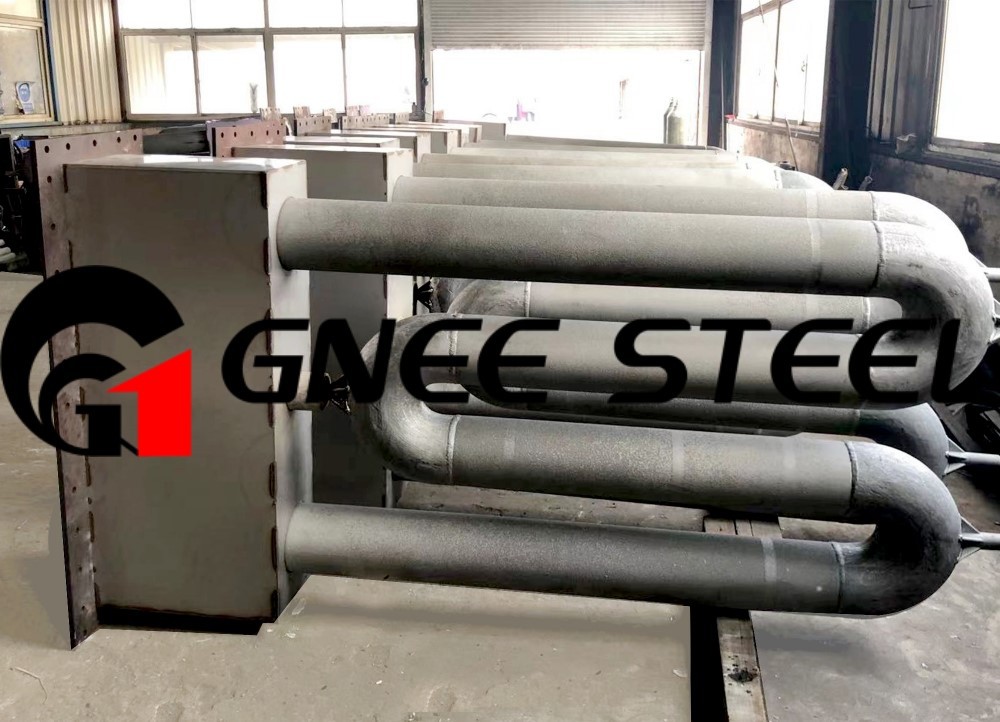
Order GH3030 sheet/tube for: static combustion chamber linings, heat treatment furnace baffles, heat shields, and radiant tubes. It is the most cost-effective solution for both heat resistance and oxidation resistance under lower loads.
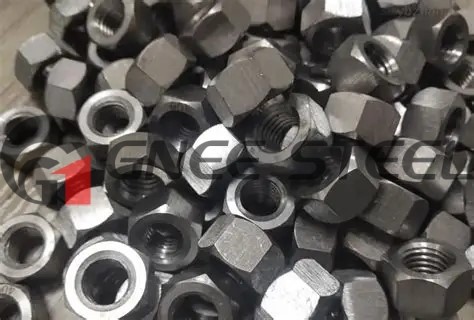
Order GH4169 bars/forgings for: rotary turbine blades, engine shafts, compressor discs, and high-strength structural bolts. These materials provide the structural integrity required at high speeds above 15,000 rpm.


Why choose to source the critical material GH4169 from Gnee Steel?
As a Tier 1 supplier, Gnee Steel doesn't just sell metals; we sell safety.
✅️VIM + VAR Melting: Our high-load alloys (GH4169/Waspaloy) are produced via double-vacuum melting to ensure zero internal inclusions.
✅️MTC 3.1 Traceability: Full heat-analysis and stress-rupture test results included with every order.
✅️Industrial Audit Support: We provide the documentation necessary to pass the most rigorous aerospace and energy quality audits.
✅️Wholesale Pricing: Benefit from Direct Factory Price on both liner-grade and blade-grade materials.

Gnee Steel GH4169(inconel 718) Certificate
📦 Packaging and Shipping
All Nickel Based Alloy products are packaged using the following methods:
Wooden pallets or crates
Moisture-proof packaging
Labels with furnace number, standard, and size labels
Shipped worldwide by sea, air, or express
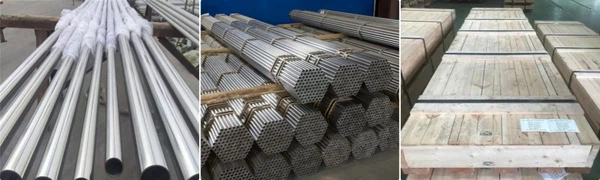
Gnee Steel GH4169 Product Packing
Contact us for the latest export price quote for GH4169 Alloy
FAQ
Q1: Can I use GH3030 for stationary guide vanes instead of blades?
A: Only if the load is low. For first-stage guide vanes exposed to extreme gas velocity, we still recommend a precipitation-hardened alloy like GH4141 or a specialized cast alloy to prevent thermal distortion.
Q2: Why is GH3030 so much cheaper than GH4169?
A: GH3030 contains far less expensive alloying elements like Niobium (Nb) or Molybdenum (Mo) and does not require the complex multi-stage aging heat treatments that give GH4169 its elite strength.
Q3: Can GH3030 be used for turbine bolts?
A: No. High-temperature fasteners require high yield strength and resistance to stress relaxation. For bolts, you should use GH2132 (A286) or GH4169.
Q4: Do you provide technical consulting for material replacement?
A: Absolutely. Our metallurgical engineers provide a Material Selection Audit to help you find the safest and most Cost-effective Solution for your specific operating environment.


