

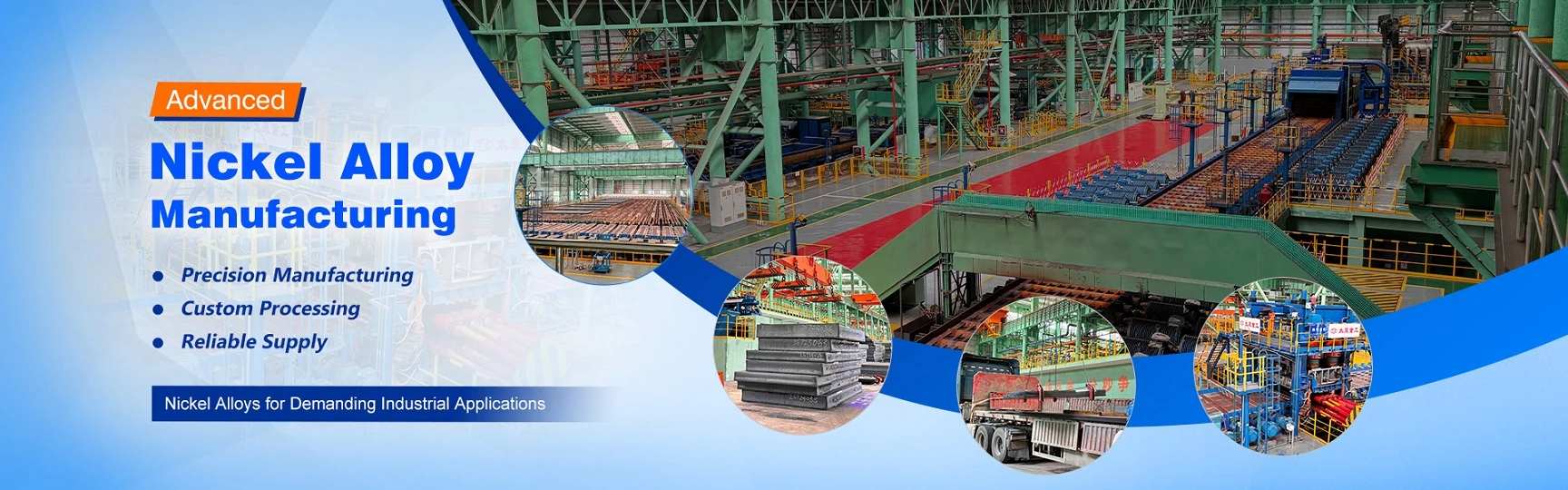
High-temperature alloy plate is supplied in fixed mill sizes, but process equipment rarely asks for exactly those sizes. Customized plate services close that gap: the supplier cuts, forms and certifies nickel and heat-resisting plate to the dimensions the fabricator actually needs, instead of the fabricator buying an oversized plate and turning most of it into scrap.
What Counts as a High-Temperature Alloy Plate
The term covers plate, sheet and strip that are designed to hold their properties where carbon steel and ordinary stainless steel no longer do. Typical characteristics are a nickel or nickel-iron base, a chromium addition for oxidation resistance, and molybdenum, niobium or titanium where resistance to specific corrosive media or additional strength is needed. These materials are used for furnace internals, pressure-retaining components, heat exchanger parts and ducting where thermal cycling, oxidation, carburization or aggressive chemistry would destroy lower-alloy plate.
Advantages of Customized Alloy Plate Services
Exact fit to the drawing. Non-standard thickness, width, length, radius or profile can be produced so the plate matches the nozzle layout, head crown or baffle spacing of the project.
Less machining and welding. A plate delivered at the required size removes the cutting, edge preparation and splice welding that oversized stock material would otherwise require.
Lower material waste. Alloy plate is expensive by weight, so the difference between a nesting plan that fits the drawing and one that does not is a direct cost saving, especially on small batches.
Shorter production cycle. Plates can arrive sequenced to the fabrication programme, which reduces work-in-progress and freeing of crane and cutting capacity.
Documented quality. Each piece is released with mill test certificates, heat numbers and, where required, dimensional inspection records, so traceability follows the part through fabrication.
Technical support. Guidance on grade selection, forming limits, welding consumables and heat treatment normally accompanies a customized order and is often more valuable than the dimensional service itself.
Grades and Standards Commonly Supplied
| Grade | UNS number | Plate / sheet specification | Typical service |
|---|---|---|---|
| Alloy 800H | N08810 | ASTM B409 | Reformer and cracking furnace internals, high-temperature process equipment |
| Alloy 625 | N06625 | ASTM B443 | Seawater, marine and strongly oxidising chemical environments |
| Alloy C-276 | N10276 | ASTM B575 | Severe reducing and mixed acid media, flue gas desulfurisation |
| Alloy 718 | N07718 | ASTM B670 | High-strength gas turbine, aircraft and oilfield components |
| Grade 310S stainless steel | S31008 | ASTM A240 | Furnace fixtures, radiant tubes, heat treatment baskets and trays |
The same 25 % chromium, 20 % nickel heat-resisting stainless steel known as 310S in ASTM A240 is designated 1.4845 in EN 10095, so the grade can be matched across procurement systems without changing the material. Plate is normally supplied to the applicable ASTM or ASME specification, with the specification and edition stated on the certificate.
Application Areas
Aerospace. Engine brackets, combustion chamber liners, exhaust components and structural parts that must keep strength at high temperature and resist oxidation during thermal cycling.
Energy. Boiler and superheater components, turbine casings and internals, nuclear and thermal power plant parts, and gas turbine ducting.
Chemical and petrochemical. Reactor shells and internals, heat exchanger tube sheets, distillation column linings, and pipe and vessel cladding where the process stream is corrosive at temperature.
Automotive and hydrogen. Exhaust and turbocharger components, electric vehicle battery tray tooling and hydrogen handling equipment, where a combination of heat resistance and corrosion resistance is needed.
Shipbuilding and marine. Engine and exhaust system parts, scrubber components and seawater-exposed fittings.
Industrial furnaces and heat treatment. Muffles, retorts, fans, rollers and supports that operate continuously in an oxidising or carburising atmosphere.
Ordering and Quality Verification Workflow
Step 1 – Define the duty. State the medium, operating temperature range, thermal cycling and whether the part is pressure retaining, so that grade and thickness can be properly selected.
Step 2 – Fix the size and form. Provide a dimensioned drawing or nesting sketch showing cut size, tolerance, edge condition, radius and any forming requirement.
Step 3 – Agree the specification. Confirm the ASTM or ASME product specification, the heat treatment condition and any additional testing such as ultrasonic, dye penetrant or intergranular corrosion testing.
Step 4 – Verify documentation. Check that the mill test certificate shows the heat number, chemical analysis and mechanical results for each plate, and that certificates match the delivered pieces.
Step 5 – Inspect on receipt. Measure thickness and dimensions, check the surface for roll marks, laminations or edge damage, and keep plates separated to preserve heat number traceability.
Frequently Asked Questions
Q: Which high-temperature alloy plate grades can be customized?
Nickel-iron-chromium and nickel-chromium grades such as Alloy 800H, Alloy 625, Alloy C-276 and Alloy 718, together with heat-resisting stainless steels such as grade 310S, can be cut, formed and supplied to non-standard sizes.
Q: Is customized cutting more expensive than buying standard plate?
The plate itself may cost more per piece, but the reduction in scrap, machining, edge preparation and splice welding usually lowers the total cost of the finished component, particularly for small batches and for expensive nickel alloys.
Q: What information is needed to request a cut-to-size plate?
A dimensioned drawing or nesting sketch, the grade, the required specification and condition, the quantity, and any inspection or certification requirement such as ultrasonic examination or a third-party inspection release.
Q: How is the quality of customized plate documented?
Mill test certificates tie each piece to its heat number and show the chemical analysis and mechanical properties. Dimensional inspection reports and non-destructive examination records are added when the order calls for them.
Q: Can plates be supplied ready for forming into heads or shells?
Yes. Plates can be cut to the developed shape needed for a head blank or shell course, with the rolling direction and any required allowance for forming stated on the drawing.
Q: How should customized alloy plate be stored before fabrication?
Keep it indoors, dry and clear of the ground, separate grades and heat numbers so that traceability is preserved, and protect machined or polished surfaces from mechanical damage and contamination by carbon steel dust.


