

Inconel 625 and Inconel 718 are high-performance nickel superalloys that have been increasingly utilized in metal 3D printing. Their nickel-chromium base composition renders them highly resistant to corrosion and high temperatures. Their excellent mechanical, thermal, and corrosion properties have enabled their use in highly demanding applications, such as aerospace, industrial manufacturing, and military equipment.
Despite the fact that these nickel-based alloys are relatively difficult to machine, 3D printing's capacity to realize complex configurations with minimal material usage can help create lightweight parts at near-net shape, which minimizes the need for machining. For that reason, Inconel 625 and 718 have become materials of interest for additive manufacturing.
But first, what exactly are Inconel 625 and 718? What is the difference between the two metal alloys? And how are they 3D printed?
Inconel 625 vs Inconel 718
Inconel 625 and Inconel 718 share many properties of the Inconel family. However, the key difference between them is that the main feature of Inconel 625 is high corrosion resistance, while that of Inconel 718 is high strength. Each of the two alloys has its own functions and cannot take the place of the other.
The following table shows how the two alloys fare against one another.
|
Inconel |
Inconel |
||
|
Chemical composition (main elements) |
Ni |
58 – 71% |
Ni: ~ 53% |
|
Cr |
21 – 23% |
19% |
|
|
Mo |
8 – 10% |
3% |
|
|
Fe |
5% |
18 – 18.5% |
|
|
Nb+Ta |
3.2 – 3.8% |
5% |
|
|
Density (23 °C) |
8.7 g/cm³ |
8.22 g/cm³ |
|
|
Tensile strength (23 °C) |
810 – 920 MPa |
1034 – 1276 MPa |
|
|
Yield strength (23 °C) |
330 – 460 MPa |
827 – 1034 MPa |
|
|
Melting point |
1290 – 1350 °C |
1260 – 1335 °C |
|
|
Operating temperature |
~ 1000 °C |
~ 700 °C |
|
|
Heat treatment |
Inconel 625 is strengthened via solid solution |
Inconel 718 is strengthened via precipitation hardening, |
|
|
Corrosion resistance |
Inconel 625 has lower Fe content than Inconel 718, which Since Ni, Cr, and Mo are elements with excellent |
||
|
3D printing process |
Powder bed fusion (PBF) processes, mainly selective laser |
||
|
Mean particle size (D50) of |
~ 31 – 32 |
~ 13.6 |
|
What are Inconel 625 and Inconel 718 used for?
Thanks to their extremely high strength and high corrosion resistance, Inconel 625 and Inconel 718 have found their way into application areas, where they can easily outperform other materials, such as traditional steel.
Inconel 718 began in the aerospace industry because of its high strength and high-temperature resistance. It has become a very common material in that field that it now accounts for up to half the weight of a modern aircraft turbojet engine.
On the other hand, Inconel 625 found itself in applications that undergo corrosive conditions, such as the marine industry. Sea salt environments are highly corrosive. So, materials have to have extremely high corrosion resistance to withstand the effects of such corrosive environments.
Inconel 718 is commonly used in components within the following industries:
Aerospace industry
Automotive industry
Power generation
Welding products
Marine industry
Oil & Gas industry
Petro processing
Inconel 625 is commonly used in the following application areas:
Aerospace industry
Chemical Processing
Marine industry
Oil & Gas industry
Petro Processing
Pollution & Waste
Power Generation
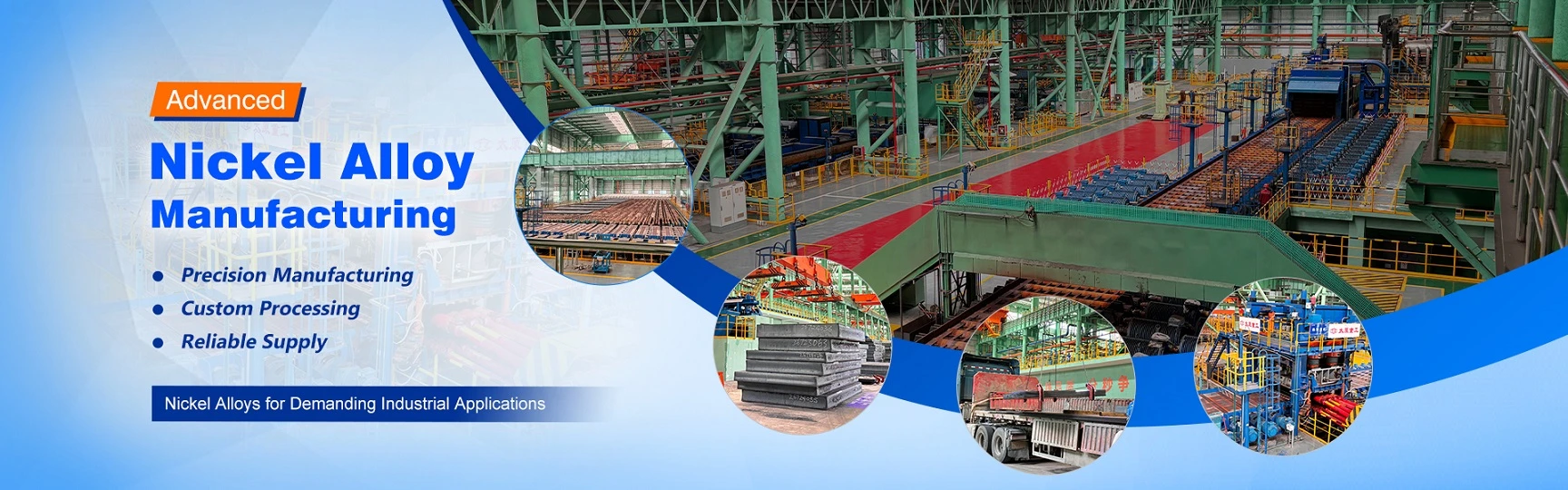
Our factory
Our nickel-based alloy products originate from a modern precision manufacturing base. The factory is equipped with fully automated vacuum induction melting (VIM), electroslag remelting (ESR), and multi-directional forging hydraulic units, ensuring that every step from melting to forming meets aerospace-grade standards. Through a digital process control system, we achieve precise control over composition purity, grain size, and mechanical properties. Each batch of products is accompanied by traceable melting reports and third-party certifications (such as DNV-GL, ABS, aerospace standards, etc.), ensuring the authenticity and reliability of performance data.

Packaging and shipping
We adopt the highest industry standards for protective packaging: all rods/plates are treated with anti-rust protection and reinforced with waterproof film and wooden crates; precision components are packaged with custom foam dividers and vacuum sealing. Through our proprietary logistics coordination system, we promise that standard specification products will be prepared and shipped within 7-15 working days after order confirmation and technical details are finalized.


