

Unlock the Potential of 4130 Alloy Steel: Applications and Properties
4130 Alloy Steel is a high-strength steel that is popular for its higher strength-to-weight ratio, versatility, and weldability compared to other low-alloy steels containing chromium and molybdenum. This high-strength steel has excellent mechanical properties; therefore, it has been used in many fields such as aerospace, automotive or construction industries due to this feature, and at a low cost. Here, we discuss what makes 4130 Alloy Steel unique and why people like to use it as a material in different fields. Whether you are an engineer, material scientist or anyone else working in the same industry as me, after reading my article, you will have a comprehensive understanding of this strong metal.
Why does 4130 Steel stand out?
Unique Chemical Composition of 4130 Steel
Containing chromium (0.8-1.1%) and molybdenum (0.15-0.25%), as well as certain amounts of carbon (0.28-0.33%), iron, manganese (0.40-0.60%), silicon (0.15-0.35%), sulfur (≤0.04%), and phosphorus (≤0.035%); 4130 alloy steel, also known as chrome-molybdenum steel, is a mixture that increases overall strength while still being easy to weld and process, with good hardenability and toughness; this special mixture also allows it to perform well in extreme environments, making this metal suitable for a variety of complex engineering applications due to its versatility.
Comparison of 4130 alloy steel with other steel alloys
When considering other types of steel alloys, 4130 alloy steel must be compared with several technical parameters such as tensile strength, yield strength, elongation, and impact resistance. Here is a quick breakdown:
Tensile Strength and Yield Strength:
4130 Alloy Steel: It has a tensile strength of about 560 – 670 MPa (81,200 – 97,200 psi), while its yield strength is about 460MPa (66,700 psi).
1020 Carbon Steel: This steel is much weaker than 4130 steel, as it has a tensile strength of only 335-450 MPa (48,587 - 65,267 psi) and a yield strength of only about 210MPa (30,457psi).
4140 Alloy Steel: After annealing, its strength is even higher than the above mild steels; for example, after annealing, its tensile strength is between 655-860MPa (95,000 - 125,000 psi), while its yield strength is close to 415MPa (60,000psi).
Elongation (Ductility):
4130 Alloy Steel: Within two inches, this material will typically stretch about 21 percent before breaking, showing good ductility.
1020 Carbon Steel: This steel is more ductile than the other two steels, but is less strong, as it can stretch as much as thirty percent or more within two inches.
4140 Alloy Steel: This material is slightly less ductile than the other alloys above it on this list, but it also offers some additional benefits, such as increased toughness and increased hardness due to the increased carbon content, making it stronger as well; typically its two-inch elongation is between 16%-19%.
Impact Resistance:
4130 Alloy Steel: This steel alloy contains chromium and molybdenum, which greatly improves its impact resistance, making it very tough.
1020 Carbon Steel: This steel is not as impact resistant as 4130 or even 4140 steel and therefore cannot be used in heavy-duty applications where high stresses are common.
4140 Alloy Steel: This particular steel differs from the others in its ability to resist sudden impacts, ensuring that this material is well suited for applications where both high strength and toughness are required.
In summary, 4130 Alloy Steel differs in its balance of strength, ductility and impact resistance; however, unlike other varieties such as carbon, which may have lower strength but higher ductility, this low carbon steel also has moderate strength, ductility and impact resistance. Furthermore, there may be many applications in the engineering sector that require these technical parameters, which are implicit in the name of "technical parameters".
Importance of Chromium and Molybdenum in 4130 Steel
4130 steel contains two important alloying metals, molybdenum and chromium, which determine its various properties in different applications. Chromium improves the material's hardness, tensile strength, and wear resistance by producing several types of stable carbides. These carbides improve resistance to mechanical stress and wear, thus making it suitable for high-stress environments. In addition, chromium increases corrosion, which is essential for use in harsh conditions.
On the other hand, molybdenum plays a very important role in improving the toughness and high-temperature strength of such steels. It helps refine the grains, thereby improving overall ductility as well as high-temperature creep resistance. In addition, molybdenum provides the metal with better hardenability, as well as a wider range of hardness and strength retention over a wide range of temperatures.
Thus, these ingredients give 4130 steel a well-balanced combination of hardness, toughness, and corrosion resistance, making it suitable for areas that require high-strength engineering, such as the aerospace industry, etc.

Heat Treatment Process of 4130 Steel
Overview of Annealing, Tempering, and Hardening of 4130 Steel
In order to meet the different requirements of different uses, 4130 steel needs to undergo a heat treatment process. There are three main methods: annealing, hardening, and tempering.
Annealing refers to heating a metal to a certain temperature and then slowly cooling it to eliminate internal stresses, increase ductility, and improve the material's machinability. This is done to achieve a uniform microstructure in preparation for subsequent heat treatment.
Tempering is applied after hardening; in this process, the hardened steel is heated to a temperature below the critical point and then cooled in still air. The purpose is to reduce brittleness while sacrificing some hardness, thereby balancing toughness and strength.
Hardening refers to heating steel to a high temperature, transforming it into the austenite phase, and then rapidly quenching it in water or oil. This treatment increases hardness and strength by forming a martensitic structure in the metal. But after hardening, tempering is usually performed to obtain the desired combination of hardness and toughness.
These procedures improve the mechanical properties of 4130 steel through heat treatment, making it widely used as high-performance parts in the aerospace industry, automotive industry, oil and gas operations, and other fields.
How Heat Treatment Affects the Mechanical Properties of 4130 Steel
The mechanical properties of 4130 steel are greatly changed by heat treatment to make it suitable for specific engineering uses. Here are the changes in its properties:
Tensile Strength and Hardness
Annealing: This process reduces tensile strength and hardness by relieving internal stresses. Typical tensile strength after annealing is around 75,000 psi.
Tempering: It adjusts hardness and tensile strength depending on the tempering temperature. For example, when tempered around 400°F (~200°C), its hardness value is HRC 48-50 and tensile strength is around 220,000 psi, while when tempered around 1050°F (~566°C), its HRC range is between 32-34 and tensile strength levels are close to 150,000 psi.
Hardening: With this method, both tensile strength and hardness are increased, and after quenching, tensile strength can reach around 300,000 psi and hardness HRC ratings can reach 55-60.
Ductility and Toughness
Annealing: This improves ductility, making the metal easier to machine or form. Elongation is expected to be between twenty percent (20%) and twenty-five percent (25%).
Tempering: Here, ductility is balanced with brittleness, so lower tempering temperatures can improve toughness without reducing the hardening to a moderate degree. Impact toughness values are typically in excess of 30 foot-pounds (1050 ft-lbs) after tempering at 150°F (15°F).
Hardening: During the initial hardening process, ductility is reduced, so subsequent tempering is required to restore the balance between the two properties. The steel's ductility remains lower than before quenching (<10%), while its tensile capacity is also slightly reduced, to less than 15 foot-pounds (15 ft-lbs) in the quenched condition.
Microstructure
Annealing: A ferrite-pearlite structure is formed by this process, giving the metal internal homogeneity.
Tempering: It refines the martensitic structure to obtain the desired mechanical mixture of tempered martensite and retained ferrite/carbide for a better balance of properties.
Hardening: The martensitic structure produced during hardening greatly increases the hardness and tensile strength values.
Overall, by more precisely controlling each heat treatment step, engineers can adjust the various qualities of 4130 steel to meet the stringent standards for high-end applications in different industrial fields.
Optimizing the Hardness and Strength of 4130 Steel by Tempering
Tempering is an important step to improve the strength and hardness of 4130 steel. It can be seen that by controlling the tempering temperature and time, the ideal combination of hardness and ductility can be obtained. Typically, the tempering temperature of 4130 steel is in the range of 750°F to 1300°F. The steel still has a high hardness (HRC 750-950) at a lower tempering temperature (50°F-55°F), but the toughness is lower, making it suitable for wear-resistant applications. Conversely, higher tempering temperatures (1000°F-1300°F) reduce its hardenability (HRC 35-45) while significantly increasing impact strength and ductility, which makes this material more suitable for load-bearing applications where impact resistance is critical.
To achieve the desired mechanical properties, tempering parameters must be accurately controlled in practice. According to the best experts, a compromise of hardness levels of about HRC 45-30 and impact toughness over 1050 ft-lbs can usually be achieved by tempering at about 40°F. Mechanical balance should always be considered so that parts made from this type of steel can withstand high-performance environments without sacrificing their structural robustness. This means that if these recommendations are followed, then engineers will be able to improve the mechanical reliability of a variety of parts made from 4130 steel used in different industries.
Explore the weldability and fabrication of 4130 steel
4130 steel welding tips and tricks
To ensure a strong and reliable weld, specific techniques need to be followed when welding 4130 steel. The material must be preheated to between 300°F and 400°F to prevent it from cracking. Identify a filler metal of the same type as the parent metal, such as ER80S-D2, which will help maintain the integrity of the weld. Low heat input processes such as gas tungsten arc welding (GTAW) or gas metal arc welding (GMAW) are recommended during welding as they prevent overheating and grain growth. After welding, a post-weld heat treatment can be performed at about 1,100°F to relieve residual stresses and restore mechanical properties. Also make sure to clean the area to be welded before starting any work, removing contaminants such as oil, rust, or scale. This practice will enhance the weldability of 4130 steel and produce a strong, long-lasting joint.
How Carbon Content Affects the Machinability of 4130 Steel
Carbon content is the primary factor affecting the machinability of 4130 steel. In the alloy, an increase in carbon content results in an increase in hardness and strength, which adversely affects its machinability. More specifically, elevated carbon content may cause tools to wear faster and reduce cutting speeds while machining.
Technical Parameters:
Carbon Content (0.28-0.33%): This indicates the range in which carbon is typically present in 4130 steel so that it can be easily machined without compromising its mechanical properties.
Hardness (HRC 40-45): Machining becomes more difficult as more carbon is infused into the material, making it tough but brittle, and therefore difficult to machine.
Cutting Speed (100-150 SFM): Lower cutting speeds are recommended where the percentage of carbide formers is higher in order to minimize tool wear while achieving a mirror finish.
Tool Material: Carbide or high-speed steel tools should be used as they are specifically designed to handle the higher hardness during machining operations.
Feed Rate and Depth of Cut: When working with materials with higher carbon content, feed rates and depth of cut need to be reduced as this will help control the forces acting on the tool, thereby preventing premature failure of the workpiece and tool.
By considering these factors, engineers can effectively address the inherent machinability of 4130 steel, ensuring cost-effective precision during machining.
Applications of 4130 Alloy Steel in Various Industries
Applications of 4130 Steel in Aerospace Industry
Due to its strength-to-weight ratio and good weldability, 4130 steel is widely used in the aerospace sector. This material has excellent performance and reliability in extreme environments, making it ideal for manufacturing control system rods, structural tubes, landing gear, etc. Therefore, high stresses are not a problem when using this steel in the aviation sector. In addition to this, fatigue resistance and ease of fabrication are other factors that make 4130 steel plates popular - they can be used to build lightweight yet strong structures for the aerospace industry.
Use of 4130 Steel in Automotive Applications
The automotive industry considers 4130 steel as a very valuable material because it is lightweight but very strong. It can be used to manufacture roll cages, chassis and suspension components, which greatly improve safety and performance due to its high tensile strength and impact resistance. In addition, this alloy also has excellent ductility, which facilitates complex forming operations that are essential for manufacturing parts with complex shapes, such as those in racing cars or custom models, where design is everything. Furthermore, what makes this material so suitable for automobiles is its toughness – even when compared to other hardened steels – which means that they will last longer than most materials in the harsh conditions that come with any vehicle manufacturing process!
Role of 4130 Alloy Steel in Manufacturing
4130 Alloy Steel is renowned in the manufacturing industry for its adaptability and high performance. It is used to make many tools, machines, and equipment because of its strength and toughness, as well as resistance to wear or fatigue. This means that these properties make the material ideal for use in conditions where wear and tear is common. In addition to this, having excellent machinability during machining, thereby improving engineering precision by making complex parts, is also another advantage. Furthermore, its ability to withstand strong pressure and high temperatures without losing any of its properties makes 4130 useful in many different types of industries, especially those that involve production lines, such as factories that handle heavy instruments such as industrial gears. Another thing is that this particular steel works efficiently during the manufacturing process, so it can be stretched into various shapes without wasting much time, thus saving costs and improving the quality level of mass production in corporate environments.
Mechanical and Thermal Properties of 4130 Steel
Understanding the Toughness and Ductility of 4130 Alloy Steel
4130 alloy steel is very tough and ductile. This toughness comes from its ability to resist impact very well and absorb energy when deformed, which is essential for items that are subject to high pressure or sudden loads. In addition, it is very ductile, meaning that it can undergo significant plastic deformation before breaking, allowing processes such as stretching and bending. In addition, this material performs best over a wide temperature range because its properties remain unchanged to varying degrees; this also ensures reliability when used in a variety of environments. Therefore, this combination of strength and the ability to bend allows 4130 alloy steel to be used in many applications at the same time.
How Temperature Affects the Thermal Properties of 4130 Steel
Temperature changes have a great impact on the thermal behavior of 4130 steel, thereby affecting its use in different industries. These changes mainly affect its thermal conductivity, coefficient of expansion, and specific heat capacity.
Thermal Conductivity: This steel is very effective in thermal management because it has good thermal conductivity. Thermal conductivity at room temperature is approximately 42.7 W/m·K. However, this value decreases as temperature increases, which may prevent the material from dissipating heat well at high temperatures.
Coefficient of Thermal Expansion (CTE): 4130 steel has a linear coefficient of expansion of approximately 12.3 x 10^-6 /°C. This parameter shows how much an object made from the material expands or contracts when heated or cooled a certain degree Celsius. Low CTE ensures the dimensional stability and accuracy required for precision part manufacturing.
Specific Heat Capacity: The energy required to change temperature is determined by the specific heat capacity; this alloy has a specific heat capacity of 477 J/kg·K. This ability comes into play in applications such as cycling, where large amounts of energy must be absorbed or released without succumbing to thermal fatigue.
With these factors in mind, engineers and designers must understand how a material's properties change at different temperatures so that they can appropriately design structures using materials such as 4130 steel under a variety of operating conditions that require long life and maximized performance efficiency.
Buying Guide: 4130 Steel Products and Availability
4130 Steel Types: Bars, Plates, and More
In terms of the variety of 4130 steel products available, there are several forms that are often used for different purposes:
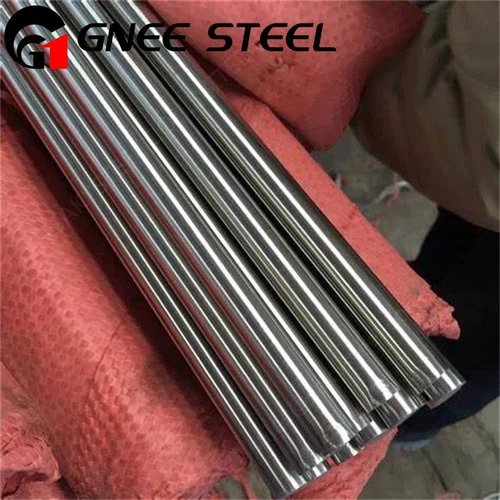
Bars: This adaptable 4130 steel is often used in structural and mechanical applications such as shafts, gears, or fasteners. Its strength, machinability, and weldability make it a valuable material.
Plate: 4130 steel plates have a good strength-to-weight ratio and are used in aerospace, automotive, and construction industries that require high strength and reasonable ductility. These plates are extremely durable under dynamic loads, so they are used as base material for support structures.
Sheets and Strips: Thinner versions of this alloy can be made into parts that require precision machining, such as aircraft skins or tubing. Due to their high specific strength (strength-to-weight) ratio, these materials are important for the lightweight, strong materials needed in many of today's industries.
Pipes: 4130 pipes are often used in the manufacture of bicycle frames, roll cages or aerospace parts because of its excellent toughness and strength properties, which allow for excellent performance in harsh conditions, especially under high stress conditions.
Regardless, whether it is required for industrial manufacturing equipment parts, aerospace engineering tools, automotive construction machinery parts, etc., there will always be some varieties of these steels to choose from so that they can perform optimally during operation without failure even when subjected to extreme stress levels.
Factors to Consider When Buying 4130 Steel
If you want to buy 4130 steel, there are some key things to consider:
Chemical Composition: Make sure that the 4130 steel provided by the supplier has the exact same chemical composition as required by industry standards, which usually includes chromium and molybdenum for added strength and durability.
Mechanical Properties: Check the tensile strength, yield point and elongation properties of these steels, as these properties determine their ability to resist loads under various conditions.
Shape and Size: You should determine whether your application requires them to be made into bars (round), plates (plates or sheets) or tubes (tubing) with precise measurements like diameter/thickness/length etc. so that they can fit well into the existing design without causing any issues.
Heat Treatment: Find out what types of heat treatment processes have been applied to the material as different treatments can affect the hardness level, toughness values and other mechanical properties.
Supplier's Reputation: It is important to choose only reliable suppliers who have previously provided quality products. This can be done by verifying the certificates possessed by the potential seller or reading past customer feedback left after completing transactions with them.
Price Considerations: Also, one should not ignore the pricing of these items relative to their technical specifications; however, competitive pricing should also not mean lowering the standards as both aspects should be equally catered to in the selection process.
All these points must be carefully considered if you want to get the best value for money when buying 4130 steel for a particular application.


