

When a project requires a nickel-based superalloy capable of withstanding extreme centrifugal stress at 1800°F (982°C), Inconel 713C (UNS N07713) is often the preferred choice. However, due to supply chain fluctuations, specific corrosion resistance requirements, or challenges in casting yield, many engineers and purchasing managers ask, "What is the best alternative to Inconel 713C?"
As a leading global exporter of superalloys, Gnee Alloy understands that the "best" alternative doesn't appear out of thin air-it depends on your specific application and budget. In this guide, we will provide a professional cost-benefit analysis of several best alternatives to help you optimize your high-temperature components.
Contact our professionals to recommend the right alloy for your project
What is the Alternative to Inconel 713C?

What is the Alternative to Inconel 713C?
Inconel 713C is a precipitation-hardening nickel-based cast alloy known for its high-temperature creep strength. Its main alternatives include Inconel 718, Rene 77, Mar-M247, and Inconel 713LC. These alternatives are chosen to achieve superior weldability, stronger creep resistance, or better machinability in extreme high-temperature environments, such as gas turbine blades.
What is the hardness of Inconel 713C?
This experiment used Inconel 713C superalloy with a hardness of 34 HRC, a diameter of 60 mm, and a length of 200 mm as the processing material. The microstructure of Inconel 713C is shown in the figure.

Information on alternative alloys for Inconel 713C

Inconel 713C vs. Inconel 718: Temperature Warning
A common purchasing mistake is substituting Inconel 718 for 713C because 718 is more "well-known" and easier to find.
Fact: Inconel 718 is a forged alloy that performs exceptionally well below 1200°F (650°C). Above this temperature, its strength drops drastically.
Conclusion: If your turbine impeller or blades are operating at temperatures close to 1800°F, 718 is not a viable alternative. Stick with precipitation-hardening cast alloys such as 713C.
Inconel 713C vs. Inconel 738: Corrosion Resistance Selection
If your components operate in "dirty" fuel environments (high sulfur or high salt), an upgrade may be necessary.
Inconel 738: Offers significantly superior high-temperature corrosion resistance compared to 713C and is commonly used in large industrial gas turbines.
Disadvantages: Due to its higher cobalt and tantalum content, 738 is also more expensive.
Our Solution: If your environment is "clean" (e.g., automotive turbochargers), our wholesale Inconel 713C remains the most economical option.


Inconel 713C vs. MAR-M-246: Strength Advantage
For users seeking to push the limits of mechanical stress:
MAR-M-246: At 1800°F (982°C), its tensile strength and creep strength are slightly higher than 713C.
Challenge: MAR-M-246 is more difficult to cast and more prone to defects, leading to lower casting yields and increased scrap costs.
Winner: In terms of cost-effectiveness, Inconel 713C consistently outperforms in the automotive and commercial aerospace turbine impeller markets.
Get a wholesale quote for Inconel 713C master alloy
4. Overview of Inconel 713C and other alloy materials
| Parameter | Inconel 713C | Inconel 718 | Inconel 738 | MAR‑M‑246 |
|---|---|---|---|---|
| Material Type | Cast Ni-based Superalloy | Wrought Ni-based Superalloy | Precision Cast Ni-based Superalloy | Cast Ni-based Superalloy |
| UNS Number | N07713 | N07718 | N07738 | – |
| Chinese Equivalent | K413 | GH4169 | K438 | K416 |
| Strengthening Mechanism | γ′ precipitation (Ni₃(Al,Ti)) | γ″ + γ′ precipitation (Ni₃Nb + Ni₃(Al,Ti)) | γ′ precipitation | γ′ precipitation + carbides |
| Product Form | Investment casting only | Wrought (bar, forging, plate, tube) | Investment casting only | Investment casting only |
| Max Service Temp | ~950°C | ~650 – 700°C | ~980°C | ~870 – 980°C |
| Typical Applications | Guide vanes, nozzle rings | Turbine discs, compressor blades, fasteners | Gas turbine blades, nozzles | High-temp turbine blades, vanes |
5. Comparison matrix of Inconel 713C and other alloy technologies
| Alloy | Best Use Case | Max Temp | Weldability | Cost Factor |
| Inconel 713C | Turbines, Turbochargers | 1800°F | Poor | Best Value |
| Inconel 718 | Structural, Disks | 1200°F | Excellent | Moderate |
| Inconel 738 | Marine Turbines | 1800°F | Poor | High |
| MAR-M-246 | High-Performance Aero | 1850°F | Poor | High |
6. Comparison of chemical composition (weight percentage) of Inconel 713C and other alloys
| Element | Inconel 713C | Inconel 718 | Inconel 738 | MAR‑M‑246 | Key Difference |
|---|---|---|---|---|---|
| Nickel (Ni) | Balance (~70-75) | 50.0 – 55.0 | Balance (~60-65) | Balance (~60) | 713C/738/M246 have higher Ni |
| Chromium (Cr) | 11.0 – 14.0 | 17.0 – 21.0 | 15.0 – 16.5 | 8.0 – 10.0 | 718/738 have higher Cr |
| Iron (Fe) | ≤ 2.0 | Balance (~18-20) | ≤ 0.5 | ≤ 1.0 | 718 has much higher Fe |
| Molybdenum (Mo) | 3.5 – 5.0 | 2.80 – 3.30 | 1.5 – 2.0 | 2.0 – 3.0 | 713C highest |
| Niobium (Nb) | 1.5 – 2.5 | 4.75 – 5.50 | 0.6 – 1.2 | – | 718 highest Nb |
| Titanium (Ti) | 0.4 – 1.0 | 0.65 – 1.15 | 3.0 – 4.0 | 1.0 – 2.0 | 738 highest Ti |
| Aluminum (Al) | 5.5 – 6.5 | 0.20 – 0.80 | 3.0 – 4.0 | 5.0 – 6.0 | 713C/M246 highest Al |
| Tungsten (W) | – | – | 2.0 – 3.0 | 5.0 – 7.0 | M246 contains W |
| Tantalum (Ta) | – | – | 1.5 – 2.0 | – | 738 contains Ta |
| Cobalt (Co) | ≤ 1.0 | ≤ 1.00 | 8.0 – 9.0 | 9.0 – 11.0 | M246/738 contain Co |
| Carbon (C) | 0.05 – 0.15 | ≤ 0.08 | 0.09 – 0.13 | 0.12 – 0.16 | Cast alloys higher C |
| Boron (B) | 0.005 – 0.015 | 0.002 – 0.006 | 0.005 – 0.015 | 0.008 – 0.020 | Grain boundary strengthening |
| Zirconium (Zr) | 0.05 – 0.15 | – | 0.05 – 0.15 | 0.05 – 0.15 | Cast alloys contain Zr |
Click to download the Inconel 713C alloy PDF file now
7. Inconel 713C and other alloys: Comparison of physical properties
| Property | 713C | 718 | 738 | M246 |
|---|---|---|---|---|
| Density (g/cm³) | 7.91 | 8.19 | 7.97 | 8.25 |
| Melting Range (°C) | 1260-1315 | 1260-1336 | 1260-1330 | 1280-1350 |
| Thermal Conductivity (20°C) (W/m·K) | 11.2 | 11.4 | 10.5 | 10.8 |
| Thermal Conductivity (800°C) (W/m·K) | ~18 | ~20 | ~19 | ~20 |
| CTE (20-100°C) (10⁻⁶/°C) | 12.0 | 13.0 | 12.3 | 12.5 |
| CTE (20-800°C) (10⁻⁶/°C) | ~14.0 | ~15.5 | ~14.5 | ~15.0 |
| Elastic Modulus (20°C) (GPa) | ~205 | ~200 | ~210 | ~210 |
| Elastic Modulus (800°C) (GPa) | ~160 | ~150 | ~165 | ~170 |
| Magnetic | Non-magnetic | Slightly magnetic | Non-magnetic | Non-magnetic |
8. Comparison of corrosion resistance of Inconel 713C and other alloys
| Environment | 713C | 718 | 738 | M246 |
|---|---|---|---|---|
| High-Temp Oxidation (to 900°C) | Good | Good | Excellent | Excellent |
| High-Temp Oxidation (to 1000°C) | Moderate | Moderate | Good | Good |
| Hot Corrosion | Moderate | Moderate | Excellent | Good |
| Thermal Fatigue | Moderate | Moderate | Excellent | Excellent |
9. Why choose to source high-temperature alloys from Gnee Alloy?
✅️Direct-from-Factory Wholesale Price: We eliminate middleman margins by supplying directly from our VIM (Vacuum Induction Melting) facilities.
✅️Unmatched Purity: Our 713C master alloy sticks are strictly controlled for trace elements (Pb, Bi, Te), ensuring your casting yield remains at an industry high.
✅️Global Logistics & Compliance: Every shipment is backed by a Full Traceability MTC 3.1 according to AMS 5391, delivered via our optimized global logistics network.

Gnee Steel inconel 713C Certificate
📦 Packaging and Shipping
All Nickel Based Alloy products are packaged using the following methods:
Wooden pallets or crates
Moisture-proof packaging
Labels with furnace number, standard, and size labels
Shipped worldwide by sea, air, or express
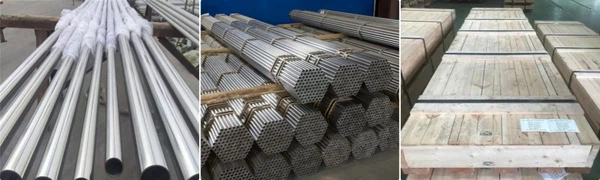
Gnee Steel inconel 713C Product Packing
Contact us for the latest export price quote for 713C Alloy
FAQ
Q: Can I use Inconel 625 as an alternative to 713C?
A: No. Inconel 625 is designed for corrosion resistance in chemical plants. It has very low creep strength at 1800°F and will deform under the centrifugal loads of a turbine.
Q: Why is Inconel 713C often the cheapest high-temp option?
A: Because it does not contain high amounts of expensive Cobalt or Tantalum like the 738 or 246 alloys, while still providing the necessary Al+Ti for gamma-prime strengthening. It offers the best performance-to-price ratio.
Q: Do you offer samples for foundry trials?
A: Yes. We provide sample master alloy sticks for foundries to verify our material's fluid flow and purity before placing a bulk order.


