

In the high-risk aerospace and power generation sectors, GH4169 superalloy bars (equivalent to Inconel 718) are core components of turbine disks and engine shafts. For purchasing managers and design engineers, a major challenge lies in internal metallurgical defects.
In large-diameter bars, standard melting processes often result in "spots" (macro-segregation)-localized imbalances in chemical composition-which are the root cause of failure. At high speeds and extreme temperatures, these hidden defects can lead to catastrophic fracture.
At Gnee Steel, we address this problem at its source. Our manufacturing processes aim for zero-defect quality, ensuring the integrity of your most critical components.
Click to understand the forging process of GH4169 and get an instant quote from the factory
Manufacturing process of GH4169 high temperature alloy bars

Manufacturing process of GH4169 high temperature alloy bars
GH4169 high-temperature alloy bars are manufactured using a rigorous triple melting process (VIM+ESR+VAR) to ensure high purity and low sulfur content. This process includes vacuum induction melting (VIM), electroslag remelting (ESR), and vacuum arc remelting (VAR), followed by homogenization, forging, and radial forging. Key steps include precise hot deformation and heat treatment (solution + aging) to control α-phase precipitation and refine grain size, resulting in excellent fatigue strength and tensile strength for aerospace applications.
What is the melting point of Inconel 718?
The melting point range of Inconel 718 is approximately 1260-1336°C (2300-2440°F). As a nickel-based superalloy, it is designed for high strength at high temperatures, typically maintaining its mechanical properties below 650°C (1200°F) and exhibiting good oxidation resistance at even higher temperatures.

1. GH4169 alloy rod composition content
| Element | Composition (%) |
|---|---|
| Nickel (Ni) | 50 – 55 |
| Chromium (Cr) | 17 – 21 |
| Molybdenum (Mo) | 2.8 – 3.3 |
| Cobalt (Co) | ≤ 1.0 |
| Manganese (Mn) | ≤ 0.35 |
| Copper (Cu) | ≤ 0.30 |
| Iron (Fe) | Remainder (approx. 11 – 22) |
| Niobium (Nb) | 4.75 – 5.5 |
| Titanium (Ti) | 0.65 – 1.15 |
| Aluminum (Al) | 0.20 – 0.80 |
| Silicon (Si) | ≤ 0.35 |
| Sulfur (S) | ≤ 0.015 |
2. Room temperature mechanical properties of GH4169 alloy rod
| Property | Value | Test Standard |
|---|---|---|
| Tensile Strength, Ultimate (Rm) | ≥ 1275 MPa (185 ksi) | ASTM E8 / GB/T 228 |
| Tensile Strength, Yield (Rp0.2) | ≥ 1035 MPa (150 ksi) | ASTM E8 / GB/T 228 |
| Elongation at Break (A) | ≥ 12% (gauge length 4D or 50mm) | ASTM E8 / GB/T 228 |
| Reduction of Area (Z) | ≥ 15% | ASTM E8 / GB/T 228 |
| Hardness (Rockwell C) | 35 – 40 HRC | ASTM E18 / GB/T 230 |
| Hardness (Brinell) | 330 – 380 HBW | ASTM E10 / GB/T 231 |
| Modulus of Elasticity (E) | ~200 GPa (29.0 × 10⁶ psi) | ASTM E111 |
| Poisson's Ratio (ν) | 0.29 – 0.30 | – |
| Impact Toughness (Charpy V-notch) | ≥ 20 J (room temperature) | ASTM E23 / GB/T 229 |
Click to download the GH4169 alloy PDF file now
3. Key Manufacturing Steps for GH4169 Alloy Rod
Triple Melting Technology (Vacuum Induction Melting + Electroslag Remelting + Vacuum Arc Remelting): This is a crucial step in producing high-quality GH4169 alloy, minimizing inclusions and chemical segregation.
Vacuum Induction Melting (VIM): Initial melting under vacuum conditions to control chemical composition.
Electroslag Remelting (ESR): Further refines the alloy by removing non-metallic inclusions and improving the solidification structure.
Vacuum Arc Remelting (VAR): The final melting step, ensuring low sulfur content (typically < 10 ppm) and excellent metallurgical purity.


4. Precision Forging of GH4169 Bar
To achieve optimal fatigue resistance, the green billet must be forged into high-performance bars by controlling the forging ratio.
High Forging Ratio (≥ 4:1): We use heavy-duty hydraulic presses to ensure a forging ratio of at least 4:1. This intense deformation breaks down the dendritic structure and refines the grains to ASTM E112 Grade 8 or finer.
Uniformity: Our forging process ensures that the core and surface of the bar have the same mechanical properties, a hallmark of industrial durability.
Click to view the Gnee Steel GH4169 bar inventory list
5. GH4169 round bar quality guaranteed
| Process Stage | Key Control Parameter | Result & Value for Buyer |
| Melting | VIM + VAR Process | Ultra-high purity, zero "freckles" or segregation. |
| Forging | ≥ 4:1 Forging Ratio | Refined microstructure, no centerline porosity. |
| Testing | Ultrasonic (UT) | AMS 2154 Class A / AAA integrity. |
| Heat Treat | Solution & Double Aging | Peak Yield Strength ≥ 1030 MPa. |
| Traceability | MTC 3.1 & 3.2 | Total compliance with AMS 5662 / ASTM B637. |
Why choose to source high-temperature alloy GH4169 bars from Gnee Steel?
✅️Direct Factory Pricing: Eliminate international trading markups and save up to 20% on procurement.
✅️Wholesale Inventory: We maintain an active stock of solution-treated rods from 20mm to 300mm for Immediate Dispatch.
✅️Custom Fabrication: We offer Cut-to-Length and Precision Ground (h8-h11) services to reduce your secondary machining costs.
✅️Global Logistics: Fast, secure shipping to the USA, Europe, and Southeast Asia with 100% traceability.

Gnee Steel GH4169(inconel 718) Certificate
📦 Packaging and Shipping
All Nickel Based Alloy products are packaged using the following methods:
Wooden pallets or crates
Moisture-proof packaging
Labels with furnace number, standard, and size labels
Shipped worldwide by sea, air, or express
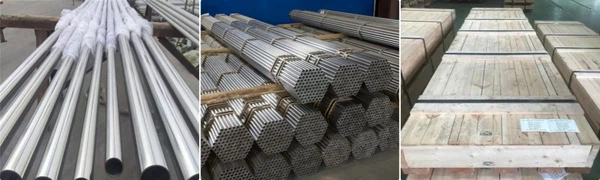
Gnee Steel GH4169 Product Packing
Contact us for the latest export price quote for GH4169 Alloy
FAQ
Q1: Why is the VIM+VAR process mandatory for aero-engine parts?
A: Rotating parts face extreme centrifugal stress. Standard air-melted or ESR alloys may contain microscopic inclusions that act as crack initiators. VIM+VAR is the only process that provides the metallurgical cleanliness required for flight-safety components.
Q2: How do you prevent "Centerline Porosity" in large-diameter bars?
A: We manage this through a combination of VAR solidification control and a high forging reduction ratio. By ensuring a minimum 4:1 deformation, we "heal" any internal voids, ensuring a 100% dense core.
Q3: Is your GH4169 equivalent to Inconel 718 for international blueprints?
A: Yes. GH4169 is the technical equivalent of Inconel 718 (UNS N07718). Our bars meet all mechanical and chemical requirements of AMS 5662 and ASTM B637, making them globally interchangeable.
Q4: Do you offer Ultrasonic Testing (UT) for each individual bar?
A: Absolutely. 100% UT Class A testing is standard for our aerospace-grade orders. We provide the NDT report alongside your Mill Test Certificate.


