

Monel 400 Pipe
Key Benefits And Uses Of Monel 400 Pipe For Oil And Gas
Monel 400 pipe offers significant advantages to the oil and gas industry with its superior corrosion resistance, high strength, and resistance to high temperatures and pressures. These properties make it an ideal choice for demanding applications in offshore drilling platforms, pipelines, and other critical systems where reliability and service life are paramount.
What is the ASTM standard for Monel 400?
ASTM B127 is the standard specification for plate, sheet, and strip of the nickel-copper alloy Monel 400 (UNS N04400). Monel 400 material offered by Metals-Piping can be hot-rolled or cold-rolled and is further categorized by thickness.

Key Properties of Monel 400 Pipe
The widespread use of Monel 400 in oil and gas applications is largely due to its excellent mechanical and chemical properties. Here are the most essential properties of Monel 400:
High Corrosion Resistance: It offers basic corrosion resistance to seawater, acids (such as hydrofluoric and sulfuric acids), and alkalis.
Optimal Performance: It is stronger than pure nickel and offers excellent durability under high pressure.
Thermal Stability: It maintains its structural integrity in temperatures ranging from sub-zero to over 500°C.
Non-Corrosive: Monel 400 remains non-corrosive even at lower temperatures, thanks to a unique technological setup.
Excellent Weldability: It can be welded using conventional welding methods without the risk of cracking or performance degradation.
These factors make Monel 400 pipe well-suited for long-term deployment in oil and gas environments, where corrosion and mechanical stress pose a constant threat.
Why Monel 400 Pipes Are Ideal for Oil & Gas Projects
Oil and gas extraction and processing facilities often face extreme corrosive and mechanical demands. How Monel 400 pipe offers significant possibilities:
1. Corrosion Resistance in Offshore Environments
Offshore platforms and subsea pipelines are constantly exposed to seawater, which can accelerate corrosion of commonly used equipment. Monel 400 pipe resists chloride-induced strain and pitting, ensuring long pipeline life and reducing maintenance costs.
2. Capital in High-Pressure Systems
Oil and gas pipelines must transport highly stressed fluids and gases. Monel 400, with its high tensile strength and toughness, effectively prevents failures such as ruptures or leaks, making it a safe and reliable choice.
3. Chemical Resistance in Processing Units
Oil and gas refinement involves the interaction with acids, bases, and hydrocarbons. Monel 400 effectively resists sulfuric and hydrofluoric acids, as well as corrosive chemicals found during processing and cleaning.
4. Temperature Resilience
Whether it's an Arctic examination or a deep well with severe geothermal heat, Monel 400 maintains performance over a wide temperature range, ensuring predictable flow and material integrity.
Simple Applications for Monel 400 Pipe in the Oil and Gas Industry
Due to its strong chemical and mechanical properties, Monel 400 pipe is most commonly used in oil and gas projects.
Subsea and offshore pipeline systems: Used to transport crude oil and natural gas from deepwater wells to surface processing platforms.
Chemical injection lines: Used to inject corrosion inhibitors and other chemicals into pipelines to improve flow or prevent scale buildup.
Heat exchangers and condensers: Resistant to high-temperature fluids and aggressive cleaning agents.
Pump and valve components: Monel 400 is often used in valve and pump components that come into contact with corrosive media.
Storage tanks and pressure vessels: Used to store high-pressure substances used in extraction and refining processes.
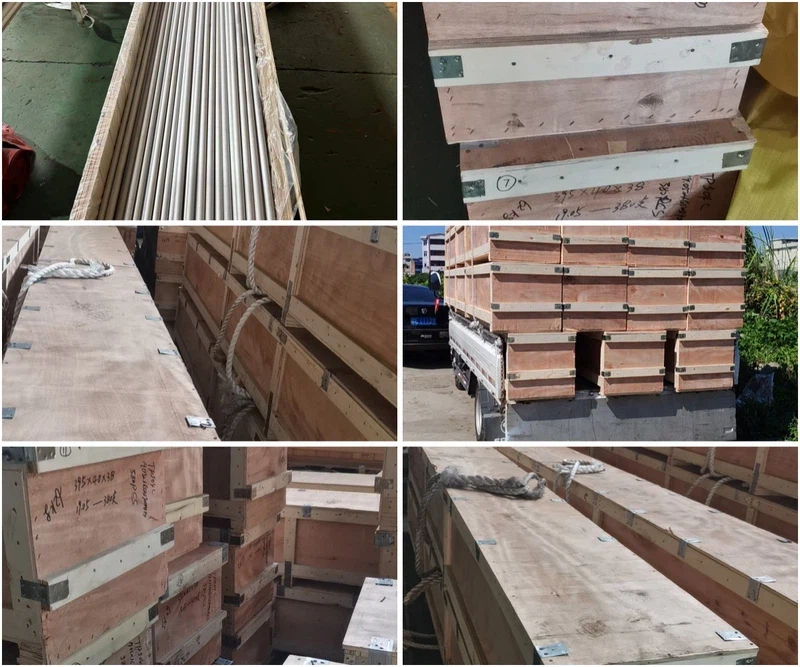
Gnee Steel specializes in the production of various nickel-based alloys. Gnee Steel's product packaging includes steel strapping: Pipes with an outer diameter of 3 inches or less are typically strapped together with polypropylene film to prevent rust during sea transportation, and then secured with steel strapping. Wooden boxes/crates: Pipes are typically packaged in wooden boxes or crates to protect them during transportation, especially those that are longer or have larger diameters. Seaworthy export packaging: Suppliers typically use standard seaworthy export packaging methods, which may include a variety of materials and techniques to protect the pipes during transportation. Tarpaulin packaging: This prevents rain, seawater, and other external factors from penetrating the export wooden crates during transportation. Gnee Steel specializes in the production and sale of alloy materials. Gnee Steel's products are widely used in aerospace, chemical, power, automotive, and nuclear energy industries, and we can provide customized alloy material solutions based on customer needs. For alloy material pricing inquiries or customized alloy material solutions, please contact us for a quote at ss@gneesteel.com


