

For engineers designing gas turbine discs, aircraft engine shafts, or high-pressure fasteners, the most critical challenge is deformation over time. At temperatures exceeding 600°C, the main issue isn't just instantaneous tensile failure, but also creep rupture-the gradual stretching and eventual fracture of the material under constant load.
Without precise stress-fracture characteristics, it's impossible to calculate the safe service life of critical components. GH4169 superalloy (equivalent to Inconel 718) is the industry-recognized primary material because it maintains excellent structural integrity even under these specific conditions.
Click to get the stress fracture test report for Gnee Steel GH4169
Stress fracture and creep properties of GH4169 high-temperature alloy at 650℃-700℃

Stress fracture and creep properties of GH4169 high-temperature alloy at 650℃-700℃
GH4169 (equivalent to Inconel 718) is a precipitation-strengthened nickel-based superalloy widely used in high-temperature structural applications, such as turbine disks, with an operating temperature range of 650°C to 700°C. At these temperatures, the alloy exhibits high creep resistance, but its performance is highly sensitive to temperature and stress variations; its service life significantly decreases when the temperature exceeds 650°C.
What is GH4169 equivalent to?
Inconel 718
GH4169 (equivalent to the American brand Inconel 718) is a precipitation-hardened nickel-based superalloy, widely used in the aerospace industry because of its excellent mechanical properties (Lu et al., 2014).

1. GH4169 Stress Rupture Performance Data
The high-temperature strength of GH4169 alloy is attributed to the stable precipitation of the γ′′ (γ′) phase. This phase effectively pins grain boundaries, hinders dislocation movement, and thus suppresses creep.
Typical Stress Rupture Performance Table:
| Applied Stress (MPa) | Temperature (℃) | Rupture Life (h) | Elongation (%) | Typical Application |
| 690 MPa | 650°C (1200°F) | ≥ 100 | ≥ 12 | Turbine Discs / Rings |
| 550 MPa | 700°C (1292°F) | ≥ 100 | ≥ 15 | Aerospace Fasteners |
| 1000 MPa | 650°C (Short-term) | ≥ 25 | ≥ 10 | High-Load Engine Shafts |
The data are based on standard solutions and double aging heat treatment (AMS 5662).
2. GH4169 - UNS N07718 High Temperature Alloy Chemical Composition
| Grade | Standard | C | Si | Mn | P | S | Cr | Ni | Ti |
| GH4169/718 | ASTM B 670 | ≤0.08 | ≤0.35 | ≤0.35 | ≤0.015 | ≤0.015 | 17.00-21.00 | 50.0-55.0 | 0.65-1.1 |
3. GH4169 - UNS N07718 High Temperature Alloy Mechanical Properties
| Element | Yield Strength (0.2%Offset) | Melting Point | Density | Tensile Strength | Elongation |
| GH4169/718 | MPa – 1034 | 1336 °C (2437 °F) | 8.19 g/cm3 | MPa – 1241 | Min 10 % |
Click to download the GH4169 alloy PDF file now
4. Creep Properties of GH4169 Alloy at 650°C-700°C
Creep Resistance: GH4169 exhibits excellent creep resistance at 650°C, especially under stresses around 700 MPa. However, increasing the temperature to 660°C-700°C significantly reduces creep life. For example, applying a 700 MPa load at 650°C may produce a long creep life, but with a slight increase in temperature, the creep life drops sharply to approximately 127 hours.
Creep Mechanism: Creep deformation is primarily driven by the slip of dislocations within γ-channels and stacking faults. At 650°C-700°C, twinning deformation typically promotes this slip.
Microstructure Evolution: During creep at 650°C-700°C, the "phase" coarsens, while the "phase" precipitates at grain boundaries. Although the precipitation of the "phase" leads to localized softening, it also hinders crack propagation. Grain boundary sliding occurs, and carbides (MCs) or primary carbides can serve as nucleation sites for microcracks.
Temperature sensitivity: When the temperature approaches or exceeds 700°C, deformation becomes increasingly planar and easier to occur, thereby reducing steady-state creep resistance.
Please request a quote for GH4169 alloy
5. Stress Fracture Behavior of GH4169 Alloy (650℃-700℃)
Fracture Mode: The creep fracture mode of GH4169 is primarily intergranular fracture, characterized by grain boundary debonding or slip. As stress decreases, the fracture mechanism may shift from intergranular fracture to transgranular fracture, or a combination of both, depending on the grain structure.
Influence of Stress and Environment: High stress and oxidation (often exacerbated by high-temperature corrosion) accelerate the penetration of corrosive media along grain boundaries, leading to faster crack initiation.
Damage Mechanism:
650℃: Deformation involves twinning and dislocation slip.
700℃ and Above: Increased stacking fault density and interactions (e.g., Lomer-Cottrell locking) result in creep life below 650℃.
Creep Fatigue Interactions: At 650℃, creep fatigue interactions (CFI) generate significant compressive stress, accelerating damage and significantly shortening service life compared to pure fatigue (LCF). Holding the tension for 30-300 seconds can lead to severe intergranular cracking.
Click to view Gnee Steel GH4169 inventory list
6. GH4169 Performance Factors Summary
Optimal Temperature: Below 650℃, the material maintains high strength and good oxidation resistance.
Deformation Limit: Temperatures above 700℃ decrease tensile strength and accelerate stress fracture. Creep life decreases due to microstructural instability (coarsening/precipitation).
Grain Structure: Fine grain structure and high volume fraction of phases lead to faster creep fatigue crack propagation at 650℃, while optimized forging structure can improve fracture life.
Why Source GH4169 From Gnee Steel?
✅️Quality Assurance: Fully compliant with AMS 5662, ASTM B637, and AS9100 standards.
✅️Short Lead Times: We maintain a large Wholesale Inventory of solution-treated bars and sheets.
✅️Traceability: Every batch is accompanied by an EN 10204 3.1 Mill Test Certificate (MTC) documenting exact stress rupture hours and elongation.
✅️Direct Factory Pricing: Benefit from Direct Factory Price with global logistics support.

Gnee Steel GH4169(inconel 718) Certificate
📦 Packaging and Shipping
All Nickel Based Alloy products are packaged using the following methods:
Wooden pallets or crates
Moisture-proof packaging
Labels with furnace number, standard, and size labels
Shipped worldwide by sea, air, or express
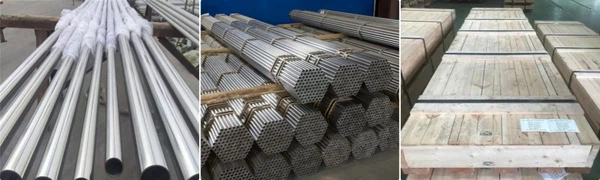
Gnee Steel GH4169 Product Packing
Contact us for the latest export price quote for GH4169 Alloy
FAQ
Q1: What is the maximum long-term service temperature for GH4169?
A: For long-term load-bearing parts where dimensional stability is critical, the recommended maximum temperature is 650°C (1200°F). For short-term service or low-stress applications, it can be pushed up to 700°C (1292°F).
Q2: How does heat treatment affect the stress rupture properties?
A: The stress rupture life is highly dependent on the Precipitation of γ′′ phases. We provide GH4169 in both the solution-treated state (ready for forming) and the fully-aged state (ready for service) according to your project requirements.
Q3: Is GH4169 equivalent to Inconel 718 in terms of creep resistance?
A: Yes. GH4169 is chemically and mechanically equivalent to Inconel 718 (UNS N07718). Our materials meet the high-strength standards required to be used as a direct replacement in international engineering blueprints.
Q4: Can you provide customized stress rupture testing for my specific order?
A: Absolutely. We can perform custom creep-rupture testing at specific temperatures and stress levels to verify that our material meets your design safety factors.


