

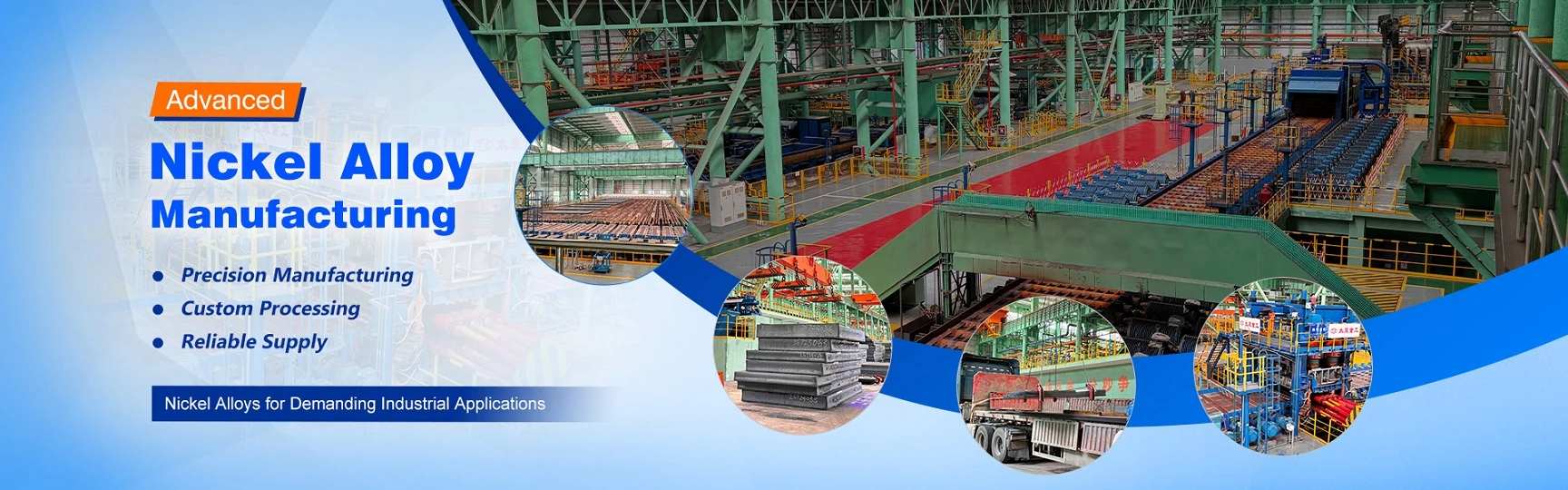
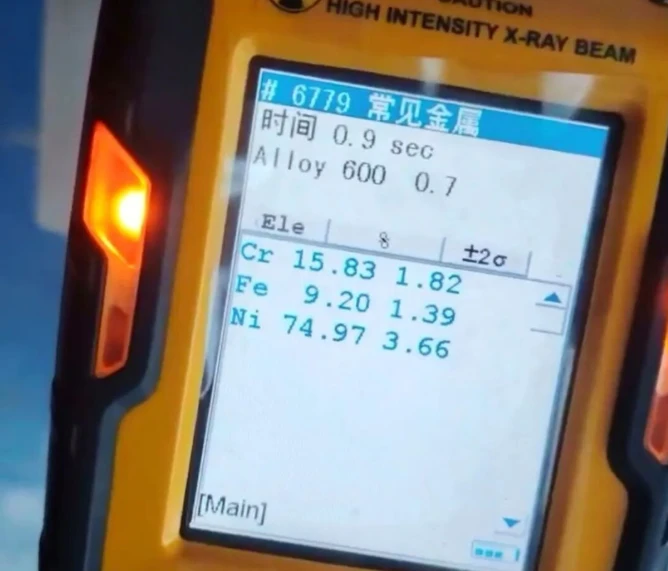
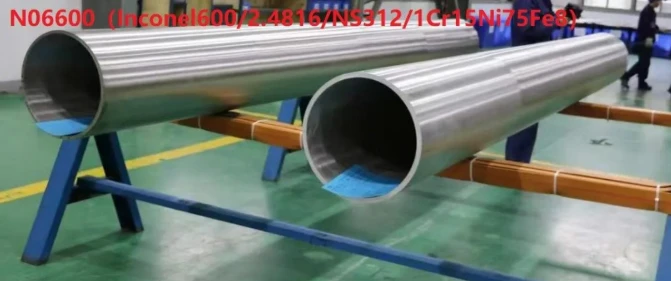
UNS N06600 (Inconel 600) is a solid-solution strengthened nickel‑chromium‑iron alloy designed for corrosion and high‑temperature resistance. It delivers reliable performance across oxidizing, reducing and chloride environments, with good oxidation resistance up to 1095 °C. This alloy offers excellent ductility and is readily formed, welded and fabricated into forgings, plates, bars and tubes. It is widely adopted for heat treatment fixtures, chemical processing equipment and nuclear components. Material supply follows ASTM standards, and each batch can be accompanied by EN 10204 3.1 test certificates for traceability.
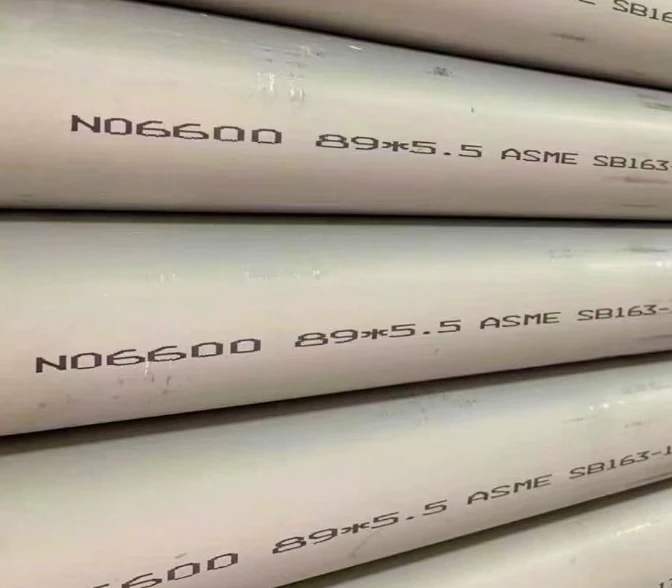
1. inconel 600 Alloy Grade Designation Comparison (Essential for Purchasing and Drawing Review)
| System | Designation | Note |
|---|---|---|
| US standard UNS | N06600 | Universal identifier, core number of the ASTM/ASME system |
| German W.Nr. | 2.4816 | Common in European projects and DIN drawings |
| France | NC15Fe | AFNOR standard |
| China GB | GH3600 (GH600) | Corresponding wrought superalloy designation |
| UK | NA14 | BS standard |
Common product standards:
- Plate / strip: ASTM B168
- Bar / forged bar: ASTM B166
- Seamless pipe & tube: ASTM B167, B163
- Butt-welding fittings (elbows, tees, reducers): ASME SB366 WPNCI
- Flanges: ASME SB564
- AMS aerospace standards: AMS5540 (plate), AMS5580 (tube), AMS5665 (bar & forgings)
⚠️ Note: Inconel 600 = N06600 = 2.4816. The three designations must correspond one-to-one on the material certificate to avoid material substitution errors.
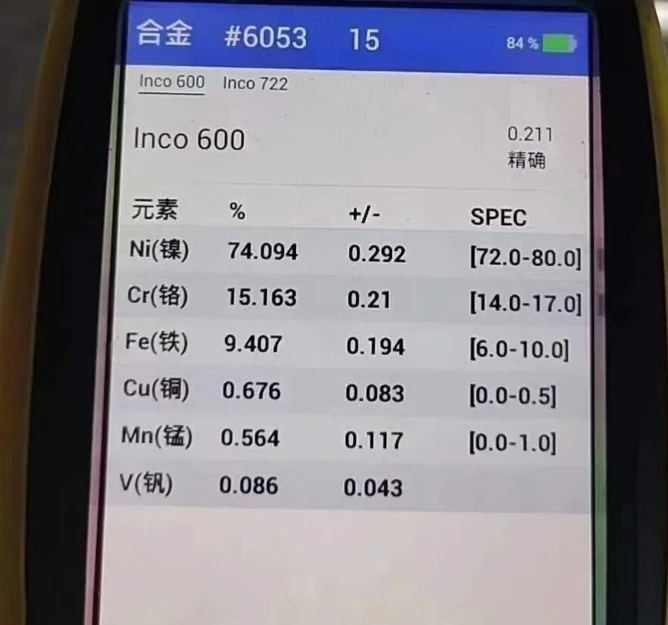
2. inconel 600 Alloy Chemical Composition (per ASTM B168, wt%)
| Element | Min | Max |
|---|---|---|
| Ni+Co | 72.0 | - |
| Cr | 14.0 | 17.0 |
| Fe | 6.0 | 10.0 |
| C | - | 0.15 |
| Mn | - | 1.00 |
| Si | - | 0.50 |
| Cu | - | 0.50 |
| S | - | 0.015 |
| P | - | 0.015 |
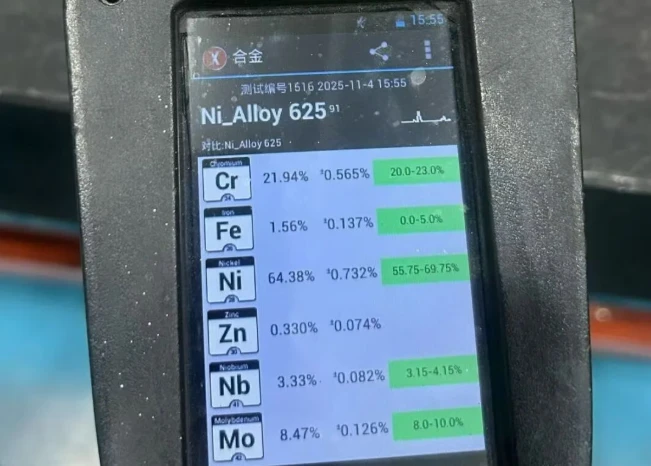
Core characteristics: Nickel-based matrix, chromium for passivation protection, iron as a solid-solution element in the matrix, with no molybdenum or niobium. Compared with Inconel 625 - which adds Mo and Nb for stronger pitting and reducing-acid resistance at higher cost - 600 is positioned as an economical nickel-based alloy for alkali resistance and chloride SCC resistance.
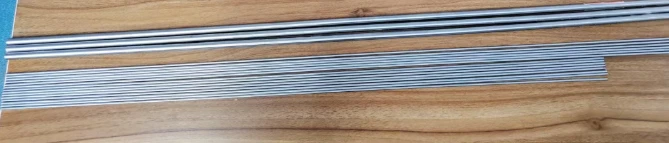
3. Inconel 600 Alloy Physical and Room-Temperature Mechanical Properties (Annealed, Standard Supply Condition)
①Basic physical parameters
- Density: 8.42 g/cm³
- Melting range: 1354 – 1413 °C
- Specific heat: 444 J/(kg·°C)
- Electrical resistivity at 21 °C: 1.03 μΩ·m
- Thermal expansion coefficient: 13.3 × 10⁻⁶ /°C (20–1000 °C range)
- Maximum continuous service temperature: ≈ 1095 °C in oxidizing environments
②Typical mechanical properties (solution-annealed delivery)
| Property | Value |
|---|---|
| Tensile strength Rm | ≥ 550 MPa |
| Yield strength Rp0.2 | ≥ 240 MPa |
| Elongation after fracture A5 | ≥ 30% |
| Brinell hardness HB | ≤ 195 |
Note: strength rises and ductility drops after cold working; for corrosive service, solution-annealed supply condition is generally required to preserve stress corrosion resistance.
4. Alloy 600 Core Corrosion-Resistance Characteristics (Key to Material Selection)
Strengths
1. Chloride SCC resistance: This is its core selling point. Austenitic stainless steels (304/316L) are highly susceptible to SCC in hot chloride-containing water, while N06600 performs stably in high-purity water and chloride media - the traditional material for PWR nuclear steam generators.
2. Strong alkali corrosion resistance: In caustic soda (NaOH) evaporation units and high-temperature alkali service, it clearly outperforms stainless steel.
3. Good oxidation and carburization resistance: Long-term stability in carburizing furnaces, nitriding furnaces, and heat-treatment atmosphere furnaces.
4. Resistance to dry chlorine, hydrogen chloride, hydrogen fluoride, and other halogen media (dry conditions).
Limitations (common selection pitfalls)
1. Not suitable for strongly reducing acids (dilute sulfuric acid, hydrochloric acid); with no molybdenum, its pitting and crevice corrosion resistance is weaker than N06625 and N08020.
2. In high-temperature sulfur and sulfide environments, sulfidation corrosion occurs easily - not recommended.
3. Corrosion accelerates markedly in moist chlorine and wet halogen environments.
In one sentence: 600 excels in alkali, high-temperature dry halogens, and chloride SCC resistance in high-purity water at high temperature; it is not suitable for wet chlorine, strongly reducing acids, or sulfidation environments.
5. Alloy 600 Main Application Fields
Nuclear power (the classic benchmark application)
Steam generator heat-transfer tubes, reactor internals, control rod drive housings, and pressurizer internals in pressurized water reactors (PWR). Serving in high-purity water at 280–340 °C with irradiation embrittlement resistance and chloride SCC resistance, it is a mature, long-validated material in the nuclear field.
Petrochemical, chlor-alkali and fluorine chemicals (the largest share of export orders)
Caustic evaporators, vinyl chloride reactors, HF fluorination units, chlorination furnace internals, catalytic reforming units, high-temperature process piping, and fittings - elbows, tees, and flanges (the everyday SB366 / SB564 orders). Suitable for high-temperature alkali and chloride process media.
Heat-treatment industrial furnaces
Muffle pots (furnace liners), radiant tubes, carburizing/nitriding furnace baskets, furnace rolls, thermocouple protection sheaths, and heat-treatment fixtures; resistant to carburizing and nitriding atmosphere attack with good dimensional stability at high temperature.
Aerospace, power, and specialty equipment
Gas turbine seals, exhaust liners, high-temperature ducts, incinerator accessories, and specialty heat exchangers.
Fine chemicals and pharmaceuticals
Organic acid reactors and high-purity chemical heat exchangers, for process loops where stainless steel ion leaching cannot be tolerated and trace chlorides are present.
6. Welding, Fabrication, and Inspection Essentials
1. Welding: Good weldability; matching consumables are ENiCrFe-3 (electrodes) and ERNiCrFe-5 (filler wire). Solution heat treatment after welding is preferred to relieve residual welding stress and prevent stress corrosion.
2. Forming: Annealed material has good ductility and can be bent, punched, and cold-formed into fittings; heavily cold-worked parts must undergo stress-relief annealing.
3. NDT: UT/PT is often required for critical nuclear and petrochemical components; PMI spectral re-verification is mandatory at material acceptance to prevent material mix-ups. Flanges, fittings, and forgings are supplied with 3.1/3.2 certificates per ASME requirements.
4. Machining: The material tends to gall on cutting tools; carbide tooling, low cutting speeds, and ample coolant are recommended.
7. Quick Differentiation: Inconel 600 / 601 / 625 (Selection Comparison)
- N06600 (600): Ni ≥ 72%, no Mo; focused on alkali resistance, chloride SCC resistance, and heat-treatment furnaces; the most cost-effective of the three.
- N06601 (601): Higher chromium, stronger high-temperature oxidation resistance; suited to incinerators and long-duration oxidizing atmospheres; weaker than 600 in alkali and SCC resistance.
- N06625 (625): Contains Mo + Nb; the all-rounder for pitting, crevice corrosion, and acid resistance; noticeably more expensive - prefer 625 for wet chlorine and acidic corrosion.
8. Closing Summary
N06600 (Inconel 600) is not a new-generation superalloy - but it is a classic nickel-based alloy validated by half a century of industrial service, with very clearly defined application boundaries.


