

"Choosing the wrong Inconel grade can cost you thousands in wasted machining time or premature part failure. Here's how to decide."
Inconel – a family of nickel-chromium superalloys – is the backbone of industries demanding extreme strength and corrosion resistance, from aerospace turbines to deep-sea oil rigs. But not all Inconel is created equal. The difference between Inconel 718 and 625 might seem minor on paper, but selecting the wrong grade can lead to:
Costly machining struggles (Inconel 718 work-hardens aggressively)
Unplanned downtime (625 is better for saltwater but weaker than 718)
Safety risks (e.g., thermal fatigue in mis-specified combustor parts)
Inconel 718 vs. 625: Key Properties Compared
Material Composition & Properties
| Property | Inconel 718 | Inconel 625 |
|---|---|---|
| Composition | Ni (52.5%), Cr (19%), Fe (18.5%), Nb+Mo (5%) | Ni (58%), Cr (22%), Mo (9%), Nb (3.5%) |
| Tensile Strength | 1,300 MPa (at 20°C) | 930 MPa (at 20°C) |
| Yield Strength | 1,100 MPa | 690 MPa |
| Max Service Temp | 700°C (1,292°F) | 980°C (1,796°F) |
| Machinability | Poor (15% of free-cutting steel) | Moderate (25% of free-cutting steel) |
| Corrosion Resistance | Excellent (acids, chlorides) | Superior (marine, pitting, crevice corrosion) |
| Thermal Expansion | 13.0 μm/m°C (20-100°C) | 12.8 μm/m°C (20-100°C) |
Key Decision Factors
Choose Inconel 718 when you need:
✓ Higher mechanical strength for turbine disks, bolts, and high-stress fasteners
✓ Better fatigue resistance for aerospace structural components
✓ Cost savings (typically 15-20% cheaper than 625 in raw material costs)
Choose Inconel 625 when you need:
✓ Extreme corrosion resistance for marine hardware, chemical processing
✓ Superior performance in oxidizing environments up to 980°C
✓ Easier machining and welding characteristics
Technical Notes for Engineers
Heat Treatment:
718 requires age hardening (720°C for 8 hrs) for optimal properties
625 is solution annealed (980°C then water quenched)
Weldability:
625 welds more easily with standard TIG/MIG methods
718 needs post-weld heat treatment to avoid strain-age cracking
Real-World Application Examples
Inconel 718 Use Cases:
GE Aviation turbine engine mounts
SpaceX rocket engine thrust chambers
Oil & gas wellhead components
Inconel 625 Use Cases:
Submarine seawater valves
Chemical reactor cladding
Nuclear waste disposal containers
Applications – Which Grade to Choose
Inconel 718 Applications
Aerospace Industry
Turbine blades and disks in jet engines
Engine mounts and structural components
Afterburner parts in military aircraft
Oil and Gas Industry
Downhole tools for deep well drilling
Wellhead components and Christmas trees
High-pressure pump shafts
Power Generation
Gas turbine combustor components
Nuclear reactor core components
Inconel 625 Applications
Marine Industry
Propeller shafts and submarine components
Seawater piping systems and valves
Offshore platform equipment
Chemical Processing
Reactor vessels and liners
Heat exchangers and distillation columns
Acid production equipment
Specialty Applications
Nuclear waste containment systems
Pollution control scrubbers
Pharmaceutical processing equipment
Frequently Asked Questions About Inconel 718 and 625
Q: Is Inconel 718 stronger than 625?
A: Yes, Inconel 718 offers higher tensile strength (1,300 MPa vs. 930 MPa), making it ideal for structural components. However, Inconel 625 maintains better mechanical properties at extreme temperatures above 700°C.
Q: Does Inconel 718 rust or corrode?
A: While highly corrosion-resistant, Inconel 625 provides superior performance in saltwater and chemical environments due to its higher molybdenum content (9% vs. 3% in 718).
Q: Why is Inconel 718 more difficult to machine?
A: Three key reasons:
Rapid work hardening during cutting
Abrasive gamma prime precipitates
High cutting temperatures
Solution: Use ceramic or CBN tools with high-pressure coolant (70+ bar)
Q: Can both alloys be welded?
A: Yes, but with different requirements:
Inconel 718: Requires post-weld heat treatment to prevent cracking
Inconel 625: More weldable with standard TIG/MIG processes
Our factory
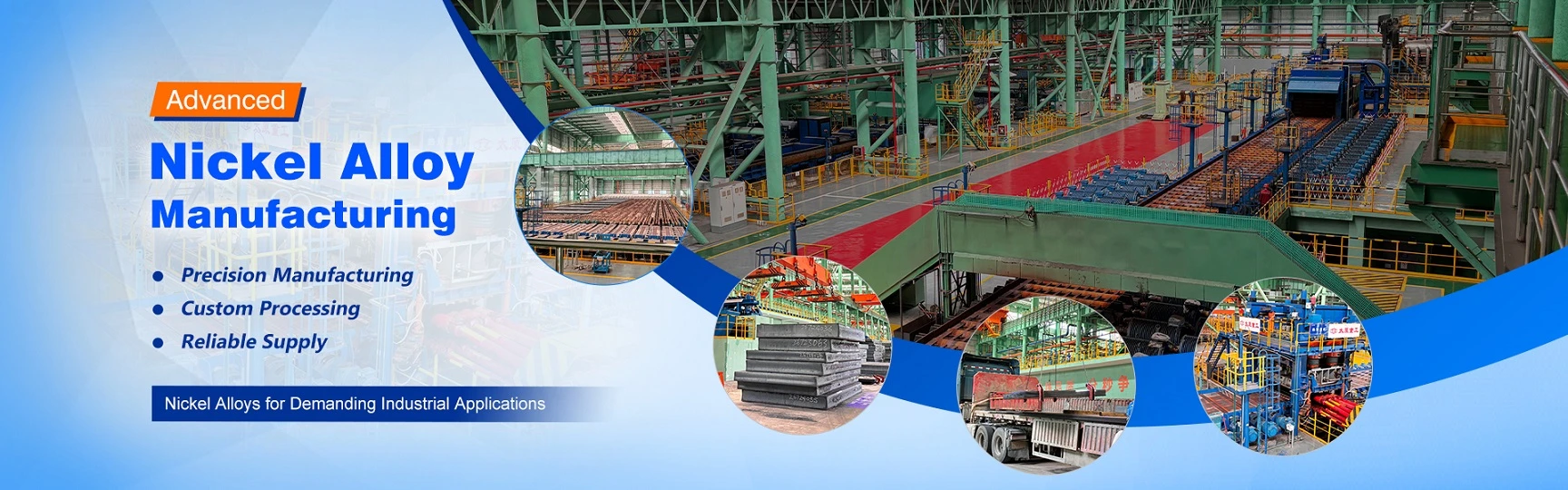
Our nickel-based alloy products originate from a modern precision manufacturing base. The factory is equipped with fully automated vacuum induction melting (VIM), electroslag remelting (ESR), and multi-directional forging hydraulic units, ensuring that every step from melting to forming meets aerospace-grade standards. Through a digital process control system, we achieve precise control over composition purity, grain size, and mechanical properties. Each batch of products is accompanied by traceable melting reports and third-party certifications (such as DNV-GL, ABS, aerospace standards, etc.), ensuring the authenticity and reliability of performance data.

Packaging and shipping
We adopt the highest industry standards for protective packaging: all rods/plates are treated with anti-rust protection and reinforced with waterproof film and wooden crates; precision components are packaged with custom foam dividers and vacuum sealing. Through our proprietary logistics coordination system, we promise that standard specification products will be prepared and shipped within 7-15 working days after order confirmation and technical details are finalized.


