

Comprehensive Guide to Nickel-Based Alloys: Hastelloy B3 (UNS N10675)
What is Hastelloy B3?
Hastelloy B3 (UNS N10675/W.Nr. 2.4600/Alloy B3) is a nickel-molybdenum alloy with additions of chromium, iron, and other elements. It has excellent resistance to hydrochloric acid in all concentrations and temperatures. It also performs well in sulfuric acid, acetic acid, formic acid, and phosphoric acid and other non-oxidizing media. Alloy B3 has excellent resistance to pitting, stress corrosion cracking, and knife-line and heat-affected zone attack. Hastelloy B3 has superior thermal stability compared to Hastelloy B2. It is widely used in chemical processes, vacuum furnaces, and piping components in reducing environments.
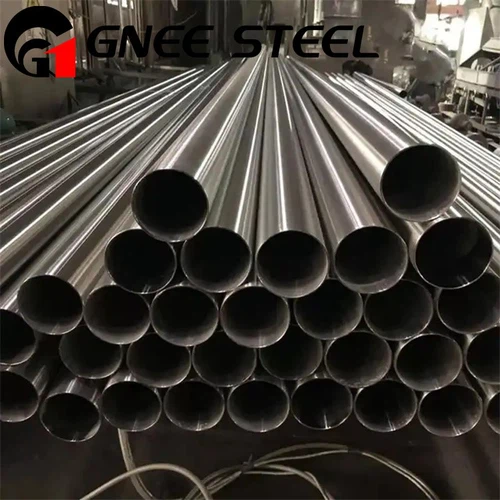

Hastelloy B-3 (UNS N10675) is a solid solution strengthened nickel-molybdenum alloy that is typically used in extreme reducing conditions. Compared with its predecessor, Hastelloy B (UNS N3), the carbon, silicon and iron contents of Hastelloy B-10001 are significantly reduced, making the corrosion resistance of the weld zone of the alloy in the welded state less likely to decrease. Controlling other alloying elements (such as iron and chromium) solves other problems related to manufacturability. Hastelloy B3 (n10675) is a nickel-based high-temperature alloy composed of elements such as nickel, molybdenum, and cobalt. The nickel content of Hastelloy B3 is about 65%. Hastelloy B3 (N10675) nickel-based alloy is a new material developed on the basis of Hastelloy B2, which improves the thermal stability and corrosion resistance of the material and improves hot and cold forming properties. In recent years, it has been increasingly used in the production and manufacturing of chemical equipment.
Characteristics of Hastelloy B3 (UNS N10675)
1. Control the iron and chromium elements to the minimum content and prevent the formation of Beta phase Ni4Mo.
2. Excellent corrosion resistance to reducing environments.
3. Excellent corrosion resistance to moderate concentrations of sulfuric acid and many non-oxidizing acids.
4. Good resistance to chloride ion reduction stress corrosion cracking (SCC).
5. Excellent resistance to corrosion by various organic acids. Hastelloy B-3 alloy is a new member of nickel-molybdenum alloys, with excellent hydrochloric acid corrosion resistance at all temperatures and concentrations. It also has good corrosion resistance to oxidizing media such as sulfuric acid, acetic acid, formic acid, phosphoric acid, etc. Due to its chemical composition adjustment, its thermal stability is significantly improved compared to the original Hastelloy B-2 alloy. Hastelloy B-3 alloy has high resistance to pitting, stress corrosion cracking, knife line and heat-affected zone erosion.
6. Better thermal stability than alloy B-2: Compared with Hastelloy B-2, the biggest advantage of Hastelloy B-3 is that it maintains excellent ductility when briefly exposed to intermediate temperatures. This exposure often occurs during heat treatment processing. When exposed to a temperature of 700°C for a short time, the B-2 alloy is easily embrittled, while the B-3 alloy exhibits significant resistance to embrittlement and can sustain this phenomenon for several hours. This provides great convenience for alloys provided in the form of composites, such as forming device components.
Forming processing of Hastelloy B3 (UNS N10675)
(1) The high elongation of Hastelloy B3 creates favorable conditions for cold forming.
(2) Hastelloy B3 is harder than austenitic stainless steel and has a more obvious tendency to work hardening, so greater pressure or step-by-step forming is required during cold forming.
(3) When the cold forming deformation rate of Hastelloy B3 is less than 10%, it will not affect the corrosion resistance of the machined parts, but the presence of residual stress may cause thermal cracks in the weld. Therefore, for workpieces to be welded later, the influence of residual stress should be eliminated as much as possible.
(4) Severe deformation cold forming can increase the yield ratio of Hastelloy B3 and increase the sensitivity to stress corrosion and cracking. Intermediate and final heat treatment processes are often used.
(5) Hastelloy B3 is very sensitive to oxidizing media, sulfur, phosphorus, lead and other low melting point metals at high temperatures.
(6) In the temperature range of 600-800℃, if the heating time is too long, Hastelloy B3 alloy will produce brittle phase, resulting in a decrease in elongation. Moreover, when external force or deformation is restricted, thermal cracks are prone to occur in this temperature range. Therefore, the temperature must be controlled above 900℃.
(7) Before processing and pressing Hastelloy B3 materials, the mold surface in contact with the workpiece should be cleaned; lubrication method can be used during cold processing, and degreasing or alkali washing should be performed immediately after forming.
(8) After the workpiece is cooled out of the furnace, the surface oxide film is thick and should be fully pickled. If there is residual oxide film, cracks may appear during the next pressing; sandblasting can be performed before pickling if necessary.
Welding of Hastelloy B3 (UNS N10675)
(1) Before forming, if the blank needs to be spliced with welds, it is best to choose the GTAW welding method to better protect the weld from oxidation. If manual arc welding is used, it is easy to cause oxidation of the intermediate weld. Even if each layer is polished and cleaned, it is difficult to ensure thorough cleaning, and a small amount of residual oxide layer may also affect the processing performance of the weld. Before welding, the attachments and oxide layer on the groove and the surface of the base material must be removed, because the presence of oxide film and impurities will affect the performance of the weld and the heat-affected zone. It is best to use a small current and avoid slow speed and swing. The interlayer temperature should be controlled below 100°C. Both sides need to be protected by argon to avoid high-temperature oxidation and combustion of alloy elements. Before pressing, the weld surface should be polished smooth, the thick oxide layer on the weld surface should be removed, and pickling should be supplemented. Since the oxide layer of Hastelloy B3 weld is very hard, it is difficult to remove it by direct pickling. Fine cracks are prone to occur during the pressing process, affecting the performance of the weld.
(2) The advantage of hot forming is that it can be formed in one time, which can avoid work hardening. If the forming temperature is well controlled, heat treatment can be avoided. However, the temperature changes greatly during hot forming, and each area is different. Even the surface in direct contact with the mold may be much lower than the temperature inside the metal, which is difficult to measure and control. Once the local material enters the sensitive temperature zone during the processing, defects such as microcracks will be difficult to eliminate in the later solution heat treatment. Select the cold forming process based on the experience of the processing plant. The die pressing method is preferred. When spinning must be used, cold spinning or warm spinning at a temperature not exceeding 400°C should be used.
(3) During the cold forming process, when the deformation is large, a step-by-step forming process should be used. Step forming should be subjected to intermediate heat treatment, and solution heat treatment should be selected, and the temperature should be controlled above 1000°C. Select the solution heat treatment process, and the temperature should be 1060~1080°C. The workpiece should be subjected to solution heat treatment after final pressing to eliminate residual stress and avoid affecting the subsequent welding quality.
Heat treatment Hastelloy B3 (UNS N10675)
It is very important to keep the workpiece clean and free of contamination before and during the heat treatment of Hastelloy B3 (n10675) Hastelloy alloy. During the heating process, the workpiece should not come into contact with low-melting-point metals such as sulfur, phosphorus, and lead, otherwise the performance of the alloy will be destroyed and the alloy will become brittle. Electric furnaces are preferred for heating furnaces. If gas or oil furnaces are used, the lower the sulfur content in the fuel, the better. According to the recommendations of material manufacturers, the total sulfur content in natural gas and liquefied petroleum gas is not more than 0.1% (V), the sulfur content in city gas is not more than 0.25g/m3, and the sulfur content in the fuel should be less than 0.5% (W).
The furnace gas must be clean and suitable for micro-reduction. Fluctuations in the oxidation and reduction properties of the furnace gas should be avoided, and the heating flame should not directly contact the workpiece. The workpiece must be protected from high-temperature deformation before entering the furnace. The heating speed of the workpiece should be as fast as possible, and the workpiece can only be placed in the furnace after the furnace temperature reaches the heat treatment temperature. After the water comes out of the furnace, it should be cooled quickly, and the immersion method or full-area uniform spraying should be used. It is strictly forbidden to use water pipe pouring to prevent abnormal deformation or tearing due to uneven cold and heat.


