

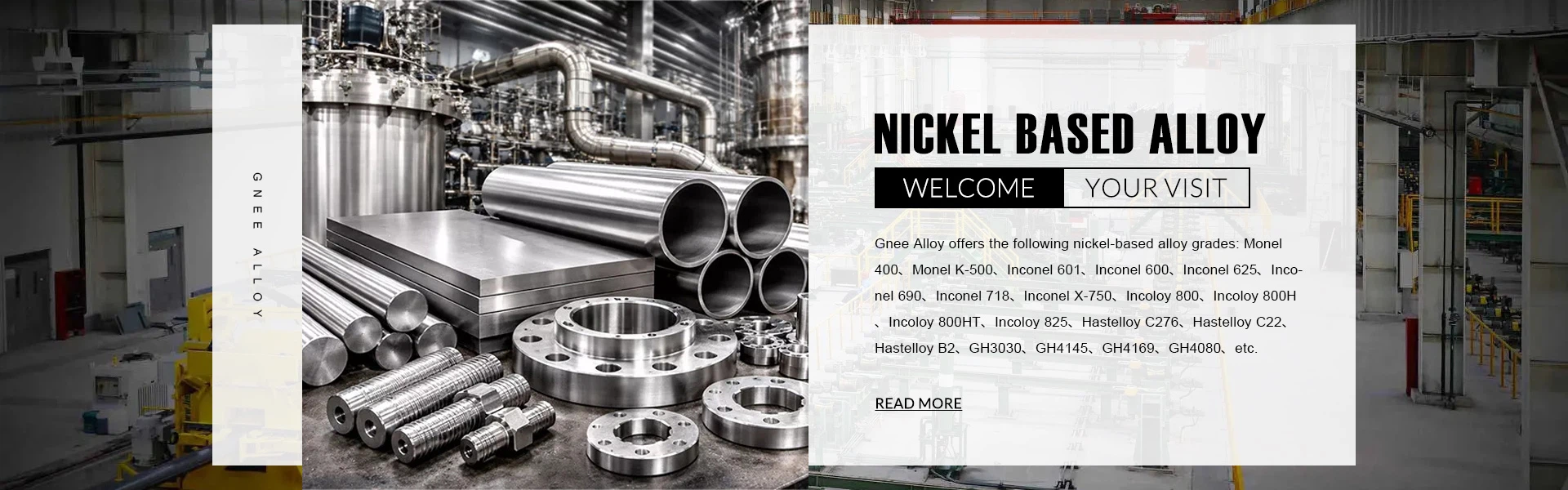
In high-performance engineering, Inconel 713C (UNS N07713) is widely recognized as the ideal high-temperature alloy for components subjected to extreme mechanical stresses up to 1800°F (982°C). Whether you are a design engineer or a purchasing manager in a precision foundry, understanding the metallurgical properties of this nickel-based high-temperature alloy is crucial for project success.
As a Tier 1 high-temperature alloy supplier, Gnee Alloy offers vacuum induction melting (VIM) Inconel 713C master alloys conforming to the stringent AMS 5391 standard, ensuring maximum casting integrity in high-stress applications.
Contact our professionals to recommend the right alloy for your project
Inconel 713C (UNS N07713) Guide: Composition, Properties & High-Stress Industrial Uses

Inconel 713C (UNS N07713) Guide: Composition, Properties & High-Stress Industrial Uses
Inconel 713C (UNS N07713) is a precipitation-hardening nickel-chromium-based cast superalloy renowned for its excellent strength and creep resistance at high temperatures, especially up to 1800°F (980°C). It is designed for high-stress, high-temperature environments where resistance to thermal fatigue and superior structural stability are critical.
What are the properties of Inconel 713C material?
Inconel 713C alloy is a high-performance nickel-based alloy with excellent high-temperature performance, oxidation resistance, creep resistance, and corrosion resistance. These properties make it widely used in high-temperature and corrosive environments such as aerospace, petrochemical, and nuclear energy.

1. Inconel 713C chemical composition
| Element | Content (Wt. %) | Expert Metallurgical Role |
| Nickel (Ni) | Balance | Provides the stable austenitic matrix. |
| Aluminum (Al) | 5.50 - 6.50 (Avg 6.0%) | Key for forming the Ni3Al strengthening phase. |
| Chromium (Cr) | 12.00 - 14.00 | Ensures superior oxidation resistance. |
| Molybdenum (Mo) | 4.00 - 5.00 | Solid solution strengthening for heavy loads. |
| Niobium (Nb) | 1.80 - 2.80 | Enhances creep-rupture life and stability. |
| Titanium (Ti) | 0.50 - 1.00 (Avg 0.8%) | Facilitates precipitation hardening with Al. |
Click to download the Inconel 713C alloy PDF file now
2. Mechanical Properties of Inconel 713C at 1800°F (982°C)
Gnee Alloy, a professional nickel alloy consulting firm, emphasizes that UNS N07713 is not only "heat-resistant" but also "stress-resistant."
Creep Fracture Strength: At a high temperature of 1800°F (982°C), under a load of 152 MPa, Inconel 713C can maintain its structural shape for over 30 hours-a benchmark that forged alloys such as Inconel 718 cannot achieve.
Resistance to Thermal Fatigue: Designed for rotating components, it can withstand the rapid heating and cooling cycles of industrial turbines without developing microcracks.
3. High-Temperature Mechanical Properties of Inconel 713C Alloy
| Temp (°C) | Temp (°F) | Tensile Strength (MPa) | Yield Strength (MPa) | Elongation (%) | Strength Retention |
|---|---|---|---|---|---|
| 20 (RT) | 68 | 830 – 950 | 650 – 760 | 2 – 5 | 100% |
| 300 | 572 | ~850 | ~700 | ~4 | ~90% |
| 400 | 752 | ~840 | ~690 | ~4 | ~88% |
| 500 | 932 | ~830 | ~680 | ~5 | ~87% |
| 600 | 1112 | ~810 | ~660 | ~6 | ~85% |
| 650 | 1202 | ~790 | ~640 | ~6 | ~83% |
| 700 | 1292 | ~770 | ~600 | ~7 | ~80% |
| 760 | 1400 | ~710 | ~540 | ~8 | ~73% |
| 800 | 1472 | ~680 | ~500 | ~8 | ~70% |
| 850 | 1562 | ~600 | ~450 | ~9 | ~62% |
| 900 | 1652 | ~500 | ~400 | ~10 | ~52% |
| 950 | 1742 | ~400 | ~350 | ~10 | ~42% |
4. Stress fracture and creep properties of Inconel 713C alloy
| Temperature | Stress | Rupture Life | Notes |
|---|---|---|---|
| 700°C (1292°F) | 350 MPa | ~100 hours | Short-term |
| 700°C (1292°F) | 280 MPa | ~1,000 hours | Long-term |
| 760°C (1400°F) | 240 MPa | ~100 hours | - |
| 800°C (1472°F) | 250 MPa | ~100 hours | Short-term |
| 800°C (1472°F) | 200 MPa | ~1,000 hours | Long-term |
| 850°C (1562°F) | 180 MPa | ~100 hours | - |
| 900°C (1652°F) | 150 MPa | ~100 hours | Short-term |
| 900°C (1652°F) | 120 MPa | ~1,000 hours | Long-term |
| 950°C (1742°F) | 100 MPa | ~100 hours | Short-term |
| 950°C (1742°F) | 70-80 MPa | ~1,000 hours | Long-term |
Click to view our professional certificates for Inconel 713C alloy
5. High-Stress Industrial Applications of Inconel 713C
Due to its excellent performance at high temperatures, Inconel 713C is widely used in critical components:
Aerospace: Jet engine turbine blades, guide vanes, and combustion chamber components
Power Generation: Industrial gas turbine blades and guide vanes
Automotive: Turbocharger rotors and impellers
Chemical/Marine: Components requiring high corrosion and oxidation resistance, such as exhaust systems and heat exchangers.


4. Why choose to partner with Gnee Alloy, a superalloy supplier that provides direct supply from factories?
✅️VIM Melted Purity: We eliminate dissolved gases (O, N < 10ppm) during our vacuum melting process, significantly increasing your foundry's casting yield.
✅️Global Supply Capability: As a trusted superalloy exporter, we manage the entire logistics chain, delivering MTC 3.1 certified material to your doorstep.
✅️Cost-Effective ROI: By sourcing directly from our melt shop, you bypass middleman markups and secure competitive wholesale pricing for annual supply contracts.

Gnee Steel inconel 713C Certificate
📦 Packaging and Shipping
All Nickel Based Alloy products are packaged using the following methods:
Wooden pallets or crates
Moisture-proof packaging
Labels with furnace number, standard, and size labels
Shipped worldwide by sea, air, or express

Gnee Steel 713C Product Packing
Contact us for the latest export price quote for 713C Alloy
FAQ
Q: Why is UNS N07713 almost always used as a casting alloy?
A: Because of its high Aluminum content (~6.0%), the alloy is extremely hard and lacks the ductility needed for forging or rolling. It is engineered specifically for vacuum investment casting.
Q: Can your 713C master alloy help reduce our foundry's scrap rate?
A: Absolutely. By controlling trace elements like Lead (Pb) and Bismuth (Bi) to ppb levels, our material prevents grain boundary embrittlement, which is the leading cause of casting cracks.
Q: What is your typical lead time for an international order?
A: We maintain a strategic inventory of standard Φ75mm and Φ80mm master alloy sticks. Standard orders can be dispatched within 2 weeks via our global logistics network.


