

What material is 4130?
4130 structural steel
4130 structural steel has high strength and toughness, high hardenability, and critical hardenability diameter in oil is 15-70mm; the steel has good thermal strength, with sufficient high temperature strength below 500℃, but its strength drops significantly at 550℃; the welding is quite good when the alloy elements are at the lower limit, but the weldability is medium when approaching the upper limit, and it needs to be preheated to above 175℃ before welding; the steel has good machinability and medium plasticity during cold deformation; it has first-class temper brittleness in the range of 300-350℃ during heat treatment; it has a tendency to form white spots.

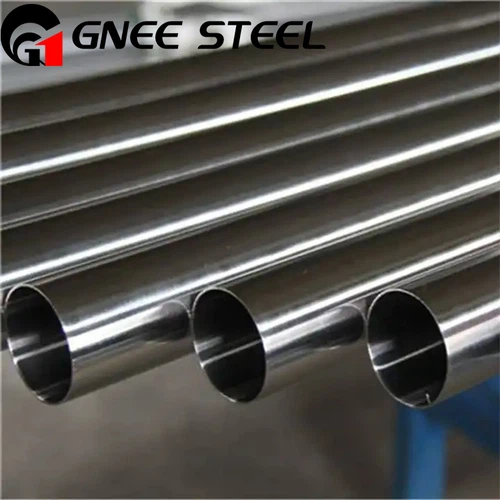
4130 structural steel performance and application
This steel is usually used in the quenched and tempered state. When the carbon content is at the lower limit, the steel can also be used as carburizing steel requiring higher core strength. In the machinery manufacturing industry, it is mainly used to manufacture quenched and tempered parts with large cross-sections and working under high stress conditions, such as shafts, spindles, and high-load control wheels, bolts, studs, gears, etc.; in the chemical industry, it is used to manufacture welded parts, welded structures composed of plates and pipes, and high-pressure pipes with a temperature not exceeding 250°C in nitrogen and hydrogen media; in the steam turbine and boiler manufacturing industries, it is used to manufacture fasteners working below 450°C and flanges under high pressure below 500°C.
4130 alloy structural steel corresponding steel grade
China GB/JB: 30CrMo
Japan JIS: SCM435
US AIS: 4130
US SAE: 4130
US ASTM: 4130
German DIN steel grade: 34CrMo4
German DIN material: 1.7220
French AFNOR: 30CD4 (NF)
4130 structural steel mechanical properties
Tensile strength σb (MPa): ≥930 (95) Yield strength σs (MPa): ≥785 (80)
Elongation δ5 (%): ≥12
Sectional shrinkage ψ (%): ≥50
Impact energy Akv (J): ≥63


